Virunga National Park, located in eastern Democratic Republic of Congo, is a vast protected area established in 1925, making it the oldest and first national park on the African continent. Known for its rich biodiversity and striking landscapes, the park, under Belgian colonial rule, was called Albert National Park, created to protect mountain gorillas living in the Virunga Mountains.
Virunga National Park covers approximately 8,090 km², stretching from the Rwenzori Mountains on the border of Uganda down to the active volcanoes of the Virunga Massif near Rwanda. The park was designated a UNESCO World Heritage site in 1979 because of its diverse habitats, exceptional biodiversity, endemism, and vulnerable species; it was listed as a World Heritage site in Danger in 1994 due to civil unrest and increased human activity in the region.
Being one of the most biodiverse places on earth with a variety of plant and animal life due to its unique landscapes, Virunga National Park is surely not lacking. The park’s diverse vegetation is influenced by its varying altitudes, from lowland forests to high alpine regions; the park has rainforests, montane forests, bamboo forests, afro-alpine vegetation, savannas, swamps, and wetlands.
Its habitats range from snow-capped mountains and glaciers to
savanna
, wetlands, lava plains, and dense tropical forests. Virunga is famous for its population of mountain gorillas on top of over 200 mammals including eastern lowland gorillas, eastern chimpanzees, golden monkeys, olive baboons, colobus monkeys, red-tailed monkeys, dent’s mona monkeys, de brazza’s monkeys, grey-cheeked mangabeys, elephants, buffaloes, hippos, okapi, lions, bushbucks, waterbucks, red-fronted duikers, hyenas, giant forest hogs, topi, and many more; over 700 bird species like shoebill, African fish eagle, regal sunbird, strange weaver, kivu ground thrush,
Rockefeller’s
sunbird, grauer’s swamp warbler, mourning collared-dove, Rwenzori turaco, forest ground thrush, grey herons, skimmers, grey-throated barbet, Angolan swallow, Rwenzori batis, alpine swift, African olive pigeon, greater and lesser flamingo, little grebe, northern pintail, red-billed teal, handsome francolin, tropical boubou, papyrus warbler, eastern grey plantain eater, egrets, pelicans, nightjars, swifts, and many more; 108 reptiles species like pythons, vipers, monitor lizards, geckos, chameleons, and many more; and 78 amphibian species like crocodiles, frogs, toads and many more.
Attractions in Virunga National Park
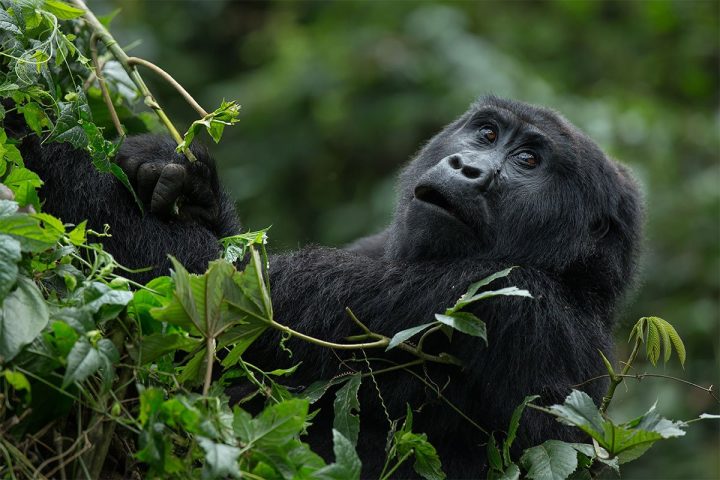
Mountain gorillas in Virunga national park
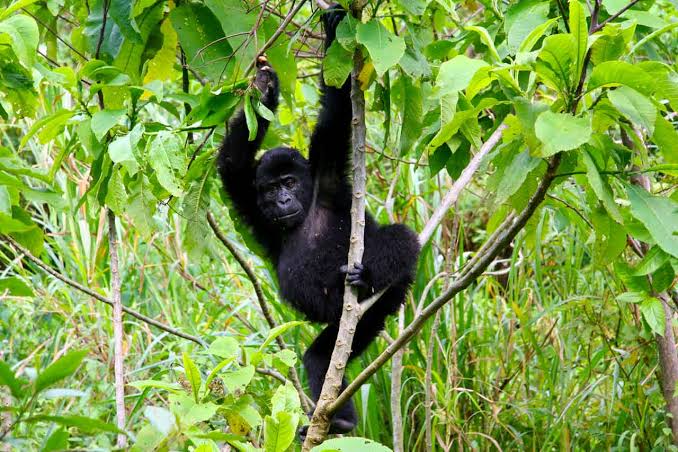
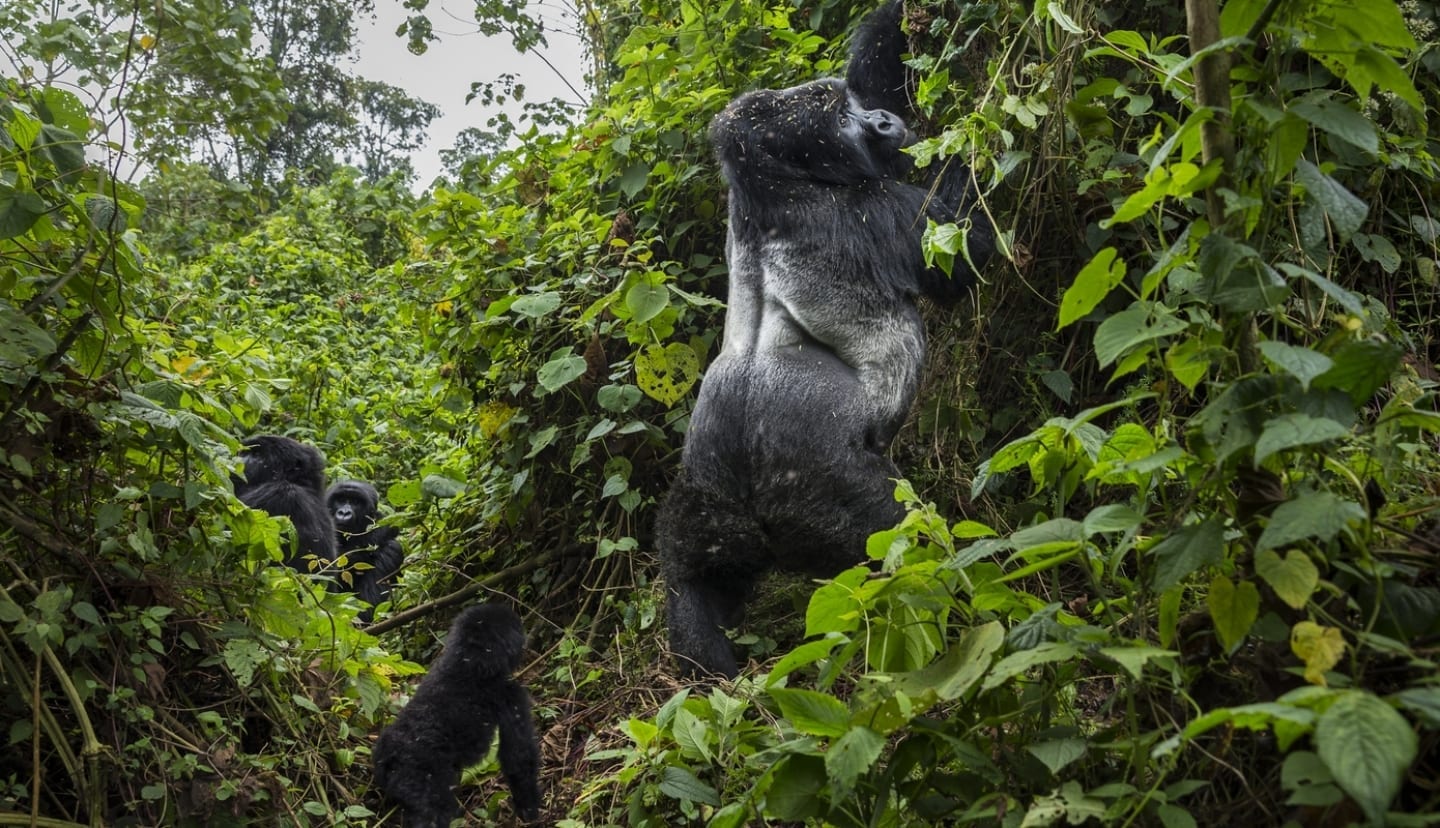
Mountain gorillas are the major attraction in the park, as it protects a significant portion of the endangered primates deep within the forests on the slopes of the southern sector of the Virunga Volcanoes. Mountain gorillas and eastern lowland gorillas coexist along with eastern chimpanzees, which makes Virunga National Park an awesome location for observing the great apes. The apes’ availability ensures the thrill of encountering them in their natural habitat for visitors, and while trekking, visitors get a chance to view them intimately through their social behaviors, feeding, grooming, and dominance of silverback males.
Birds in Virunga national park
Birds are another main attraction in the Virunga National Park, making it one of Africa’s most important birding destinations with over 700 bird species recorded. This is reflected by the wide range of habitats, ranging from montane forests, alpine zones, wetlands,
savanna
, and volcanic landscapes. Virunga shelters several Albertine Rift endemics, water birds, forest birds, and migratory birds, including Rwenzori Turaco, handsome francolin, blue-headed sunbird,
Shelley’s
crimsonwing, dusky crimsonwing, crowned eagles, augur buzzard, African harrier-hawk, grauer’s swamp warbler, grey heron,
Rockefeller’s
sunbird, red-faced woodland warbler, African olive pigeon, white-headed Woodhoopoe, Rwenzori batis, alpine swift, tropical boubou, papyrus yellow warbler, nectarinia rockefeller, and many more.
Wildlife in Virunga national park
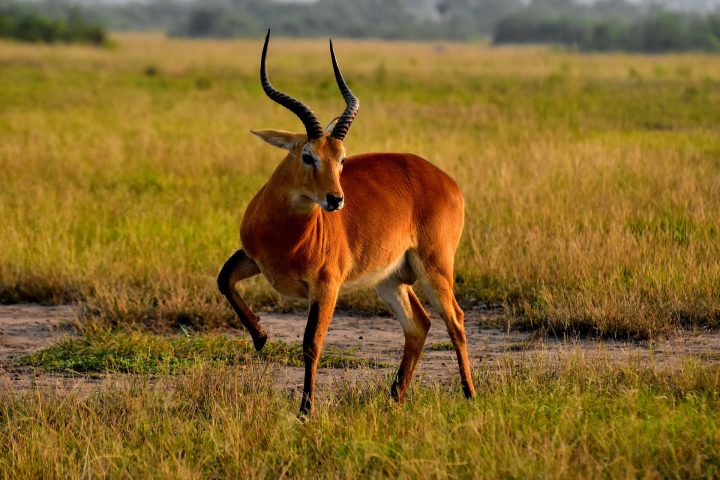
Virunga National Park has a vast range of habitats that support amazing species, with some being endangered. Visitors can encounter wildlife across the different sectors of the park, including the rare mountain gorillas, eastern lowland gorillas, eastern chimpanzees, elephants, buffalo, warthogs, okapi, bongo, waterbucks, bushbucks, duikers, giant forest hogs, olive baboons, colobus monkeys, red-tailed monkeys, dent’s mona monkeys, de brazza’s monkeys, grey-cheeked mangabeys, and many more. The wide variety of wildlife species makes Virunga National Park unique, as it combines the endangered apes with the rest.
Landscapes
Some of the most striking attractions are the landscapes of the park, which evoke a sense of natural wilderness. Virunga is located within the Albertine Rift Valley, offering a diverse scenery with the Virunga volcanoes, the Rwenzori Mountains, Mountain Nyiragongo, and Mikeno wetlands. It features lava plains, forests, and
savanna
that serve as habitats for a wide range of wildlife and birds, including the endangered mountain gorillas. The combination of scenic variety and rich wildlife makes Virunga a sanctuary, with different sectors of the park providing unique experiences for visitors.
Communities
The communities around Virunga are essential to the park because they add depth beyond just wildlife and landscapes. The diverse traditions, livelihoods, histories, and heritage of these communities are an integral part of the land, which visitors can enjoy. Visitors interact with the communities through music, dance, drama, storytelling, crafting, fishing, and community projects, gaining insight into different ways of life. This fosters a better appreciation and understanding of the communities.
Activities in Virunga national park
Gorilla trekking in Virunga national park
Gorilla trekking is one of the most amazing wildlife experiences as it allows visitors to come face-to-face with the endangered mountain gorillas in their natural habitats within the deep forests of the park. This will start with a briefing in the morning at the headquarters, where one will be allocated a gorilla family, guide, and ranger to ensure a smooth experience for both the visitors and gorillas. Once the briefing is done, the group will head into the forest to track the gorillas, and this will take between 30 minutes to 6 hours, depending on the location of the gorilla family. Once located, the visitors will spend an hour observing the primates while they nest, feed, groom, care for their young ones, and take photos. During the trek, visitors will also spot other primates like monkeys, baboons, and mangabeys with birds like Rwenzori turaco, forest ground thrush, grey-throated barbet, Angolan swallow, Rwenzori batis, mountain masked apalis, red-throated alethe, warblers, kivu ground thrush, and many more.
Chimpanzee habituation in Virunga national park
Virunga offers visitors a chance to observe wild chimpanzees as they get accustomed to human presence. Unlike trekking, this experience lets visitors witness the process of habituation, which takes a few years. Visitors will gather for a briefing very early in the morning, with researchers and rangers who will lead the trek, and it will take anywhere between 1 to 6 hours. Once the chimps are located, visitors will watch them in their natural habitat and observe them foraging, grooming, playing, and communicating with each other. This helps visitors and researchers gain insights into chimpanzee behavior, conservation efforts, and research methods.
Mount Nyirangongo hike
Hiking Mount Nyiragongo offers another thrilling adventure in Virunga National Park. The hike leads to the mountain’s summit at 3,470 meters, home to the world’s largest active lava lake, providing a breathtaking view of glowing red-hot magma at night. Starting from the Kibati ranger post, the hike takes about 6-7 hours after a briefing and gear check by the rangers. The trail is steep but manageable; however, good fitness is essential, with several resting points. During the trek, visitors will navigate rugged terrain, steep slopes, and slippery stones. Once they reach the summit, they will enjoy stunning views of the scenery, especially the glowing lava lake at night. The descent will occur 3-4 hours after visitors have appreciated the sunrise.
Bird watching in Virunga national park
Virunga National Park is a haven for bird watchers, featuring over 700 known bird species, including many endemic and rare birds, and making it one of the top birding spots in Central Africa. The park’s varied landscapes provide ideal habitats for a wide array of birdlife, with trails such as
Rwindi
, Lulimbi, Ishasha River, Lake Edward, and the Rumangabo forests. Expect to see birds like the Rwenzori turaco, great blue turaco, white-bellied robin-chat, shoebill, African fish eagle, pelicans, egrets, grey crowned crane, secretary bird, Abyssinian ground hornbill, Rwenzori
nightjars
, dusky crimsonwing, blue-spotted wood dove, alpine swift, mountain greenbul, olive pigeon, black-headed waxbill, blue-headed sunbird, chestnut-throated apalis, tropical boubou, and many more, with an experienced bird guide taking about 1-3 hours.
Guided nature walks in Virunga national park
The nature walks allow visitors to explore the park’s breathtaking landscapes, diverse wildlife, and unique ecosystems more intimately, as the walks provide an immersive experience in the park’s lush forests, savannas, and volcanic foothills. With expert rangers and guides, most walks begin at Rumangabo or Lulimbi tented camp for about 1- 4 hours, based on the fitness of the visitors. The trails like Mikeno forest, Lulimbi, Rwenzori Mountain, Lake Edward, and River Ishasha vary from easy to moderate. While hiking, visitors will view lush tropical forests with rare trees and flowers, birds, monkeys, valleys, rivers, and mountains. These hikes are more intentional and slow, giving the visitors a chance to reach spots vehicles can’t. One can spot wildlife like mountain gorillas, chimpanzees, blue monkeys, duikers, forest hogs, elephants, buffalo, and many more, with birds like the Rwenzori turaco, African fish eagle, Rwenzori apalis, Shelley’s crimsonwing, Rwenzori batis, sunbirds, egrets, bee-eaters, and many more.
Senkwekwe Gorilla Orphanage Center
This is the only mountain gorilla sanctuary at Mikeno Lodge, which facilitates rescues and rehabilitation of orphaned gorillas by providing them with lifelong care and protection. Named after Senkwekwe, a dominant silverback who was killed in 2007 by armed poachers, the center was established in 2010 and is operated by expert veterinarians, caregivers, and conservationists who work alongside park rangers and gorilla doctors to ensure the rescued gorillas receive the best care. Visitors can observe the rescued gorillas in a semi-wild enclosure, see how close the gorillas are with their caregivers, similar to a family unit, and learn about the conservation and rehabilitation process, which includes feeding, medical care, and socialization. Visitors will watch the gorillas play, interact, and feed in a safe environment.