Overview
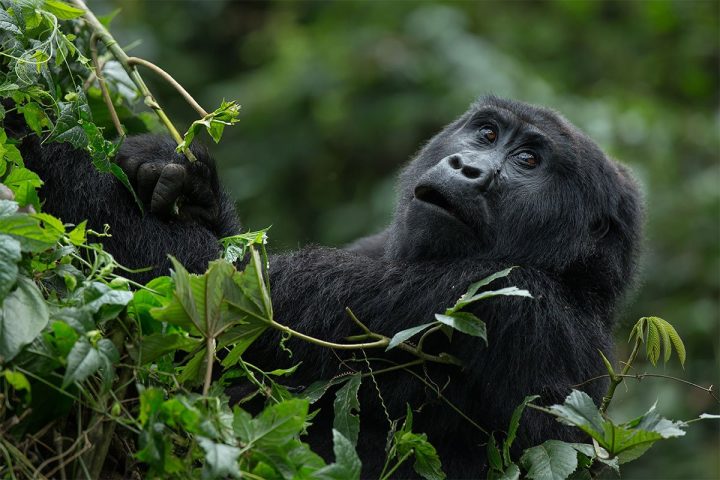
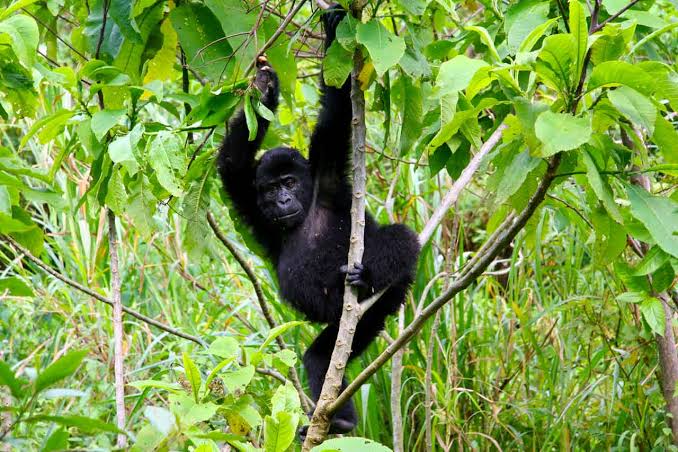
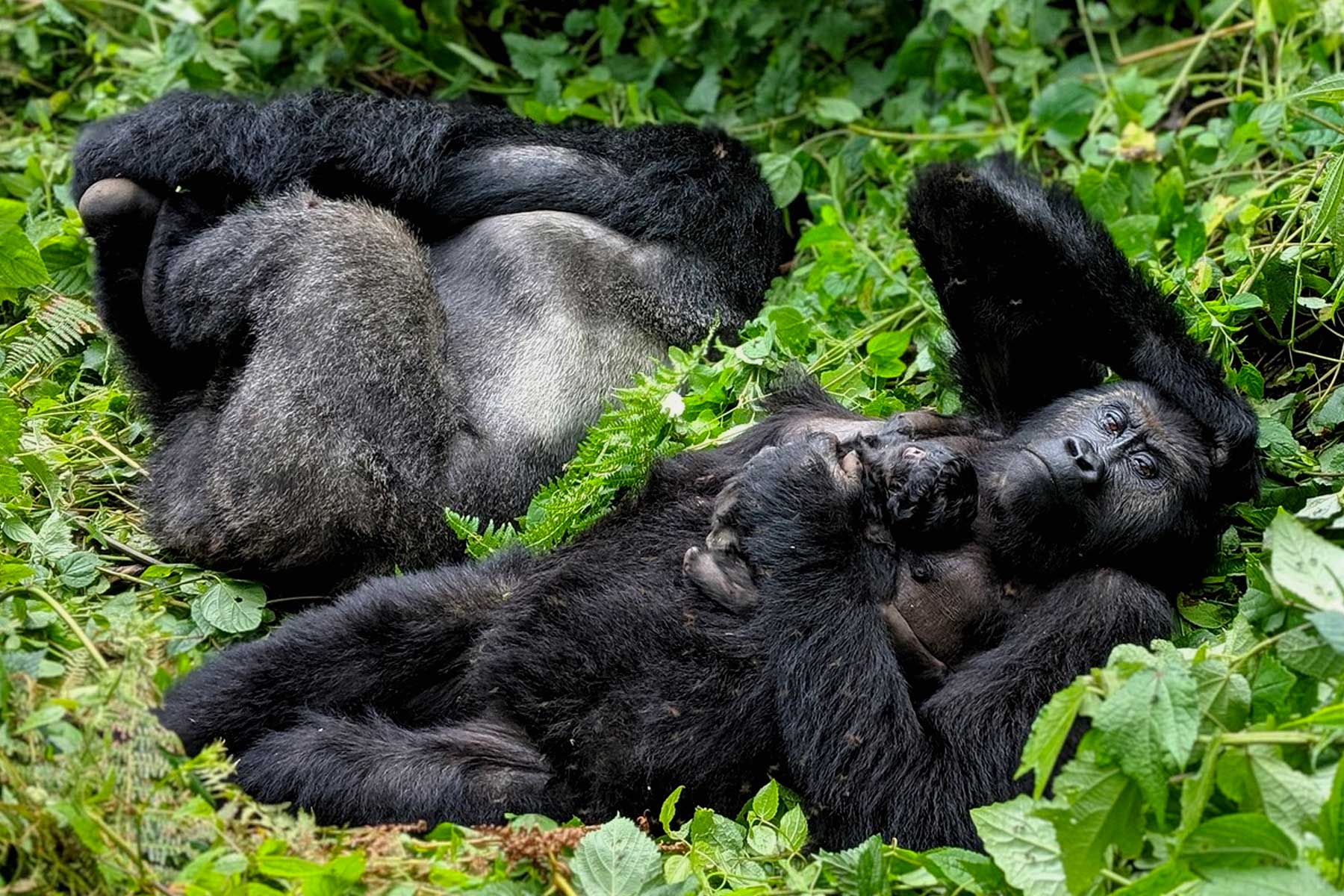
The Democratic Republic of Congo is the second-largest country in Africa, blessed with vast natural beauty, diverse wildlife, and a unique cultural heritage. The Democratic Republic of Congo is one of the few countries in which visitors can see both mountain gorillas and eastern lowland gorillas in their natural habitats in the world. As one of the few countries where the great apes can still be seen, this offers the most adventurous and rewarding gorilla trekking experiences in Central Africa. This remarkable experience is unique because it comes with fewer crowds and a raw, untouched wilderness setting. Gorilla trekking can be done in Virunga and Kahuzi-Biega National Parks.
Virunga National Park, located in eastern Democratic Republic of the Congo, is a vast protected area established in 1925, making it the oldest and first national park on the African continent. Known for its rich biodiversity and striking landscapes, the park, under Belgian colonial rule, was called Albert National Park, created to protect mountain gorillas living in the Virunga Mountains. Covering about 8,090 km², stretching from the Rwenzori Mountains on the border of Uganda down to the active volcanoes of the Virunga Massif near Rwanda, the park was designated a UNESCO World Heritage site in 1979 and a World Heritage site in danger in 1994 due to its diverse habitats, exceptional biodiversity, endemism, and vulnerable species, as well as civil unrest and increased human activity in the region.
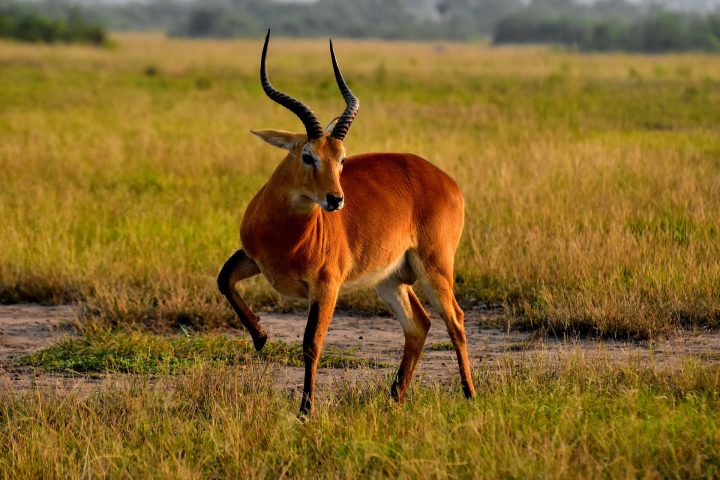
Virunga is famous for its population of mountain gorillas on top of over 200 mammals including eastern lowland gorillas, eastern chimpanzees, golden monkeys, olive baboons, colobus monkeys, red-tailed monkeys, dent’s mona monkeys, de brazza’s monkeys, grey-cheeked mangabeys, elephants, buffaloes, hippos, okapi, lions, bushbucks, waterbucks, red-fronted duikers, hyenas, giant forest hogs, topi, and many more; over 700 bird species like shoebill, African fish eagle, regal sunbird, strange weaver, kivu ground thrush, Rockefeller’s sunbird, Grauer’s swamp warbler, mourning collared-dove, Rwenzori turaco, forest ground thrush, grey herons, skimmers, grey-throated barbet, Angolan swallow, Rwenzori batis, alpine swift, African olive pigeon, greater and lesser flamingo, little grebe, northern pintail, red-billed teal, handsome francolin, tropical boubou, papyrus warbler, eastern grey plantain eater, egrets, pelicans, nightjars, swifts, and many more; 108 reptiles species like pythons, vipers, monitor lizards, geckos, chameleons, and many more; and 78 amphibian species like crocodiles, frogs, toads and many more. The park is not lacking, as it is one of the most biodiverse places on earth with a variety of plant and animal life.
Kahuzi-Biega National Park is located near the western shore of Lake Kivu and the border with Rwanda, covering 6,000 km², making it one of the largest parks in Congo. It was established in 1970 by Belgian photographer and conservationist Adrien Deschryver, who was motivated by the need to protect the eastern lowland gorillas and the park’s unique biodiversity. As a result, it was designated a UNESCO World Heritage Site in 1980. However, it was also listed as a World Heritage Site in Danger in 1997 due to regional political instability, an influx of refugees, and increasing wildlife exploitation. The park was named after Mount Kahuzi and Mount Biega, both extinct volcanoes, which give the park varied terrain with both low and high altitudes. Kahuzi-Biega features swamps, marshlands, and forests, with equatorial rainforests occupying the western parts of the park. Located in the Mitumba mountain range of the Albertine Rift within the Great Rift Valley, most of the park lies in lowland terrain.
Kahuzi-Biega national park protects quite a big number of diversity of mammals than any other park in the Albertine rift putting it at 136 species including the eastern lowland gorillas, chimpanzees, white and black colobus monkeys, red-tailed mangabeys, baboons, L’Hoest’s monkeys, vervet monkeys, blue monkeys, galago’s, elephants, buffaloes, antelopes, horseshoe bats, dwarf buffaloes, bongos, aquatic civets, aquatic genets, forest hogs and more; over 350 bird species like African green broadbill, Congo peafowl, Rockefeller’s sunbird, Rwenzori turaco, helmet shrike, yellow-chested helmet, handsome francolin, Shelley’s crimson-wing, trogons, red-eyed doves, African blacklist, long-crested eagles, bush shrike, brown-chested Alethe, African hill babblers, Ethiopian crimson-wing, red-faced cisticola and many more and 1,180 plant species.
Gorilla trekking is one of the most popular activities in the Democratic Republic of Congo, available in both Virunga and Kahuzi-Biega National Parks. The parks offer tourists a chance to get close to both mountain and lowland gorillas through tracking them. Lowland gorillas are larger compared to their relatives, the mountain gorillas, which adds an interesting aspect to look forward to. Trekking usually takes between 30 minutes and 6 hours, depending on the location of the family being tracked. Once located, tourists are given an hour to observe these large primates in their habitat. This can only be done after obtaining a permit with the help of a guide and ranger.
The best time for gorilla trekking is during the dry seasons of June to September and December to February. During this time, trekking conditions are reliable and comfortable as trails are less muddy, making it easier to hike, the forests are more accessible, and less mist, which makes viewing easier.