Nyungwe Forest National Park is one of national parks in Rwanda, covering approximately 1,019 km², is located in the southwestern part of Rwanda, in the western branch of the Great Rift Valley, near Rwanda’s border with Burundi and close to Lake Kivu. Nyungwe was designated as a national park in 2004 and officially confirmed in 2005; however, it had been a protected reserve since the early 1900s. Nyungwe Forest National Park became a UNESCO World Heritage Site in September 2023, making it the first site in Rwanda to be listed due to its biodiversity and conservation significance. This positions Nyungwe as a vital watershed between the Congo River basin to the west and the Nile River basin to the east, providing 70% of Rwanda’s fresh water. As one of Africa’s oldest and most biodiverse tropical montane rainforests, Nyungwe is celebrated not only for its rich wildlife but also for its unique landscape and cultural importance.
Nyungwe Forest National Park is home to over 1,000 plant species and 200 tree species, with its vegetation remaining relatively intact through climatic fluctuations, as it has adapted to the montane rainforest environment. The park also hosts 85 mammals, including 13 primates such as chimpanzees, L’Hoest’s monkeys, colobus monkeys, baboons, mona monkeys, golden monkeys, crowned monkeys, along with golden cats, giant forest hogs, mongooses, duikers, bush pigs, servals, elephants, buffalo, bushbucks, genets, and many more; over 300 bird species, many endemic to the Albertine Rift, such as regal sunbird, red-throated alethe, yellow-eyed black flycatcher, great blue turaco, Kungwe apalis, Rwenzori apalis, Albertine owlet, Rwenzori batis, handsome francolin, dusky crimsonwing, archer’s robin-chat, Neumann’s warbler, handsome spurfowl, red-faced woodland warbler, purple-breasted sunbird, mountain masked apalis, Abyssinian ground thrush, black saw-wing, dwarf honey-guide, and others; as well as reptiles, amphibians, and butterflies.
Attractions in Nyungwe National Park
Wildlife in Nyungwe national park
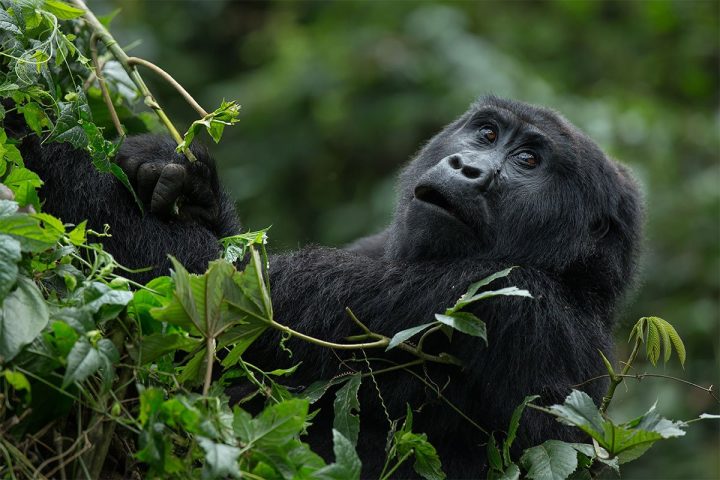
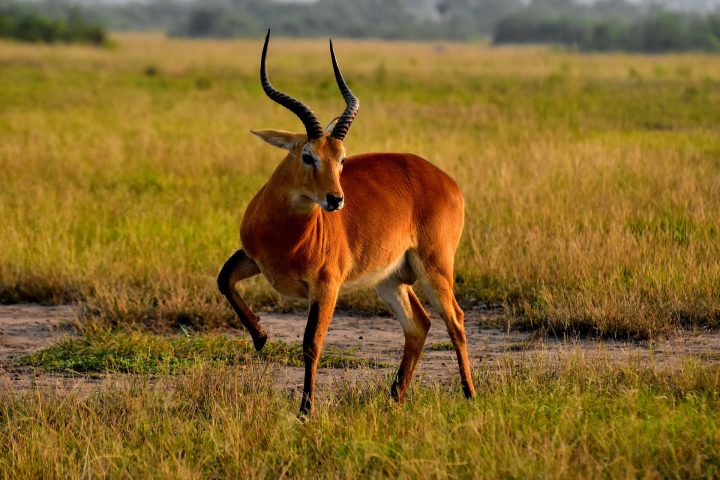
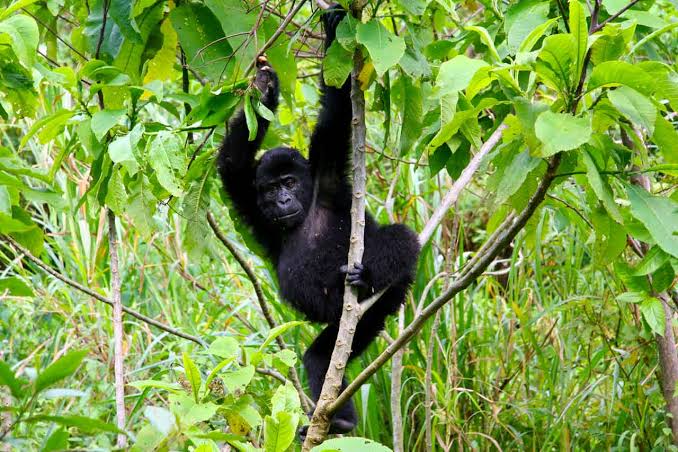
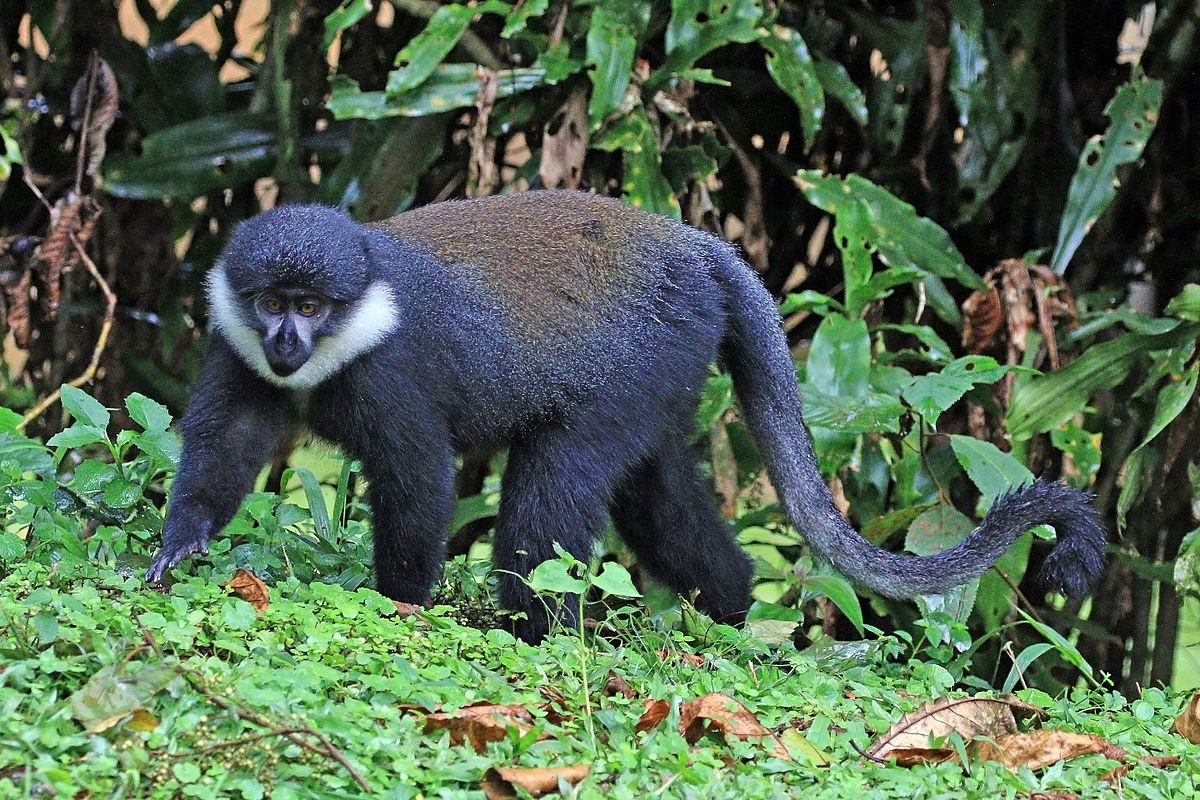
One of the biggest attractions in Nyungwe National Park is the diverse wildlife supported by the park’s location in the Rift Valley. Often called a primate haven, Nyungwe has 13 primate species, including chimpanzees, L’Hoest’s monkeys, colobus monkeys, baboons, mona monkeys, golden monkeys, crowned monkeys, Rwenzori black and white colobus, mangabeys, dent’s monkeys, and vervet monkeys with other mammals like elephants, duikers, bushpigs, giant forest hogs, squirrels, golden cats, servals plus rare spotting of leopards, and many more. Due to the cool, wet montane conditions, the park is home to a diverse array of reptiles and amphibians, including snakes, frogs, chameleons, and a wide range of butterflies, which add to the forest’s vibrant colors.
Birding in Nyungwe national park
Nyungwe National Park is one of the top birding destinations in Africa, with over 300 bird species recorded, including endemics. The diverse habitats available for birds to flourish make the park an important site for bird conservation. Expect to see birds like the great blue turaco, Rwenzori turaco, Grauer’s swamp warbler, red-collared mountain babbler, dusky crimsonwing, handsome francolin, purple-breasted sunbird, Archer’s robin-chat, Neumann’s warbler, handsome spurfowl, red-faced woodland warbler, mountain masked apalis, Abyssinian ground thrush, black saw-wing, dwarf honey-guide, Kungwe apalis, white-tailed crested flycatcher, Rockefeller’s sunbird, stripe-breasted tit, and many more. Rare, colorful, and endemic birds create a stunning variety that makes the park a must-visit for both serious birders and casual visitors.
Landscapes in Nyungwe national park
Nyungwe National Park is filled with several landscapes that are an attraction in their own right, different from the country’s savannah parks. The park has swamps like Kamiranzovu, rainforest canopy, Mount Bigugu, and many more that offer a beautiful backdrop for both wildlife viewing and hiking. The mountainous terrain, lush vegetation, and misty atmosphere ensure that the park offers panoramic views from all angles. The mix provides scenic beauty and habitats that support the park’s biodiversity.
Activities in Nyungwe national park
Chimpanzee trekking in Nyungwe national park
Chimpanzee trekking is one of the most popular and exciting activities in Nyungwe National Park, as it offers visitors the chance to see chimps in their natural habitat. Nyungwe has two main trekking trails: the Uwinka area and Cyamudongo Forest. Trekking begins as early as 5:00 am because chimps are most active at dawn; at the headquarters, visitors will be briefed before setting out into the forest with a guide, tracker, and ranger. Once located, visitors will spend about an hour with the chimps, observing them feed, groom, climb, play, and nest in their home. The treks last between 2 and 6 hours, depending on the chimpanzees’ location, and groups are limited to eight members, each with a chimpanzee permit issued by the Rwanda Development Board. Beyond the chimpanzees, visitors can also see other wildlife, such as black and white colobus monkeys, grey-cheeked mangabeys, olive baboons, red-tailed monkeys, blue monkeys, vervet monkeys, duikers, bushbucks, bushpigs, and many more. Birdwatching options include species like Grauer’s warbler, Rwenzori apalis, great blue turaco, purple-breasted sunbird, yellow-eyed black flycatcher, Ruwenzori batis, handsome francolin, Albertine owlet, and others.
Canopy Walk in Nyungwe national park
Another iconic attraction in Nyungwe National Park is the canopy walk, which provides a unique perspective of the forest. The walkway extends for about 160 meters, hanging at an elevation of 50-70 meters above the forest floor, giving visitors a bird’s-eye view of the dense Nyungwe. Accessed via the Igishigishigi trail, visitors start at the Uwinka visitor center and are guided, receiving information about the forest’s ecology and other relevant details. The trail is relatively short, taking approximately 2-3 hours, and during the walk, visitors can see primates, butterflies, birds, valleys, and endless treetops, offering an amazing experience since the walkway provides a rare chance to explore the forest from above. Visitors should wear proper clothing to make their hike easier and carry a permit, which is issued at the visitors’ center.
Guided nature walks in Nyungwe national park
A guided nature walk is one of the best ways to deeply connect with and appreciate Nyungwe National Park, revealing its vast, complex, and hidden details over time. This is facilitated by a guide and ranger who will make the walk easier, provide any information the visitor desires, and ensure safety throughout. The walks don’t just focus on wildlife, but also on vegetation, plants, and other small forest creatures, which can be explored along trails like Igishigishigi, Umoyove, Isumo, Kamiranzovu, and Bigugu. Guided nature walks last anywhere from 1 to 8 hours, depending on the visitor’s preference, with variations in trail difficulty. During these walks, you might spot wildlife such as chimpanzees, black and white colobus monkeys, L’Hoest’s monkeys, golden monkeys, red-tailed monkeys, crowned monkeys, vervet monkeys, grey-cheeked mangabeys, olive baboons, and many more; birds like Rwenzori turaco, blue-headed sunbird, red-collared babbler, handsome francolin, Rwenzori batis, yellow-eyed black flycatcher, dusky crimsonwing, red-throated alethe, among others; as well as butterflies, snakes, and frogs, with towering trees, lianas, and epiphytes.
Birding in Nyungwe national park
Nyungwe National Park is home to over 300 bird species and is an Important Bird Area, making it a top birding destination in Africa. Visitors will be in a position to spot birds like Rwenzori turaco, red-collared mountain babbler, Albertine owlet, dwarf honeyguide, Grauer’s swamp warbler, great blue turaco, regal sunbird, barred long-tailed cuckoo, handsome francolin, dusky crimsonwing, Rwenzori batis, yellow-eyed black flycatcher, strange weaver, Kungwe apalis, bar-tailed trogon, crowned hornbill, lemon dove, red-eyed dove, and many more, along with some wildlife like monkeys, baboons, mangabeys, duikers, giant forest hogs, and many more. Bird watching can be done via trails like Karamba, Bigugu, Gisakura, Kamiranzovu, and Isumo waterfall, led by an experienced guide who will educate the visitors about the birds and respond to any questions that may arise for about 1-3 hours.
Primate tracking in Nyungwe national park
This is another activity that can be enjoyed in Nyungwe National Park, offering encounters with some captivating monkeys. The park is home to 13 different primate species, one of the highest in Africa, and is famous for the Rwenzori black and white colobus monkeys. However, during the tracking, primates like chimpanzees, black and white colobus monkeys, L’Hoest’s monkeys, grey-cheeked mangabeys, red-tailed monkeys, silver monkeys, olive baboons, vervet monkeys, and blue monkeys can be spotted much as the black and white colobus monkeys being the main star of the show. The tracking is led by experienced park rangers who know the forest, the primates’ homes, and their habits. Once a group is found, visitors can observe the primates in their natural habitat, like feeding, grooming, social interactions, and movement through the forest. The trails for this particular kind of tracking are Uwinka, Kamiranzovu swamp area, and Bigugu, with the tracking taking 1-4 hours depending on the location of the primate groups.
One finding their way to Nyungwe National Park can be achieved via the road or air, as the park is about 225km from Kigali, near the borders of Burundi and the Democratic Republic of Congo. The most common is by road, and the drive takes about 5-6 hours, depending on the stops, and it is an adventure as the route is through Rwanda’s scenic countryside with multiple viewpoints over the rolling hills and tea plantations. However, RwandAir also offers domestic flights from Kigali International Airport to Kamembe Airport in Rusizi, which is 40minutes. Once in Rusizi, one takes a car, and the drive is only an hour to the park. Both versions will give you the beautiful views of Rwanda.
Nyungwe National Park can be visited all year round; however, the visitors’ desire or need determines the best time to visit. The park, being a montane rainforest, is best to visit during the dry seasons of June to September and December to February, as the cool climate means rain is possible at any moment. Plus, the trails are dry, making trekking or hiking easy, and viewing wildlife easier with the vegetation less dense.