Semuliki National Park is one of Uganda’s ten National Parks situated in the western region encompassing an area of about 219 square kilometers of East Africa’s only lowland tropical rainforest. This National Park lays on Uganda’s border with the Democratic Republic of Congo with the Rwenzori Mountains lying to the southeast of the Park while Lake Albert is to the Park’s north.
Semuliki National Park also lies within the Albertine Rift along the western arm of the East African Rift. The history of Semuliki National Park dates back in 1932 when it was first established as a forest reserve aiming to control sleeping sickness and yellow fever by evacuating forest villages.
Later in 1993, the area was upgraded to a National Park, formally recognized as a protected area under the Uganda Wildlife Authority being driven by the need to protect the region’s unique biodiversity particularly the lowland tropical rainforests which is the only one of its kind in the entire East Africa. This National Park is currently a significant conservation area showcasing East Africa’s only lowland rainforest and attracting several visitors from all over the world with its diverse wildlife species and its distinctive geological features such as the hot springs and many others.
Attractions in Semuliki National Park
Mammal species
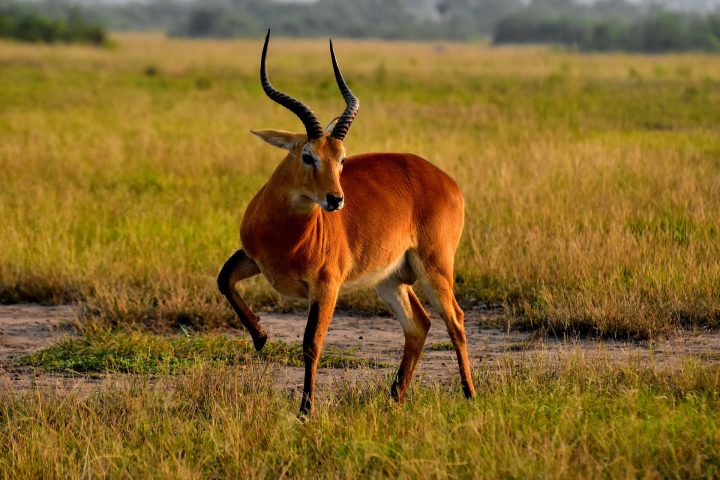
Semuliki National Park is a biodiversity hotspot housing up to 120 mammal species some of which include elephants, hippopotamuses and crocodiles that thrive along the Semuliki river, bushbucks, giant forest hog, warthogs, waterbucks, Uganda kobs, buffaloes, pygmy squirrels, little collared fruit bats, over nine species of duikers, beecroft’s flying squirrel, pygmy antelopes, water chevrotain, over six types of bats to mention but a few. The Park also protects several primate species for example olive baboons, chimpanzees, black and white colobus monkeys, red-tailed monkeys, grey-checked Mangabeys, vervet monkeys, blue monkeys and many others.
Bird species
Semuliki National Park is particularly known for its bird life with over 441 recorded bird species. These include 35 Guinea-Congo forest biome species such as the hartlaub’s duck, 12 species with extremely restricted ranges like the yellow-throated cuckoo, rare raptors like the Congo serpent eagle and 23 Albertine Rift endemics. The Park is well-known for its diverse hornbill populations most notably the black-casqued wattled hornbill, black dwarf hornbill, white-crested hornbill, red-bellied dwarf hornbill, piping hornbill and many more. The birding diversity is more stimulated by numerous migratory bird species that storm the Park in the months of November to April.
Sempaya hot springs
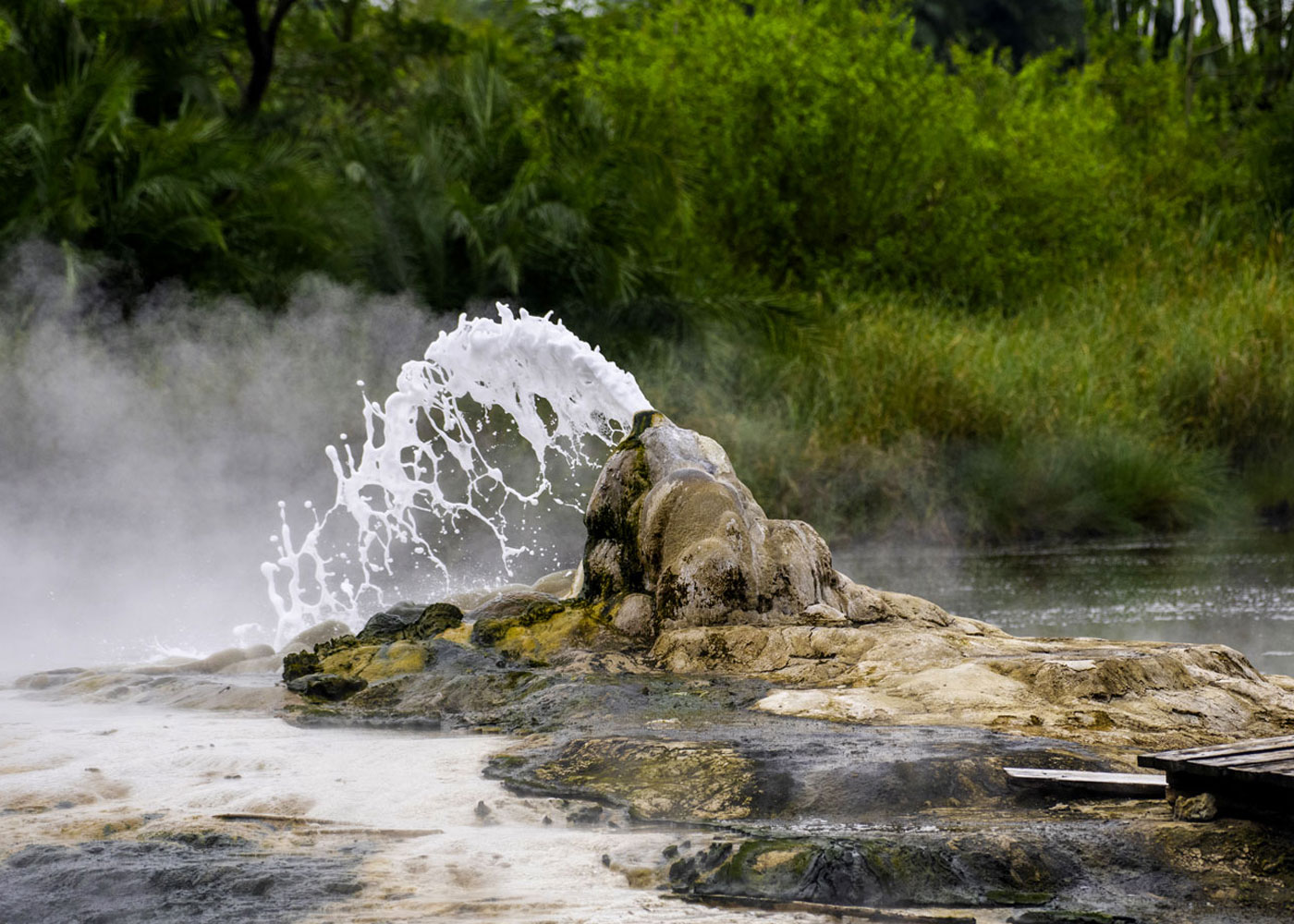
This is one of the Park’s most famous attractions known for its boiling water that bubbles up from deep underground releasing steam and smoke. The Park hosts two hot springs locally referred to as male and female hot springs namely Bitente and Nyasimbe respectively. This is a significant spot to the local residents that often visit these hot springs for healing with a belief that there are secret gods in this place who will eventually administer healing upon them. These hot springs reach temperatures hot enough to boil food items such as cassava, matooke, Irish potatoes and most preferably eggs that are often boiled by visitors. It is said that the male hot spring formed before the female hot spring and they are locally known to have been a married couple according to the myth behind them. This married couple disappeared within the forests but later on Bitente emerged as a hot spring and his wife Nyasimbe also emerged later as a female hot spring as she was trying to locate her husband.
Lake Albert
This Lake is a large freshwater lake in the Albertine Rift Valley that defines the Park’s northern and western borders. Lake Albert is therefore a key natural feature of the Park that supports a diverse ecosystem including various mammals, bird species, reptiles and others. This tranquil Lake is the only spot for boat rides in Semuliki National Park popular for bird watching and spot fishing within the Park.
Mungiro falls
Distinctive ethnic groups
The area around Semuliki National Palace is a home to four distinct and indigenous ethnic groups namely the Bwamba farmers that cultivate the land at the base of the Rwenzori Mountains, the Bakonjo people that cultivate the slopes of Mountain Rwenzori growing crops like bananas, rice, cocoa, potatoes and many more, the Batuku cattle keepers and the Batwa pygmies who are originally hunter gatherers from the Ituri forests and currently reside on the forest edges preserving their ancient culture and traditions.
Activities in Semuliki National Park
Game drives
Game drives in Semuliki National Park offers an opportunity for visitors to spot up to 52 mammal species roaming the Park’s grasslands namely bushbucks, giant forest hog, warthogs, waterbucks, Uganda kobs, buffaloes, pygmy squirrels, little collared fruit bats, over nine species of duikers, elephants, crocodiles, hippopotamuses to mention but a few. The Park specifically has three major tracks that are used for game drives passing through the Park’s savannah plains. Both day and night game drives are possible in Semuliki National Park done in a 4 wheel drive vehicle with a pop-up rooftop for the best vintage views.
Bird watching
Semuliki National Park is one of the best bird watching destinations in Uganda known to house several bird species from the Democratic Republic of Congo since the Park extends to the Ituri forests of DRC that stretch up to River Zaire. Therefore a variety of bird species move into Semuliki National Park which automatically increases on the Park’s bird checklist. Bird watching in the Park is best done around the Sempaya hot springs, in the forest and behind the Rangers post. A few of the bird species to look out for include the African wood owl, buff-spotted flufftail, Zenker’s Honeyguides, yellow-throated nicator, white-throated blue swallow, white-belied kingfisher, western bronze-napped pigeon, spot-breasted ibis, simple greenbulls, red-thighed sparrowhawk, red-bellied Malimbes, piping hornbills, northern bearded scrub, Maxwell’s black weaver, Ituri batis, grey ground thrushes, Gabon woodpeckers to mention but a few.
Cultural and community encounters
Semuliki National Park is surrounded by up to four ancient indigenous tribes that visitors can choose to visit for a cultural experience of a true indigenous African culture. These include the Batwa, Bakonjo, Bamba and the Batuku that still hold the ancient traditions and cultural values. Visitors are led by local guides into the local communities for an insight into their culture, traditions and their way of lifestyle. They learn about the local people’s way of living such as farming, cattle grazing and how the Batwa lived as hunters and fruit gatherers in the Ituri forests.
Nature walks/ forest walks
Nature walks and forest walks are one of the other ways one can thoroughly explore the Park. A variety of forest mammals, birds, butterflies and plant species are easily spotted during nature walks through the Park. The Park has three major trails namely the Sempaya nature trail, the Red-monkey track and the Kirumia hiking trail. Nature walks usually start with a briefing from the ranger guide with the walk beginning from around the Semuliki Park gate and ending at the Sempaya hot springs.
Visiting the Sempaya hot springs
The Sempaya hot springs are one of the Park’s major tourist attractions from all over the planet that are fascinated by the local story of their formation rather than their geographical theories. The most interesting part of a visit to these Sempaya hot springs is that visitors can easily boil food items in the springs’ bubbling hot water that is known to boil up to 103 degrees Celsius. Food items that are usually boiled in these hot springs more so the female one include eggs, matooke, irish and others. The hot springs are now easily accessible through a raised board trail that even enables one to spot the hot springs in a safe distance. Several wildlife species are easily encountered along a hike to the Sempaya hot springs and these include primate species, birds and plant species.
Primate viewing
Semuliki National Park is a haven to a several primate species that can easily be spotted and watched by visitors that are primate enthusiasts. Primates that are easily seen include the DeBrazza’s monkeys, black and white colobus monkeys, olive baboons, red-tailed monkeys to mention but a few. It is easier to see these primate species in large numbers during the rainy season when fruiting fig trees are in abundance.
Best time to visit Semuliki National Park
Semuliki National Park is open for visits all year round but the best time is during the dry season in the months of June to September and December to February. These periods of the year offer the most favorable conditions for wildlife viewing, nature walks, making hikes to the hit springs and many other activities since the trails are dry and easy to navigate. However the Park receives heavy rains in the months of March to May and October to November that often make roads and trails muddy and difficult to traverse though the forests in the Park are lush during this period of the year making bird watching particularly rewarding due to migratory species that storm the Park.