Volcanoes national park is a prominent national park located northwestern of Rwanda, near the town of Musanze at 160km2 originally established in 1925 making it one of the oldest parks in Africa. The park is home to five of the eight volcanoes in Virunga which are Karisimbi, Bisoke, Muhabura, Gahinga and Sabyinyo and is known for its unique landscapes and diverse wildlife. Volcanoes national park is one of the only three parks in the world where visitors are able to view the endangered mountain gorillas.
Volcanoes National Park was established as Albert National Park, named after King Albert I of Belgium. It was created to protect the mountain gorillas from poaching and encroachment in 1925 making it one of the first national parks in Africa. In 1929, the park was extended into the Belgian Congo (Democratic Republic of Congo), covering an extensive area of the Virunga Mountains. The park was later divided following the independence of Rwanda and Congo in the 1960s. The Rwandan section became known as Volcanoes National Park, while the Congolese portion was named Virunga National Park.
Dian Fossey, an American primatologist, arrived in the park to study mountain gorillas in 1967 and established the Karisoke Research Center between Mount Karisimbi and Mount Bisoke. Her work brought international attention to the plight of the mountain gorillas. In the 1970s and 1980s, Fossey’s research highlighted the severe threats to mountain gorillas from poaching and habitat destruction. Her efforts, often controversial, were pivotal in bringing about stronger conservation measures. Dian Fossey was tragically murdered in 1985, presumably by poachers or individuals opposed to her anti-poaching efforts. She is buried at the research center she founded.
Volcanoes national park is renowned for its rich biodiversity, encompassing a wide variety of flora and fauna. The park boasts diverse vegetation types that vary with altitude and topography. The park has bamboo forests covering about 30% of the park which is crucial for the mountain gorillas, African redwood, sub-alpine and alpine zone.
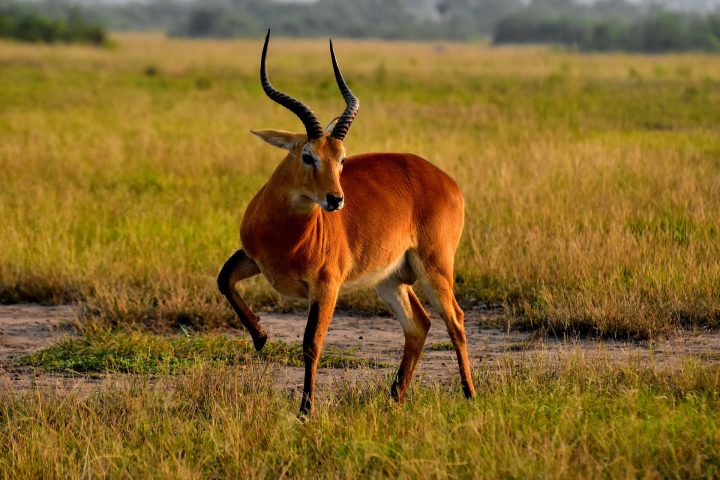
Much as the park is known for the mountain gorillas and golden monkeys, it also supports a wide variety of other species for both mammals and birds including buffaloes, elephants, bushbucks, giant forest hogs, bush pigs, hyenas, civet cats, leopards, golden cats, duikers, serval cats and birds like Ruwenzori batis, Ruwenzori apalis, dusky crimsonwing, grauer’s swamp warbler, handsome francolin, strange weavers, Rwenzori turaco and many more. The landscape is very ideal and stunning for various avian life and animals.
Attractions
Primates
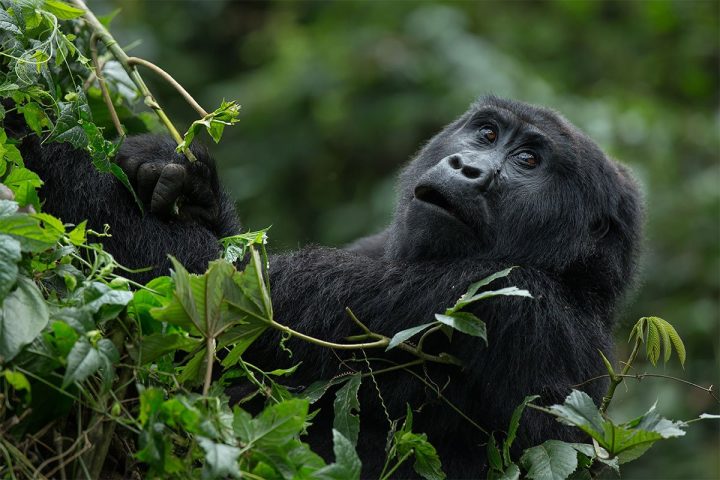
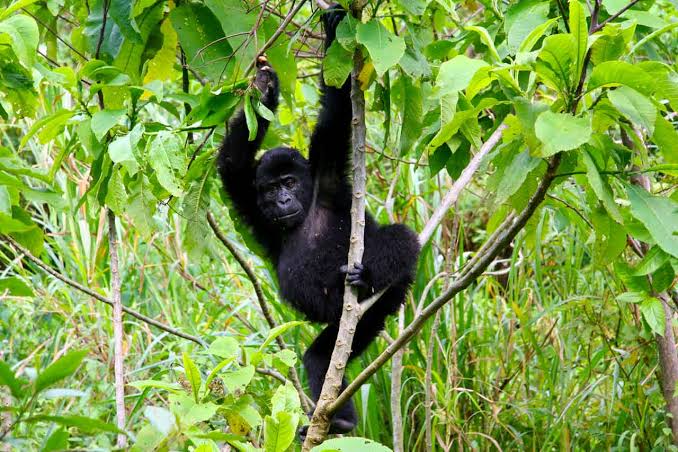
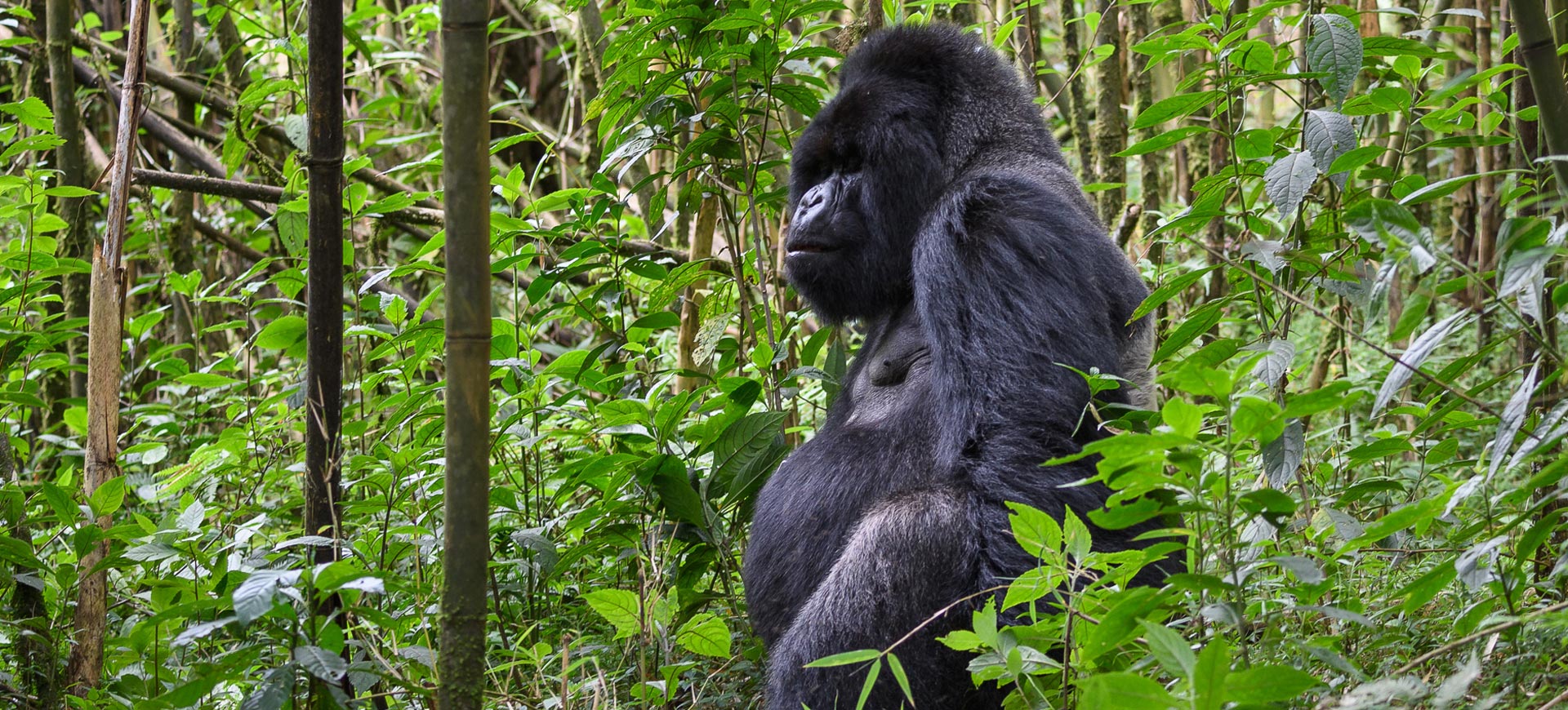
Volcanoes national park has the magnificent mountain gorillas and golden monkeys which are both endangered. These primates call the park home and its rich biodiversity comfortably supports them together with other primates like baboons and monkeys. These can be tracked by tourists and this would get the tourist a chance to get intimate with the primates once located.
Volcanoes
The Virunga volcanoes are also popular with 5 of them inside the park which are Mount Karisimbi, Bisoke, Muhabura, Gahinga and Sabyinyo. All with a meaning in regards to Kinyarwanda creating a beautiful scenery and also home to the endangered primates and other mammal and bird species in the park.
Dian Fossey was brave and determined to fight poaching especially mountain gorillas, an effort she died defending making her tomb or burial site worth a visit as she ensured the longevity of protecting animals with more concentration towards the majestic mountain gorillas. She did her best to encourage the comfort of the mountain gorillas amongst the humans and for that many pay her homage for her efforts.
Are among the scenic highlights near Volcanoes National Park in Rwanda. These lakes are known for their picturesque beauty and serene environments, providing a tranquil escape for tourists. A boat cruise through these deep waters is a sight as you get to view birds, amazing landscape and waterfalls as you mingle with the locals about the history and heritage of the area and the people who live in the area.
Activities
Is the most popular activity in the park, with 11 habituated gorilla families, tourists embark on the exciting journey of trekking with viewing the mountain gorillas as the main purpose. Tourists are briefed about how to behave while trekking and when the families have been seen, once located, one is given an hour with the gorillas to see how they live, nest, care for each other and the young and also take pictures to retain the memory of the experience. Trekking the gorillas takes about 3-5hours depending on the location of the desired family and sometimes one is lucky to take part in the naming of the new additions to the gorilla families with the help of guides and rangers.
Golden Monkey tracking
Tracking Golden monkeys has become popular over the years and is also another activity for one to be involved in. With a group having about 100 individuals led by a dominant male, this can be done with high chances of spotting the monkeys as it is less strenuous as they prefer lower altitudes even in search of food. Once located, one has an hour to observe the monkeys in their habitat plus taking pictures; all this is done with a guide.
Visiting the Dian Fossey tomb
The history behind Dian Fossey and her efforts to preserve and protect the animals especially the mountain gorillas made her death a big blow to the primate community so tourists pay homage to her tomb as a way to credit her for bravery while fighting for the primates to have a home and be safe from harm and this is done through a trek to the site of the Karisoke Research Center, established by Dian Fossey, and her tomb. A tourist can view the endangered mountain gorillas, golden monkeys, mammals and birds in the process.
Guided nature walks
These nature walks are arranged and done either in the Musanze caves and or the twin lakes of Burera and Ruhondo. This provides opportunities to view the beautiful lake views, bird watching and interest in the geological experience and glimpse into the region’s volcanic past. There is a possibility of seeing some mountain gorillas, golden monkeys, elephants, duikers, bushbucks and giant forest hogs together with birds like dusky crimsonwing, grauer’s rush warbler, handsome francolin, Rwenzori turaco, archer’s round-robin and more.
Birding
The park is a perfect birder’s haven therefore tourists will get to enjoy the avian life available including the common, migratory and endemics. With over 200 bird species, one has a chance to see multiple birds with the help of a guide who has all information needed about the birds. Guided bird-watching tours can be organized to spot various species, including some that are endemic to the region like African green broadbill, kivu ground thrush, Ruwenzori batis, black cuckoo, archer’s robin char, Ruwenzori turaco, red-chested sunbird, honey guide, handsome francolin, collared apalis, dusky crimsonwing, dusky turtle dove, bateleur and many more with morning as the best time for bird viewing as more birds are freshly active for the day. In addition one can spot animals like buffaloes, bushbucks, butterflies and primates.
Mountain climbing
The park is home to 5 of the 8 Virunga volcanoes and climbing is done on four of them as Sabyinyo has sharp ridges making it impossible for one to climb it. This leaves Mount Karisimbi, Bisoke, Muhabura and Gahinga with Gahinga as the shortest all providing beautiful views and scenery. Expect to see elephants, buffaloes, duikers, bushbucks, bush pigs, hyenas, black and white colobus monkeys, baboons and red-tailed monkeys with birds like Ruwenzori batis, Ruwenzori turaco, strange weavers, sunbirds, bushshrike, honeyguides and many more.
Community tours
Tours of nearby villages provide insights into rural Rwandan life and the integration of community-based conservation efforts. These tours often include visits to schools, farms, and local markets, showcasing the daily lives of local residents. Iby’iwacu cultural village is one of the most sought after community in the area as the village offers a deep dive into Rwandan traditions including dance, music and crafts. Visitors can participate in traditional activities and interact with the local community to learn about their customs and way of life and for a full experience a local guide is used.
Volcanoes National Park offers a diverse range of activities, ensuring a rich and fulfilling experience for every visitor, whether you are seeking adventure, wildlife encounters, or cultural immersion. And the best time to visit is during the dry months which are June-September and December-February which also makes movement a lot easier.