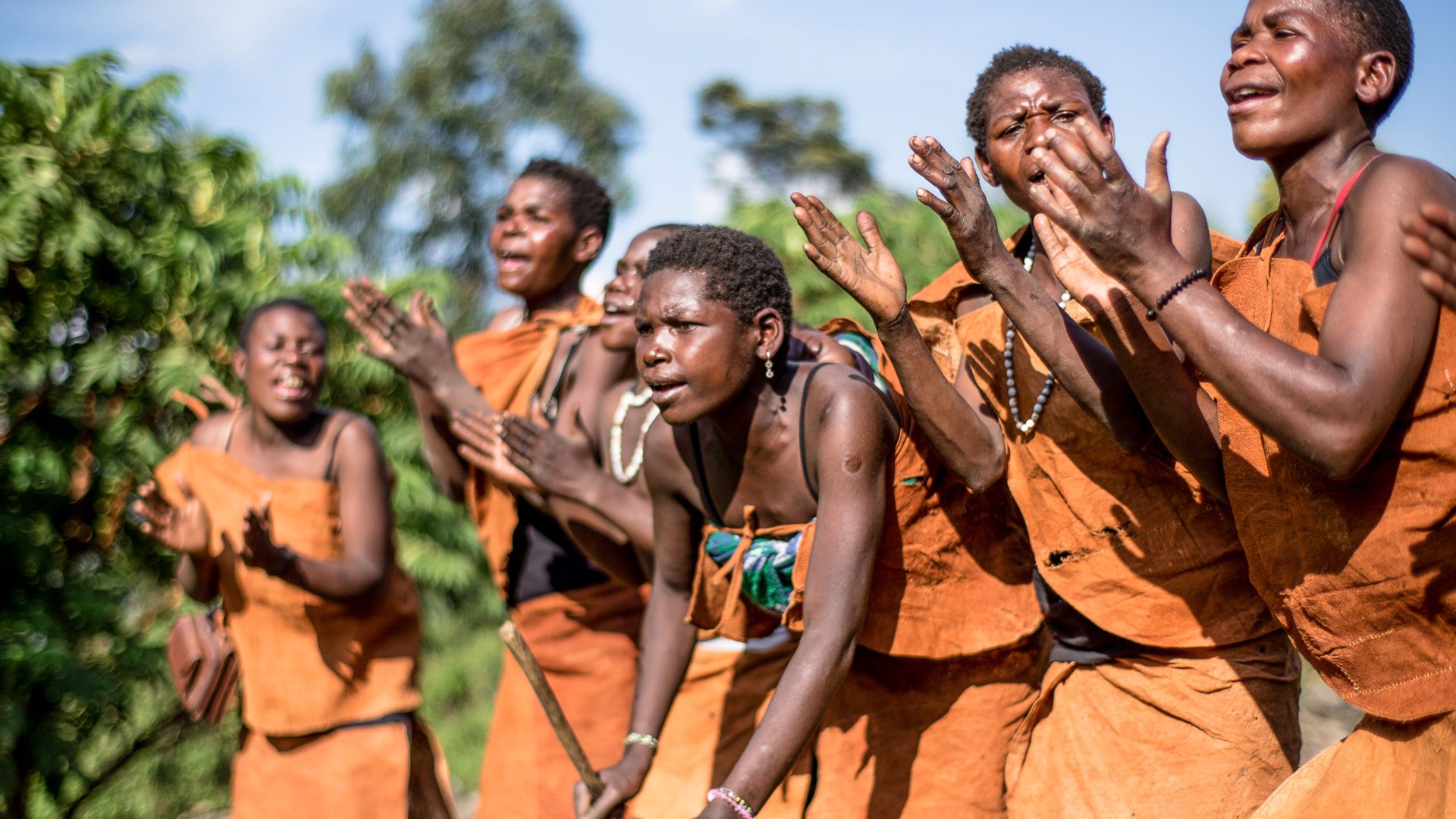
The Batwa culture is an inherent culture that every tourist desires to know about and explore visiting the one of the poorest cultures in the world made of the shortest people that live a peaceful and harmonious life.
The Batwa people belong to the Pygmies ethnic group that grow up to 1.5M high, spending all their life in the forests. In Uganda they can be found in Bwindi Impenetrable National park and in Mgahinga National park, in DRC, they are found in Kivu around the boarders of DRC with Uganda and Rwanda.
The Batwa are known as the “Twa”, a name that identifies them as members of the pygmies ethnic group for over 60,000 years guarding the forests, an activity that made them to term themselves as “keepers of the forest”.
The Batwa valued the forests very much as they were homes to them, source of food through fruit gathering and wild honey collection and most of all, home of the spirits who always were prayed to for protection.
Life was smooth till the arrival of the Bantu who came in with cattle, a life of hunting down the wild animals for meet, cutting down trees which disturbed the Batwa so much but still kept peace for as far as 1992.
The Batwa were displaced from the forests of Bwindi in 1992 to the outskirts of the park with out any single compensation, claiming that they were hunters of the wild and the park was being designated for the conservation of the wild mountain gorillas and the ecological diversity.
This was a sorrowful moment for the Batwa leading to their cultural decline, only to be restored in 2011, when the United States Agency for International Development (USAID), UNITED Organization for Batwa Development (UOBDU), Uganda Wildlife Authority (UWA), Netherlands embassy in Uganda and other non government organizations joined efforts and restored the Batwa culture through the Batwa cultural trail that was established on 7th June 2011.
The trail follows the traditional culture of the Batwa right from the king’s palace in the caves, down to the life of a local mutwa. The Batwa cultural experience was set up for tourists to enjoy the Batwa culture and to keep the Batwa culture living.
Who are the Batwa?
Before a drive into the Batwa culture, you may ask yourself “who the Batwa are?” Just at your door step is a 1.5m high human. The Batwa are the shortest people in the world belonging to the Pygmies, one of the first indigenous cultures to live in south-western Uganda.
The Batwa spent all their lives in the forests collecting wild honey and gathering fruits. Females in the Batwa culture are know for their high fertility rate and unity for all the Batwa as they all work together for the well being of their society.
The Batwa culture Back then and Today
Originally, the Batwa or the Twa were keepers of the forests who migrated from Ituri forest of Congo and settled in the forests of South-western Uganda in the present day Bwindi Impenetrable national park and Mgahinga national park. While in the forests, the Batwa had a saying “A mutwa loves the forest as he loves his body” which meant that the forest was life for the Batwa.
They survived by gathering fruits in the forest, collecting wild honey from the sting less bees and the honey bees, making fire by rubbing two dry sticks and the fire was used for cooking and for protection from attack of the wild animals, the trees provided shelter and herbs that were used for treatment of all kinds of diseases.
Each tree and grass to the Batwa in the forest had a vital value such as the grass used to burry the dead. The forests were worshipping grounds for the Batwa ancestral spirits that they believed blessed the hunting, the day and offered protection on a daily basis.
The Batwa culture is so unique that however much it changed over time from the time of the Batwa eviction in 1992 from the forests in Bwindi and Mgahinga, the Living Batwa still carry on some of the cultural traits of a true Mutwa in size, fire making, wild honey collection, praying to forest Gods to bless the day when going for a hunt and most of all, the current Batwa still live in the forest all thanks to UWA,USAID, UOBDU and all other organizations that are offering support to the Batwa in and around Bwindi and Mgahinga national parks since 2011. The Batwa today adopted the culture of drinking alcohol which they very much prefer whenever they are visited and while they tell stories around the fire places.
Batwa as well have cultural crafts that symbolizes a mutwa culture which are made and sold by the women and the children since the men are now responsible for hunting, farming with some stronger women along, and gathering fruits as a way of survival.
Where to go for the Batwa culture and cultural experience?
The Batwa can only be found in Bwindi impenetrable national park and Mgahinga national park of South-western Uganda, and thousands of them at the boarders of DRC, Rwanda and Uganda in south-west since it is where the Forests favorable for their survival are accessible.
Best time for Batwa cultural experience in Uganda
Uganda is a free country open for tourism year round for all tourists wishing to participate in the life of the Batwa people. Bwindi impenetrable national park and Mgahinga gorilla national park are the only places for the Batwa cultural experience in Uganda, most preferably in the dry season the runs from June to September then from December to February. The two dry seasons .may receive some small amount of rain once in a while since the Batwa occupied the rainforest areas that may not be completely dry, however, these are the peak seasons of the tourism industry, bookings should be made earlier to avoid inconveniences and make the safari the best ever.