
Bwindi Impenetrable National Park is situated in the southwestern region of Uganda on the edge of the Rift Valley along the border with Democratic Republic of Congo covering an area of about 331 square kilometers. Bwindi Impenetrable National Park is a UNESCO World Heritage Site renowned for protecting approximately half of the entire world’ remaining mountain gorilla population making it a popular destination for mountain gorilla trekking. This National Park was first gazetted in two blocks of Bwindi Impenetrable forest namely the Northern and Southern blocks that were designated as Crown Forest Reserves in 1932 that stretched on an area of about 298 square kilometers. The Northern block was therefore designated as the Kayonza Crown Forest Reserve and the Southern block designated as the Kasatora Crown Forest Reserve. These two Reserves were later combined, enlarged and renamed the Impenetrable Central Crown Forest in 1942 under the joint control of the Ugandan government’s game and forest department. In 1964, the Impenetrable Central Crown Forest was turned into an animal sanctuary in order to protect the mountain gorillas and renamed the Impenetrable Central Forest Reserve. The Impenetrable Central Forest Reserve was later designated as a National Park in 1991 and named Bwindi Impenetrable National Park and the Batwa pygmy people were evicted from the forests and never permitted to access the Park or its resources. The Park was declared to protect a range of wildlife species most notably the mountain gorillas. Other species include primates such as olive baboons, L’Hoest’s monkeys, black and white colobus, nocturnal apes like the pottos and galogos, bird species, other mammals like forest elephants, bush pigs, duikers to mention but a few as well as several butterfly species. Bwindi Impenetrable National Park is made up of four gorilla sectors namely Buhoma in the north, Ruhija in the east, Rushaga and Nkuringo in the south. All these four sectors are renowned for protecting over 21 habituated gorilla families readily available for trekking.
Attractions in Bwindi Impenetrable National Park
Mountain gorillas in Bwindi Impenetrable Forest National Park
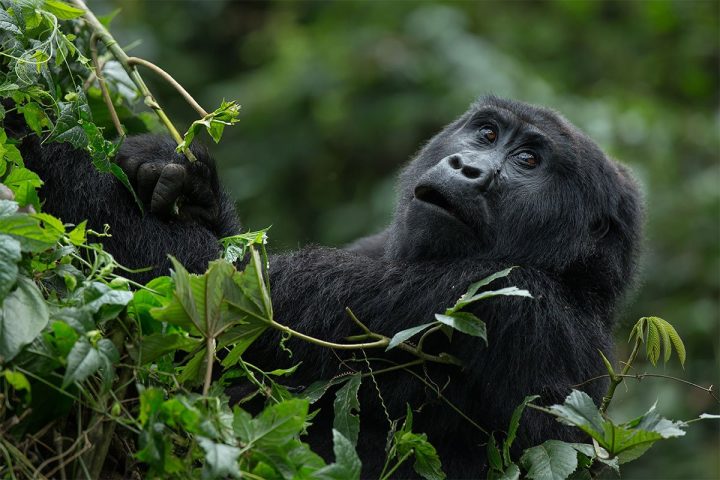
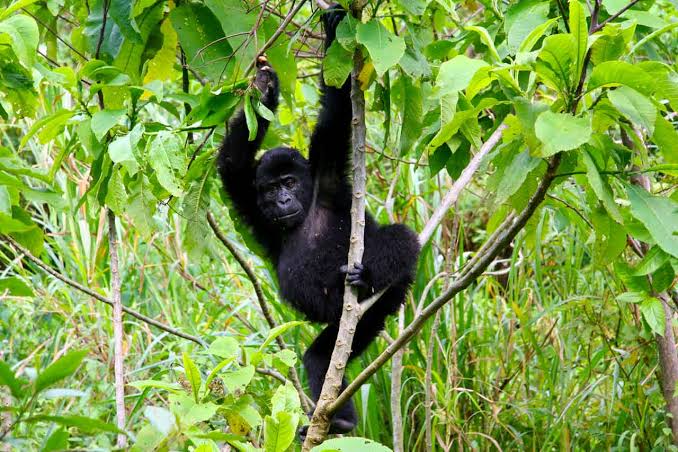
Mountain gorillas are the top tourist attractions in Bwindi Impenetrable National Park and about half of the remaining mountain gorilla population is known to live within the Bwindi impenetrable forests. More than 460 individual gorillas call these forests their home and renowned to live in groups known as gorilla families that are led by one dominant silverback that dictates the family’s daily activities. There are over 21 families of habituated gorillas that are readily available for trekking and numerous families of wild mountain gorillas that offer the gorilla habituation experience as they are being prepared to get used to human presence. Gorilla families that are readily available for trekking include Mubare, Habinyanja, Rushegura in Buhoma gorilla sector, Nkuringo, Bushaho and Bikingi in Nkuringo sector, Nshongi, Kahungye, Busingye, Mishaya, Bweza and others in Rushaga sector and Bitukura, Oruzogo, Kyaguliro A and B in Ruhija gorilla sector.
Birds in Bwindi
Bwindi Impenetrable National Park is known to protect up to 350 bird species, with 10 of the 26 globally threatened species in Uganda. The forest is therefore a birder’s paradise housing 24 of the 25 Albertine Rift endemics and 76 of the 144 Guinea Congo biome bird species. The major bird species to spot in Bwindi Impenetrable National Park include the African wood owl, handsome francolin, Rwenzori nightjar, black bee-eater, Dwarf honey-guide, Bar-tailed Trogon, western green tinkerbird, fine-banded woodpecker, African green broadbill, grey cuckoo-shrike, Shelly’s greenbul, red-throated Alethe, yellow-streaked greenbul, archer’s robin-chat, white-bellied robin chat, Kivu ground thrush, Mountain yellow warbler, red-faced woodland warbler, short-tailed warbler, chestnut-throated apalis, collared apalis, Chapin’s flycatcher, Rwenzori batis, stripe-breasted tit, blue-headed sunbird, Tit Hylia, purple-breasted sunbird, Regal sunbird, Blue-headed sunbird, strange weaver, brown-capped weaver, dusky twinspot, Montane oriole, Shelley’s crimsonwing to mention but a few.
Other wildlife species in Bwindi
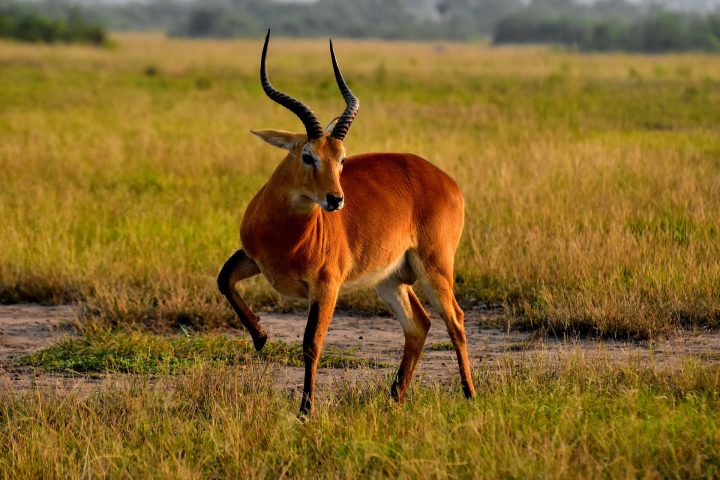
Bwindi Impenetrable National Park is a haven to over 100 mammal species some of which include the bush pig, duikers, forest elephants, African golden cats, bush bucks, forest hogs and many more. Other primates that can be spotted in the Bwindi forests include the black and white colobus monkeys, olive baboons, red-tailed monkeys, blue monkeys, L’Hoest’s monkeys, pottos and many more. These mammals can easily be spotted during nature walks, hikes, birding excursions and more activities in the forests.
The local culture
Bwindi Impenetrable forests are known as the ancient home to the Batwa pygmies that used to live in harmony with the mountain gorillas entirely surviving on the forest resources. These former keepers of the forests were driven out of the forests to settle around the designated protected area due to conservation programs and efforts. The Batwa tribe currently showcases their cultural practices to visitors that often make it to Bwindi Impenetrable National Park. The Batwa also present how they used to survive in the forests such as displaying their medicinal herbs, how to start fire by rubbing two sticks, presenting their great hunting techniques and skills as well as entertaining visitors with their traditional songs and dace.
Waterfalls
Bwindi Impenetrable forest is a water-catchment area with several waterfalls in the Park that can easily be spotted during guided nature walks and hikes. Waterfalls that can be explored include Munyaga River falls, Kashasha River, Ivy river trail, River Ndego and Ntegyero that flow to Lake Edward and southwards to Lake Mutanda.
Activities in Bwindi Impenetrable National Park
Gorilla trekking in Bwindi Impenetrable national park
Bwindi Impenetrable National Park is world renown for housing half of the entire remaining gorilla population making it the best destination to encounter the gorillas in their natural habitats. Gorilla trekking is the Park’s major tourist activity that draws visitors from around the globe. Gorilla trekking requires one to have secured a gorilla trekking permit in advance with a reputable tour operator before making it to Bwindi Impenetrable National Park. This activity involves several hours of hiking through dense jungles of about 2 to 6 hours while spotting several other wildlife species such as birds, monkey species and many more. A period of up to an hour is allowed close to the gorilla family having encountered one as trekkers clearly observe them interact, feed and play which is a once in a life time experience.
Mountain gorilla habituation in Bwindi
Gorilla habituation is the best option for those interested in spending more than an hour with the gorillas in their natural habitat. This activity is done by researchers as they make mountain gorillas get used to human presence through the habituation process. Visitors interested in habituation often join these researchers as they follow after mountain gorillas from the time these gorillas leave their nests until late in the evening when they are done with the entire day’s activities and start to make other nests for their night. In the entire Bwindi Impenetrable National Park, Rushaga gorilla sector is the only place where one can have such an experience of mountain gorilla habituation.
Bird watching in Bwindi
Bwindi Impenetrable National Park is a prime destination for birdwatchers housing to over 350 bird species including the 23 bird species endemic to the Albertine Rift. Birding excursions are led by experienced birder guides and often done either in the morning when the birds are still active or in the evening as they start to seek for dense foliage and cavities in trees while others are spotted perching high in trees close to the trunk. The forest’s birdlife thrives in the dense undergrowth and high canopies offering bird watchers unique opportunities to spot a variety of rare species most of which are rarely spotted elsewhere.
Guided nature walks in Bwindi
Bwindi Impenetrable National Park offers a variety of hiking trails that expose the Park to tourists interested in nature. Nature walks are done with the guidance of the ranger guide into the forest to spot a variety of species that nature presents such as tree and plant species, mammals, birds, butterflies to mention but a few. The Park presents several hiking trails such as Rushura hill trail that offers panoramic views of the forest and the surrounding area, Munyaga trail best for spotting primates and several forest birds to mention but a few. Nature walks offer the best opportunity to explore the biodiversity of Bwindi Impenetrable National Park as well as discover its hidden treasures other than mountain gorillas.
The Batwa cultural experience
The Batwa/pygmies are one of Uganda’s indigenous tribes that is known for having inhabited in the forests of Bwindi before they were evicted by the government to settle around the forests. Batwa people lived in the forests as hunter gatherers before the forest was gazetted to protect mountain gorillas. Visitors often join guided tours to the Batwa communities where they learn about their ancient way of life style compared to how they currently survive out of the forests. The Batwa experience includes watching them start fire by rubbing two sticks, demonstration their ancient methods of hunting, storytelling and cultural performances.
Hiking through the forest
Hiking through the forests of Bwindi involves following several trails from low to higher elevations of the Park. The hikes through the forest can be a one day hike or longer from the northern section Buhoma to the south in Nkuringo and later proceed to Lake Mutanda if one is interested in more several days of hike. Hiking trails include Ruizi river trail, Rushura hill trail, the Habinyanja trail, Ivy river trail and many more.
Best time to visit Bwindi Impenetrable Forest National Park
Bwindi Impenetrable National Park is open for visits all year round though the best time is during the two dry seasons of the year which are June to September and December to February. This season offers the best conditions for trekking through the forest’s rugged terrain. This period of the year receives less rain implying that the trails are drier, less slippery and more manageable for trekking. The vegetation is dense during this period of the year making it slightly easier to spot gorillas in their natural habitat. The wet season runs from March to May and October to November that is characterized by heavy rainfall down pours. During this period of the year, trekking can be more challenging due to muddy and slippery trails. However this period of the year presents rich scenery since the forest is at its most verdant offering incredible opportunities for nature photography. This period of the year is ideal for bird watching as the forest comes alive with a variety of bird species. This period is also known as the off-peak season offering discounted prices at several lodges and tour operators.