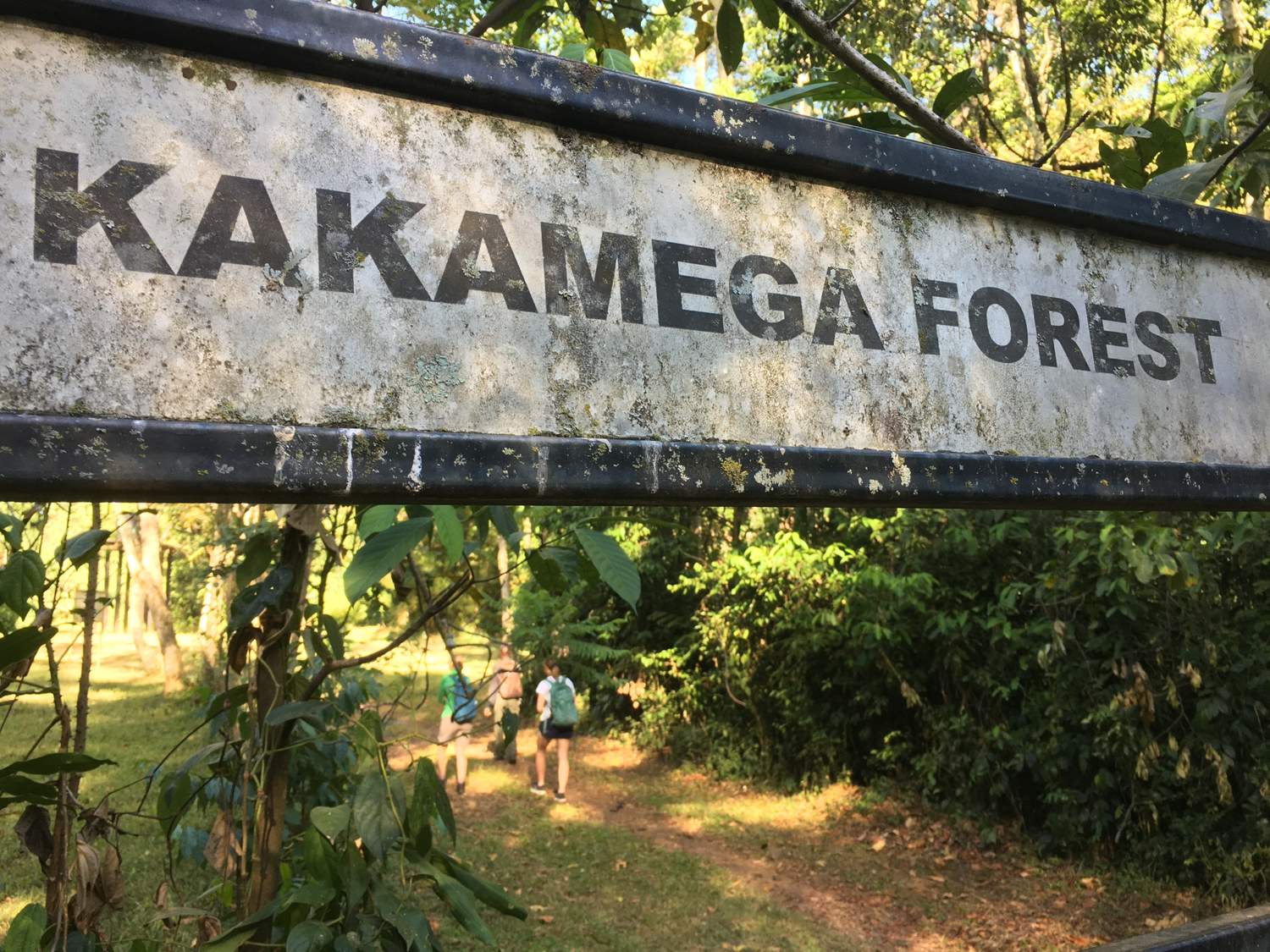
Kakamega forest national reserve is the only Kenya’s remaining remnant tropical rainforest located northwestern side of Nairobi the capital city of Kenya near the border with Uganda in Victoria basin. The tropical rain forest is situated in Kakamega and Nandi counties covering an area of about 24 square kilometers traversing the central and West Africa.
Kakamega forest national reserve was established in 1933 to protect the virgin forest and the ecosystems that dwell in the forest and in 1985 about 4,468 hectares were gazetted to expand the forest reserve. Kakamega is a local dialect meaning “pinch”. Kakamega forest national reserve was designated as Important Bird Area (IBA) confirming it to be a true birding haven for the birdwatchers. Unlike other Kenya safari destinations like Masai Mara national reserve, Amboseli national park among others, Kakamega forest national reserve has amazing nature that is composed of the gentle forests, thick canopies and undulating terrain along with bubbling streams creates a cool representation of crisp sanctuary for mind rejuvenation and reconnection with nature. This ambiance invites travelers from all sorts of life to come and self-reward this abundant nature. The forest is a true home to hundreds of birds, the rare De Brazza’s monkeys, primates, snakes, butterflies, reptiles, and indigenous rare tree species and beautiful sceneries, this makes Kakamega a true ecosystem destination.
Kakamega forest national reserve has some parts open others covered by trees and shrubs with main rivers Isiukhu and Yala Rivers which flow throughout the forest into Lake Victoria.
The Climate in Kakamega Forest National Reserve
Kakamega forest reserve receives tropical rainy climate with temperatures varying between 20 to 30 degrees Celsius throughout the year. The forest reserve receives these temperatures because it lies astride the Equator. Kakamega forest national reserve receives rainfall between 1200 mm and 1700mm with long heavy rains received between April and May, June is fairly drier and between August and September the reserve receives less rain. January and February are the most dry months in Kakamega forest national reserve.
What are Attractions in Kakamega Forest Reserve?
Vegetation in Kakamega Forest National Reserve: Kakamega forest national reserve lies in the Victoria basin and astride the Equator a home to variety of plant species and some species are associated with the Guinea-Congolian region. The forest is composed of the ancient Africa’s hard and soft wood tree species for example red stinkwoods, white stinkwoods, Elgon teaks, Pouteria altissima to mention but a few. Kakamega forest reserve accommodates over 370 tree species with over 60 fern species, 150 trees and shrub species, 170 blooming plants, 60 orchids and 9 endemic species only in Kakamega forest reserve.
Animals in Kakamega Forest National Reserve: Kakamega forest national reserve is a home to mammals, primates, birds, butterflies, reptiles among others. Some of the wildlife in Kakamega forest reserve include; bushbucks, African clawless otters, squirrels, mongooses, tree pangolins, duikers, porcupines, bush pigs, leopards, bats among others. Kakamega despite of the listed variety of species, it still the celebrated occupants of the forests and these are primates. Some of the primates that welcome visitors include; blue monkeys, scarlet-tailed monkeys, Sykes monkeys, Potto, olive baboons, black and white colobus monkeys, and many more. The forest accommodates reptiles for example crocodiles and snake species like Black lipped cobra, rhinoceros horned vipers, Gabon viper, forest cobras among other types.
Birds in Kakamega Forest National Reserve: Kakamega forest national reserve being in the Victoria basin with undulating terrain that attracts lowland and highland bird species the avian diversity in this forest reserve has been recognized not only regionally but also internationally. The forest reserve has over 360 recorded numbers of bird species and being an ancient remnant of the Guinea-Congo basin, it has unique bird species that are only limited into this reserve and cannot be found elsewhere in the country. Some of these bird species include; Turner’s Eremomela, Tyto Capensis, indicator exilis, indicator conirostris, prodotiscus insignis, Phyllastrephus baumanni, circaetus cinerascens, blue-headed bee-eater, black-billed turaco, great blue turaco, grey parrots to mention but a few.
Insects in Kakamega Forest National Reserve: Kakamega forest national reserve is a home to a number of insects which include; goliath beetles, flower mantis, orthopterans, gastropods, millipedes. There are over 400 butterflies in the forest reserve.
Activities in Kakamega Forest National Reserve
Birdwatching in Kakamega Forest National Reserve: The reserve being a home to over 360 bird species and this makes Kakamega forest reserve to be an outstanding birding destination in Kenya. The reserve is famous for hosting 36 bird species that are endemic to the forest and you will not find them somewhere else with 80 bird species limited to central and West Africa. Some of the bird species found in Kakamega include; great blue turaco, colorful blue headed bee-eater. Some birds are migratory and these can be spotted in November and April and some of the migratory birds are; crowned eagles, black faced rufous warbler, Ross’s turaco, Chapin’s flycatcher, yellow-mantled widowbird, green hylia, yellow-billed hyliota, snowy-headed robin chat, white-chinned prinia, Uganda’s woodland warbler among others.
Game Viewing in Kakamega Forest National Reserve: Kakamega forest national reserve is a home to a number of wildlife which can be seen during game drives. You can engage in morning game drives or evening game drive to have a glimpse of the Kakamega wildlife menu. Some of the wildlife to explore in Kakamega are; buffaloes, hartebeests, bushbucks, duikers, roan antelopes, monkeys, Sunni, giraffes, pangolins, porcupines, elephants, leopards, crocodiles, Dik-Dik, among others. Game viewing in Kakamega forest reserve is best done during dry season in the months of December to February and June to September, this is when the vegetation is short, roads in the reserve are dry and all pathways and you can easily predict where the wildlife are in this period. The best time for birders is during wet season and this is when the birds are nesting, breeding and migratory birds flock the reserve giving birders high chances of exploring more bird species.
Butterfly Watching in Kakamega Forest National Reserve: Kakamega is a home to over 4800 species of beautiful butterflies with over 6000 moth and this makes the reserve to be a natural Lepidopteran wonder. The swamps and waterlogged areas in the reserve provide a breeding space for these delicate creatures to flourish.
Hiking in Kakamega Forest National Reserve: Kakamega forest reserve being with undulating terrain, embark on unforgettable hiking adventure in Kakamega forest reserve. There are many marked hiking trails, choose the one that fits you, engage with the group or get a ranger guide who is knowledgeable and experienced to take you through your hiking experience, you will visit different scenic viewpoints and feel so close to nature. You will spot birds and different wildlife as well.
How to Get to Kakamega Forest National Reserve?
You can access Kakamega both by Air and road.
By Road: Kakamega forest reserve is about 418 kilometers away from Nairobi and the driving time is about 7hours. You will have stopovers for lunch and stretching around then hit the road again to Kakamega. You will arrive in the evening hours, connect to your lodge and wait for the exploration the next day.
By Air: There is an option of getting a flight from Nairobi to Kakamega and this is the fastest way to reach Kakamega forest national reserve.
Can I Combine Kakamega Birding Safaris with Uganda Gorilla Trekking Experience?
It is very possible to combine Kenya birding safaris with Uganda gorilla trekking in Bwindi impenetrable national park. This is a common trip and also Bwindi impenetrable national park is not only a home to mountain gorillas, but it is a birding haven with over 350 bird species and some species being Albertine rift endemics or birding in Mgahinga national park in Uganda. Mgahinga is a home to over 250 bid species.