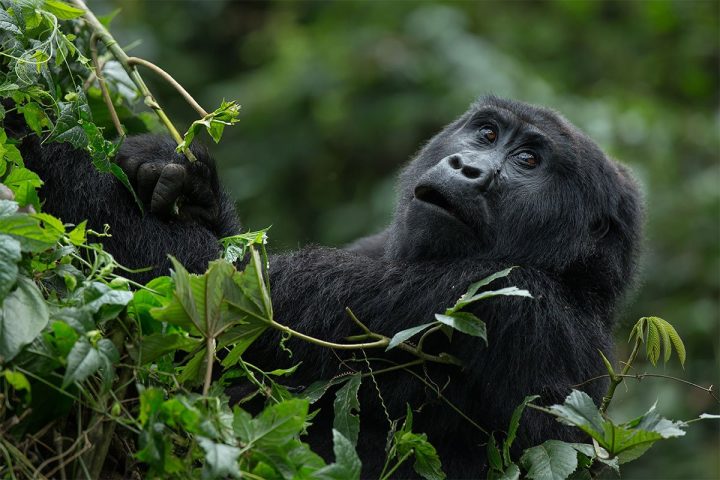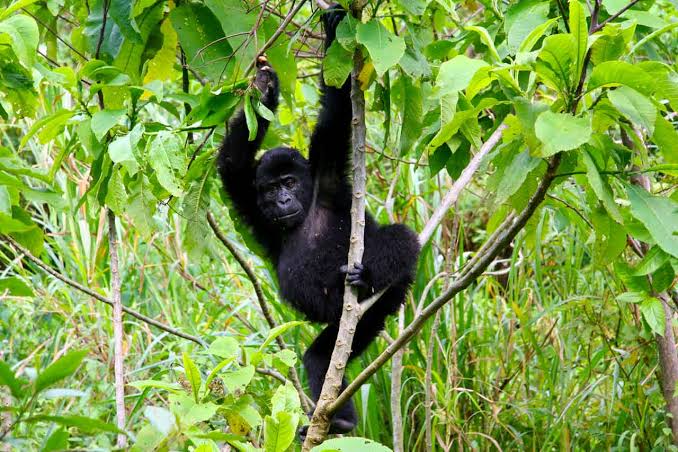
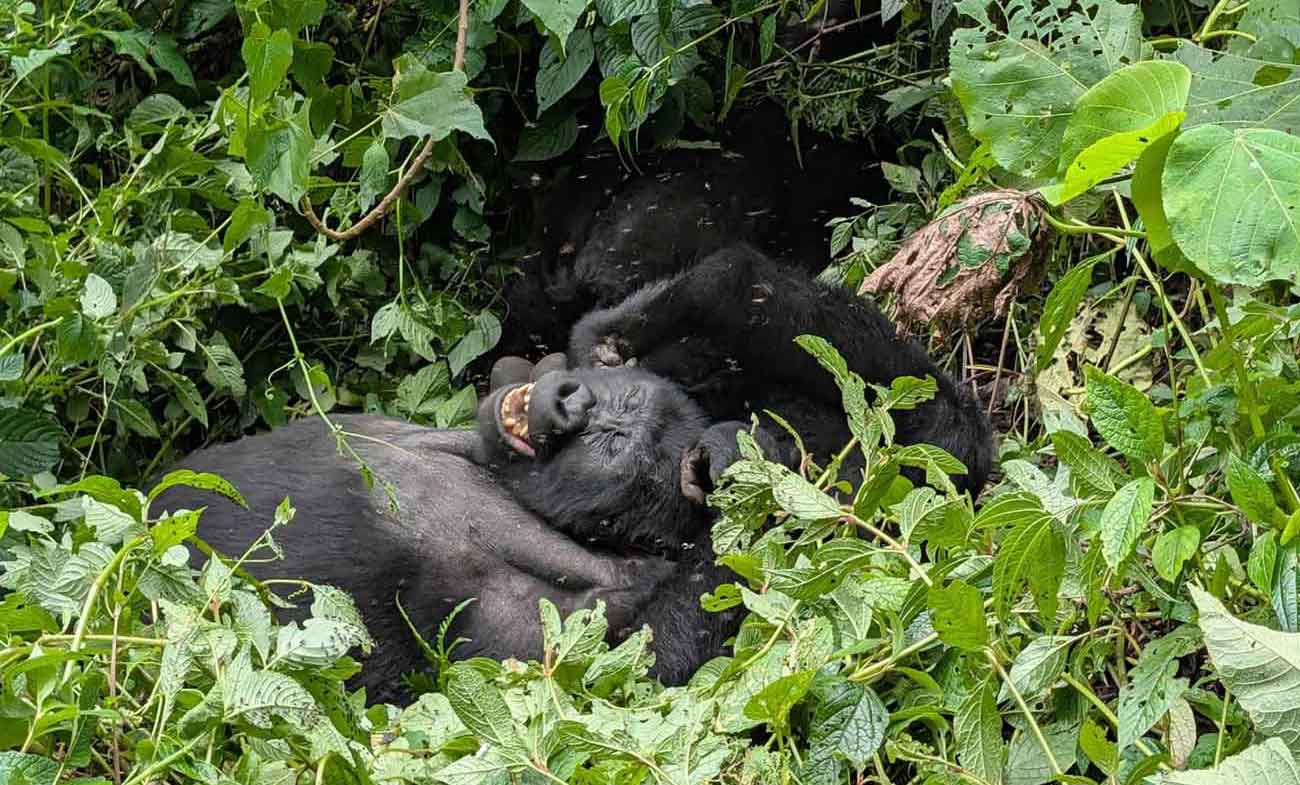
Buhoma of Bwindi Forest national park. Bwindi Impenetrable Forest National Park, located in southwestern Uganda, is one of Africa’s most biologically diverse and ecologically important forests.
Best known as a sanctuary for the endangered mountain gorilla, it is home to over half of the world’s population, but its history and significance go far beyond tourism.
At 330 km2, Bwindi Impenetrable Forest is renowned for its dense vegetation, ancient trees, and significant role in conserving the endangered mountain gorillas.
In 1991, Bwindi was gazetted as Bwindi Impenetrable National Park, a decision primarily aimed at conserving the endangered mountain gorilla population.
In recognition of its unique biodiversity and critical role in the survival of mountain gorillas, Bwindi was declared a UNESCO World Heritage Site in 1994.
This status heightened international attention on the forest’s conservation, helping bring in funds for research, anti-poaching efforts, and sustainable tourism.
Bwindi is home to nearly half of the world’s remaining mountain gorilla population, making it one of the most important conservation areas for this species.
Buhoma is located in the northern part and serves as the main gate to the park. It is close to Kihihi airstrip, making it accessible from Entebbe for those who wish to fly, and Kampala in 8 hours.
The area features a dense montane forest with a rich variety of flora and fauna. Buhoma was the first sector for tourism to be developed when the Mubare family was first habituated in 1992, immediately after the Bwindi Impenetrable National Park was gazetted.
The sector also encourages hiking with trails like Munyanga Trail, Ivy River Trail, Mazabajiro Loop Trail, and Rushura Trail, which provide beautiful views for sightseeing and picnic sites.
The establishment of the Buhoma sector as the first tourism zone helped to shift the approach from protection through exclusion to one of sustainable use and community participation.
The Buhoma sector emphasized involving local communities in conservation efforts.
The Buhoma Community Rest Camp and other community-run projects were created to ensure that local people benefit directly from tourism revenue.
A portion of the income from gorilla permits and park entry fees is shared with surrounding communities to support schools, health centers, and infrastructure projects.
Buhoma is relatively accessible compared to other sectors like Rushaga and Nkuringo, making it the most popular starting point for visitors.
Buhoma remains one of the most visited sectors of Bwindi with four habituated gorilla groups, and has become a model for balancing ecotourism, conservation, and community empowerment. Below are some of the gorilla families habituated for visitors in Buhoma:
The Mubare Gorilla Family is the oldest habituated gorilla group in Bwindi Impenetrable National Park, named after the Mubare Hills.
Being the first group to be opened to tourism in the park makes it special, a milestone that helped establish Bwindi as a major destination for primate tourism.
The group was initially led by a dominant silverback named Ruhondeza for over 20 years with 12 individuals. After Ruhondeza died in 2012, the group saw leadership shifts and changes in composition due to natural factors like dispersal, fights, and births.
The new leader of the group is a silverback named Kanyonyi, Ruhondeza’s successor, and with a new dominant silverback, Mubare has increased the number of members from 5 to 9, and is an interesting group to visit.
The Mubare group is generally considered one of the more accessible families for trekking, often found in lower altitudes around Buhoma, making it a favorite for tourists seeking an easier trekking experience.
Being the first habituated group, Mubare has played a central role in training rangers and guides, and establishing Uganda’s gorilla tourism protocols.
Habinyanja gorilla family
Is another group habituated in the Buhoma sector, known for its rich history, dynamic group structure, and sometimes challenging treks due to the group’s wide range.
The group has 25 individuals at the time of habituation and currently has 18 individuals. The group was once led by a dominant silverback named Mugurisi.
After his death, his sons Rwansigazi and Makara vied for leadership, with Makara becoming the dominant silverback. His leadership style is known to be calm and protective, although younger silverbacks have at times challenged his authority.
Over the years, the group has experienced internal leadership challenges and splits. One of the most notable events was when some members of Habinyanja broke off to form the Rushegura group around 2002.
Rushegura gorilla family
It is one of the most popular and frequently visited mountain gorilla groups in Bwindi Impenetrable National Park, known for its relatively large size, calm demeanor, and accessibility.
The Rushegura family was formed in 2002 when a silverback named Mwirima split from the larger Habinyanja group, taking several members with him.
The name ‘Rushegura’ comes from a place in the forest where the group was first observed after the split. It also reflects the vegetation type in that area.
Initially, the group had 8 individuals when newly formed and has later grown to 19 individuals with Mwirima as the dominant silverback until he died in 2014, then leadership passed on to Kabukojo.
The group is known for being relaxed around humans, making for excellent viewing and photography opportunities.
Katwe gorilla family
Katwe gorilla family is one of the newest habituated gorilla groups in the Buhoma sector of Bwindi Impenetrable National Park.
The Katwe family underwent the gorilla habituation process and was officially opened for tourism in 2018 with 8 members.
Its habituation and inclusion in the trekking program were partly aimed at managing increasing tourist numbers and offering more trekking options in the Buhoma sector.
Much as the Katwe group is not as famous as other groups in this sector, it provides a quieter and equally moving experience for visitors who visit Buhoma gorilla sector.