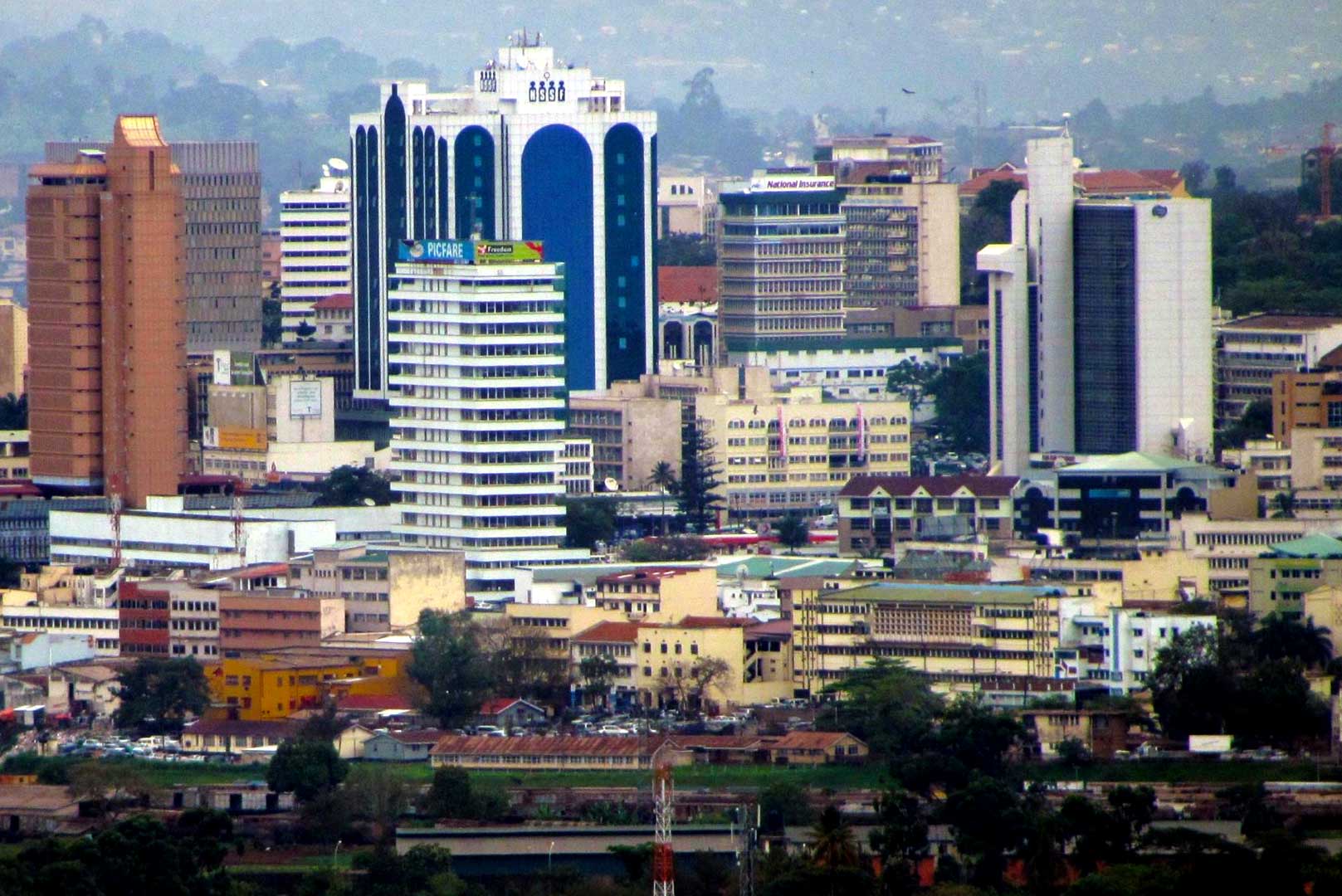
Kampala is Uganda’s capital city and the largest city in the country known as a bustling hub for trade, finance and industry with a rich history and diverse culture including several attractions.
Kampala is situated on a series of hills with the city’s development originally centered on the original seven hills unlike now where the city encompasses up to 21 hills.
The original seven hills include Rubaga, Mengo, Makerere, Namirembe, Old Kampala, Nakasero and Kololo. Other prominent hills encompassed by Kampala city include Mulago, Naguru, Kibuli, Buziga, Mbuya, Kireka, Muyenga, Banda, Nsambya, Mutungo to mention but a few.
However, Kampala originally referred to only the present day old Kampala hill where the British protectorate was allocated to construct their headquarters Fort Lugard.
But before the construction of this Fort Lugard, the hill was known to be a hunting ground of the Kabaka of Buganda, Kabaka Mwanga II by then who also signed a treaty of protection by the British government over Buganda.
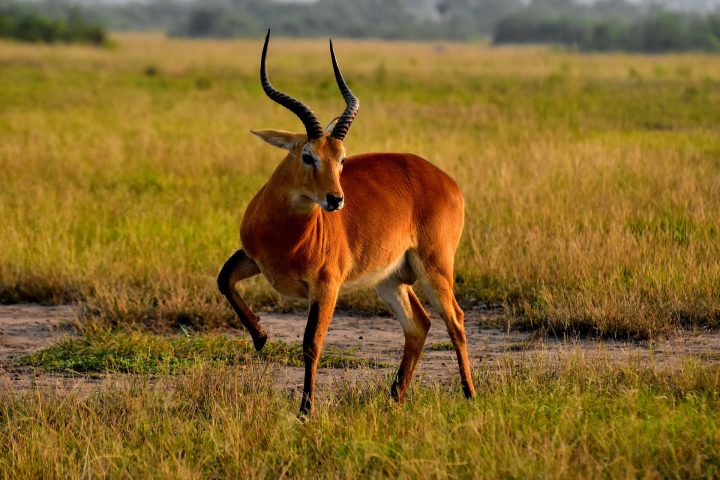
This Old Kampala hill was a haven to several antelope species but most dominantly the impalas. As a result, when the British officials were allocated this hill by the then Kabaka of Buganda, they referred to it as “the Hill of Impalas”.
The natives in whose territory this British settlement was located then translated “hill of the impalas” as “Akasozi k’empala” which was then shortened to K’empala and finally Kampala.
And therefore the name Kampala came to refer to this initial British colonial settlement that would later on spread out from the occupied Old Kampala hill near the pre-existing capital of Buganda kingdom.
Kampala now covers a total area of about 189 square kilometers comprising of 176 square kilometers of land and up to 13 square Kilometers of water.
The highest point of Kampala city is the summit of Kololo hill standing at an altitude of 1,311 meters above sea level and the lowest point being at the shores of Lake Victoria standing at an altitude of 1,135 meters below the sea level.
Kampala city has by far grown into a modern and urban city with a total population of more than 1.5million people which is diverse from all regions of the country unlike in the ancient years where it used to only be drawn from Buganda.
The city is now the country’s economic engine drawing more population from neighboring countries such as the Democratic Republic of Congo, Kenya, South Sudan, Somalia, Rwanda, Eretria, Tanzania and even other countries as far as China, India and many more.
Kampala is steadily growing evidenced by its booming business centers and yet still preserving the rich Buganda Kingdom heritage, history of the colonial influence, ancient religions and places of worship to mention but a few.
Therefore Kampala city has a lot to offer during one’s tour ranging from attractions and things to do as described below;
Kabaka’s Palace known as the Lubiri
The Kabaka’s palace is the royal compound of the Kabaka of Buganda located on Mengo hill which is one of the major hills that make up Kampala.
It’s known that the original Lubiri was destroyed by the Ugandan army in the May 1966 battle of Mengo hill at the culmination of the struggle between King Muteesa II of Buganda and President Milton Obote for power.
After the King was ousted by President Milton Obote, his replacement Idi Amin Dada turned a section of the Palace into a notorious torture chamber where up to 250 people are believed to have been killed.
During a tour around the chambers, tourists will listen to the sad stories of the people that were killed here including top politicians, businessmen, soldiers and those that seemed to be threats to Amin’s rule.
Their torture and death is evident on the walls that are stained with blood, their remains and many more. However the Lubiri Palace is the current home of the Kabaka of Buganda though there are other Palaces such as the one in Banda close to Kyambogo University.
Bulange (the Buganda parliament)
Bulange is known as Buganda’s Parliament where the Kingdom’s parliamentary sessions are held pertaining several issues pertinent to the Kingdom.
It is believed that these sessions used to be held under a large tree or grass thatched buildings before Uganda was colonized.
Guided trips around the Bulange do provide fascinating insights about the history of the Kingdom, former kings and their lineage, the 56 tribes of Buganda as well as the current stake of Buganda Kingdom.
Kasubi Tombs
The Kasubi Tombs are regarded as one of the leading tourist attractions in Kampala as well as the entire Uganda known to be a UNESCO World Heritage Site.
The Kasubi tombs are the burial grounds for up to four of Buganda’s former Kings.
Tourists while at the Tombs, can spot a large hut holding the tombs, ancient royal clothing, hunting tools as well as monuments of the past Kings. According to the Baganda, Kings don’t die but rather disappear to another world.
During a tour around these royal tombs, royal guides will narrate stories about each of the fallen Kings and the roles they played during their reign.
The descendants of the Kings’ wives are responsible for taking care of the tombs and here are other tombs where fallen Kings of Buganda were buried a few kilometers away from the Kasubi tombs and can be visited after visiting the Kasubi tombs for example the Wamala tombs about 11km away from Kasubi long Hoima road.
This is where the most notorious and feared King of Buganda was buried known as Kabaka Suuna II. The other Tombs that can be visited are the Namasole Kanyange tombs close to the Wamala tombs. The Katereke prison ditch can also be visited where Kabaka Kalema of Buganda killed thirty of his brothers so as to retain control of his throne.
The Gaddafi Mosque
This is Uganda’s largest mosque with a seating capacity of more than 15,000 believers situated on one Kampala’s major hills known as the Old Kampala hill.
The construction of this mosque was initiated and started by President Idi Amin Dada in 1972 and later completed in 2007 with a generous donation from Colonel Muammar Gaddafi of Libya.
Visiting this mosque, visitors get insights into the history of the Islamic religion. Climbing to the highest point of this mosque, tourists are rewarded with one of the best views of Kampala city.
Tourists are led around the Gaddafi mosque with the guidance of an in-house tour guide who has enough knowledge and experience about the premises.
Old Kampala
Old Kampala is known to sit on the original Kampala hill. It is where the first administrative buildings were constructed before the city expanded and most administrative buildings were relocated to a more centralized location. Old Kampala stands out as one of the places to visit in Kampala because of its old colonial and Indian architecture designed buildings which offers an insight of how Kampala used to look like in the ancient years.
Namirembe Cathedral
Namirembe cathedral is arguably the most beautiful and headquarters of the Anglican faith in Uganda. It is the oldest cathedral that was constructed in 1919 also known as the St. Paul’s Cathedral. This cathedral was built on Namirembe Hill which is one of the hills that make up Kampala. This religious site contains a building next to the cathedral where the Archbishop of the Anglican Church resides. The Cathedral also features a graveyard of Sir Ernest Cook and Bishop Hannington that was murdered in 1885 on orders of Kabaka Mwanga II of Buganda. Visitors that make it to the Namirembe Cathedral get an understanding of the history of the Anglican faith and how it was introduced in the country. A visit to this Cathedral is complemented with a visit to a small hut housing large drums that were used to notify and call worshipers for service during the ancient years.
Namugongo Martyrs shrines
The Uganda Martyrs shrines Namugongo is a religious site situated a few kilometers from the city center ad regarded as one of the most visited religious sites in Africa. Between 1885 and 1887, up to 45 Christians were killed on the orders of Kabaka Mwanga II of Buganda where most of them were burnt live while others were speared to death. Their major crime was refusal to denounce Christianity and the Islamic faith on orders of the same Kabaka. At first, Kabaka Mwanga II had accepted foreign religions such as Islamic and Christianity but he later grew hatred for all the religions seeing them as threat to his rule. What angered him most were his pages that were no longer obeying most of his orders and continued to spread Christianity to different regions of his Kingdom. The Namugongo Martyrs shrines were therefore constructed to commemorate the young and brave Christian converts who refused to denounce their faith even after going through great suffering. Therefore every year of 3rd June, people from different regions of the country, Africa and the entire world congregate to celebrate and pray for these Uganda Martyrs. This religious site provides an insight of what transpired during the reign of Kabaka Mwanga, the history of both the Anglican and Catholic religions.
Kibuli Mosque
This mosque lies on one of Kampala’s original seven hills known as Kibuli offering great views of the city. Kibuli Mosque is the country’s most popular mosque where top Sheiks sit and regarded as the center of all Moslem activities in the country. It is therefore considered one of the best places to visit during a city tour around Kampala since it offers an understanding into the history of the Islamic faith in Uganda.
The Baha’i Temple
The Baha’i temple is the worshiping place of the Baha’i faith that started to grow in 1951. This Baha’i temple was constructed in Uganda from 1958 to 1961. It therefore became the first Baha’i temple in Africa and it was dedicated to Ruhiyyih Rabbani who was an author and a prominent guardian of the Baha’i faith from 1937 to 1957. It was built on Kikaya hill near Gayaza road providing great views of Kampala city and the surrounding areas.
Kabaka’s Lake
This is a man-made Lake found in Ndeeba dug by Kabaka Mwanga II’s subjects through his orders. It is about 200 feet deep known to be one of the largest man-made Lakes in the entire Africa. The Kabaka himself also took part in the digging of the Lake just to encourage his subjects. The major purpose of digging this Lake was to connect the Kabaka’s palace to Lake Victoria providing an escape route in case of a war or revolt by his subjects during his reign. The Lake is considered sacred by the people of Buganda and clan leaders that occasionally gather to clean it. This Lake is now a perfect place to include on one’s itinerary during a tour around the city because it offers a perfect atmosphere for relaxation, boat rides as well as a good spot for bird watching enthusiasts.
The Uganda National Museum
The Uganda National Museum showcases the cultural heritage and the historical milestone of Uganda including religion, tribal groups and their cultural values, agriculture, medicines, clothing, machines and many more. This is Uganda’s oldest and largest museum that was founded by George Wilson, a British Colonial Governor in 1908. The museum comprises of several sections that showcase culture, natural resources and the historical background of the country. A variety of artifacts such as local musical instruments like drums and adungus, hunting tools like spears, bows and arrows and many more were put on display for proper understanding of Uganda’s background. An onsite tour guide is always provided on one’s visit to the Uganda museum to foster proper understanding Uganda’s history.
Rubaga Cathedral
This is the headquarters of the Roman Catholic faith in Uganda that was constructed in 1914 erected on one of Kampala’s major hills known as Rubaga. The land on which this Cathedral was constructed was donated to the French Catholic Missionaries by Kabaka Mwanga II. Its construction started in 1914 and ended in 1925 built in memory of the 22 Uganda Catholic Martyrs that were burnt in Namugongo under the orders of Kabaka Mwanga II. A visit to Rubaga Cathedral offers a proper understanding of the Roman Catholic faith as well as its history of how it came to be introduced in Uganda. A tour around this Cathedral also features a visit to the burial grounds of the first African Catholic Bishop and later Archbishop Joseph Kiwanuka.
Craft markets, art galleries and Monuments
Kampala is dotted with a variety of both temporary and permanent craft shops or markets selling locally made sculptures, fabrics, jewelry, paintings, art pieces, fabrics and many more. Craft shops include those at the National Theater, Gerald’s antiques, Exposure Africa for the best jewelry and wood carvings, Uganda Crafts 2000 Ltd for beautiful paintings and traditional cloths like the bitenge and many more. For the best art galleries and local souvenirs, one can decide to visit gallery shops like Asante Art gallery, Afriart gallery, Karibu art gallery, Makerere Art gallery, Uganda Art gallery close to Namirembe Cathedral to mention but a few.
Independence monument
This monument was constructed in a picture of a man holding a child up in the skies signifying how the country was let free from colonial rule. It was built close to Sheraton hotel in Kampala just before Uganda’s independence in October 1962 known to have been designed by Gregory Maloba a former lecturer at Makerere University. There is another independence monument that was put up recently at the Kololo airstrip when Uganda was celebrating 50 years of independence.
The Ndere cultural Center
The Ndere cultural center is a prominent cultural center in Kampala in an area known as Kisaasi aimed at promoting and showcasing Ugandan and African cultural expressions through music, dance and drama. Its name Ndere is derived from a local noun “endere” which means flute a musical instrument found in all cultures. It was therefore chosen as a universality of cultural expressions. This cultural center is famous for its Ndere troupe known to perform several nights every week showcasing cultural dances from all over Uganda’s cultures as well as Burundi and Rwanda.
The city’s culinary escape
Kampala city is made up of a diverse culinary landscape as its people with a range of dining options that reflect both local and international cuisines. Street foods like the famous Rolex is part of the city’s food culture and a visit to Kampala would seem incomplete without trying the Rolex a popular street food made up of an omelet whether plain or Spanish and then rolled in a chapatti. For visitors that would prefer dining in a more formal setting, the city has numerous fine restaurants that offer a variety of cuisines ranging from Uganda local dishes such as the luwombo and Matooke to international fare including Chinese, Indian, Italian cuisines and many more.
Vibrant shopping centers and Markets
Kampala city is known for its vibrant shopping scene offering variety from traditional crafts to modern fashion. The city center features several markets such as the Owino market also known as St. Balikudembe Market, Nakasero market popular for agricultural produce such as food, cereals, vegetables, fruits and many more. Owino market is one of Uganda’s largest and busiest markets in Uganda where one can find an array of goods and produce such as clothes, shoes, bags, a variety of fresh produce and many more. Kampala is filled with several shopping malls and arcades selling a variety of products from all over the world.
Kampala’s night life
This is another aspect of the city’s leisure that cannot be overlooked. Kampala is alive with music and dance including live band performances innumerous bars, clubs, lounges and much more offering entertainment throughout the night. Popular areas within Kampala popular for nightlife include Kololo, Kabalagala, Makindye, Kansanga and many more.
How to explore the city
One can choose to explore Kampala city on foot with the guidance of a tourist guide from a reputable tour company such as Glory Summit tours and travel, be driven around the city in an air-conditioned vehicle or for an authentic Uganda city experience, one can do the tour on the back of a motorcycle locally known as a bodaboda motorbike though it’s advisable to choose a registered and licensed rider or company.
Best time to visit Kampala city
Kampala city can be accessed at any time of the year though the best time of visit is during the dry season that runs from June to August and December to February. This period of the year offers ideal conditions for outdoor activities and sightseeing with cooler temperatures and less humidity. This period of the year is therefore characterized by less rainfall down pours making it perfect to explore the city while visiting several attractions and enjoying a variety of outdoor activities. The wet season offers unfavorable conditions running from March to May and September to late November. However, you can combine Kampala city tour with source of the Nile at Jinja, shoebill stork viewing in Mabamba Bay or Lake Mburo national park if you have a limited time.