Mount Rwenzori is a range of mountains located at the border of Uganda and the Democratic Republic of the Congo with the highest peak at 5,109 meters and the upper regions permanently glaciated.
The park was gazetted in 1991 and was recognized as a World Heritage site in 1994 and a Ramsar site in 2008. Also known as the ‘Mountain of the Moon’, it is the only mountain in East Africa not formed due to volcanic action at 1000 kilometer squared in size with the third highest peak in Africa, after Kilimanjaro and Mount Kenya.
The glaciers, waterfalls, and lakes make the region one of the beautiful Alpine areas in Africa including permanent glaciers near the equator though rapidly shrinking due to climate change. Labeled by Henry Stanley in 1988 as Ruwenzori a local name which means ‘Rain-Maker’ or ‘Cloud King’ when placed on the map.
The Rwenzori Mountains have a unique microclimate, with rainfall throughout the year. There are frequent mists, which contribute to the lush vegetation. The mountains have distinct ecological zones and are known for their rich plant life ranging from dense rainforests at lower altitudes to alpine meadows and glaciers higher up.
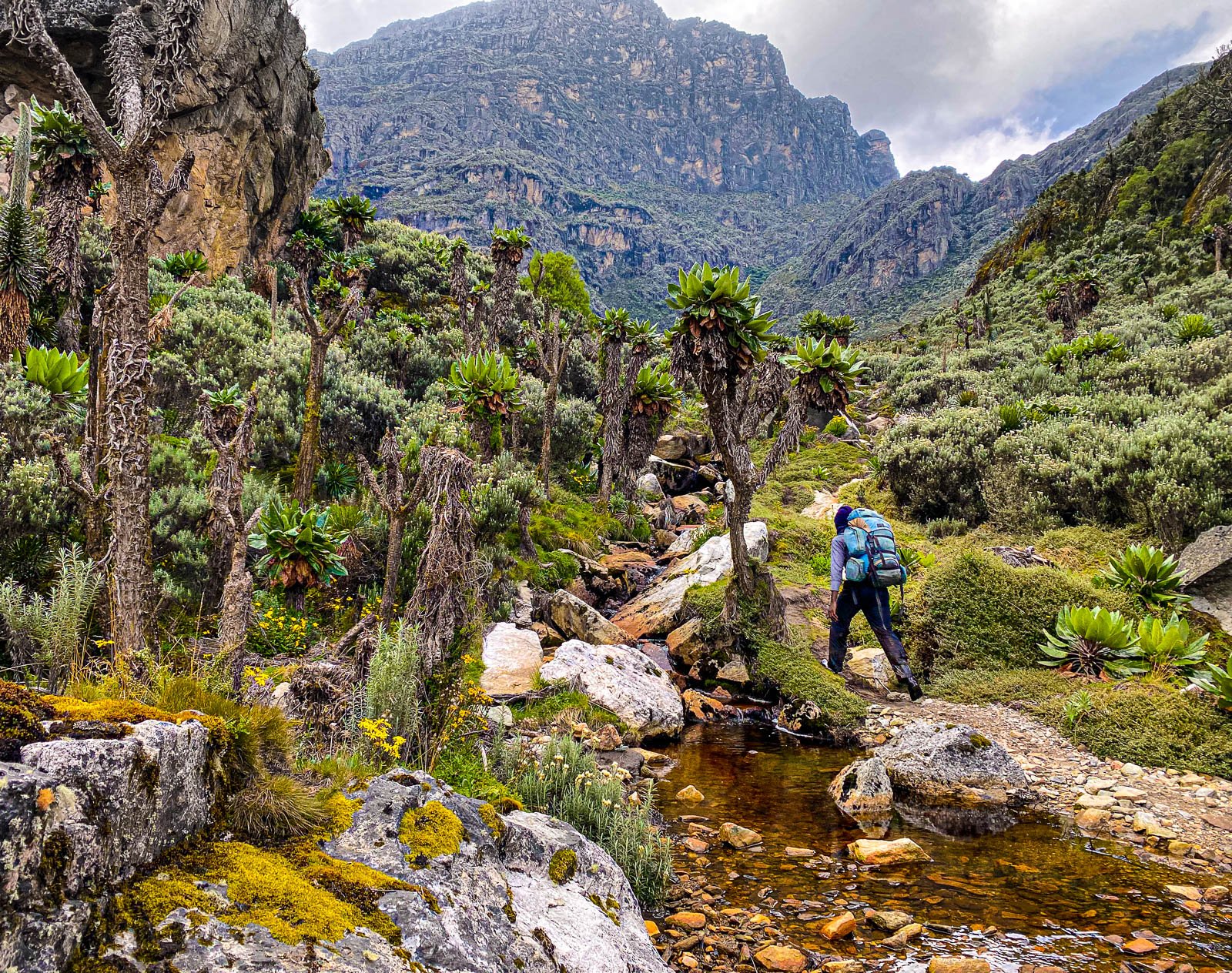
The vegetation varies dramatically with altitude. The lower slopes are covered with tropical rainforests, while higher elevations feature giant lobelias, groundsels, and heathers.
Due to the region’s varied ecosystems from lowland tropical rainforests to high-altitude glaciers, the Rwenzori supports a unique mix of animal species, many of which are endemic to the area; the area has 70 mammals including elephants, leopards, duiker, otters, colobus monkeys, L’Hoest’s monkeys, blue monkeys, chimpanzees, rock hyrax; Birds with 19 endemics like Rwenzori turaco, Shelley’s crimsonwing, honeyguide, double-collared sunbirds, strange weaver, black-eared ground thrush, strange weaver; reptiles and amphibians like three-horned chameleon, leopard gecko, frogs, toads, clawed frog, insects, butterflies and many more.
Climbing Mount Rwenzori is an exciting and challenging adventure with trails like the Central circuit, Kilembe, Mahoma, Rwenzori peaks climbing, and Bukurungu trails for one to choose from, each providing unique views, ecosystems, and challenges. The trails vary in length, difficulty, and the summits one aims to reach.
Central Circuit trail
This is the most popular route offering a complete experience of the range’s diverse ecosystems and peaks. It is a challenging trail that circles the major massifs and allows the trekkers the option to summit Margherita Peak, the highest point in the Rwenzori range. Depending on the pace and acclimatization needs, for the trail to be completed to Margherita Peak one needs 7-10 days with the starting and end point being Nyakalengija which is near Kasese.
The trek takes you through tropical rainforests, bamboo forests, moorlands, bogs, alpine meadows, and glaciers. The trail offers stunning views of lakes such as Lake Bujuku, and Kitandara, and valleys with each zone rich in unique flora and fauna including giant lobelias and groundsels.
The trail has some memorable and challenging sections that require hikers to balance on boardwalks over the muddy terrain. Margherita peak as the aim, one will go through glaciers and rocky terrain as the final ascent involves using crampons and ice axes. Along the Central Circuit Trail, hikers will spend their nights in designated mountain huts. These huts provide basic shelter, making it easier to acclimatize and rest before tackling the high-altitude sections.
Kilembe trail
The Kilembe Trail is an alternative and scenic route for hiking the Rwenzori Mountains, offering a quieter and more remote experience compared to the Central Circuit Trail. This trail starts from the village of Kilembe, near Kasese in Uganda, and ascends through dramatic valleys, ridges, and waterfalls, ultimately leading to Margherita Peak at 5,109 meters on Mount Stanley, the highest point in the Rwenzori range.
The trail takes 6-9 days depending on acclimatization and one’s desire to summit Margherita Peak as the trail is challenging. This trail provides breathtaking views of the Nyamwamba Valley, waterfalls, and surrounding peaks as the trail ascends more gradually than the Central Circuit and features more landscapes. Kilembe trail presents rich vegetation and animal life and the treks along it offer the best mountaineering experience.
The Kilembe Trail is less frequented than the Central Circuit, making it ideal for trekkers looking for solitude and a more peaceful experience in the Rwenzori Mountains. It also offers a unique blend of scenery, wildlife, and the opportunity to summit Margherita Peak.
Mahoma trail
This is a 28km hiking trail that takes you around the lower slopes of Mount Rwenzori and ends at the beautiful Lake Mahoma. The Mahoma Trail is a shorter, less challenging, and more nature-focused trekking route in the Rwenzori Mountains that takes 3-4 days more suitable for beginners or those who prefer shorter hikes. It’s ideal for those who want to experience the beauty of the Rwenzori without the technical climbing required for summiting the higher peaks as the highest elevation is at 3,515m.
This trail offers a rich experience of the lower slopes and diverse ecosystems, and it provides stunning views of the higher peaks without the need for glacier travel.
The main highlight of this trail is Lake Mahoma, a scenic alpine lake surrounded by giant lobelias and providing spectacular views of the Rwenzori range. The trail passes through lush montane forests, bamboo thickets, and moorlands, giving hikers a glimpse into the stunning biodiversity of the Rwenzori. Giant heathers, lobelias, and groundsels dominate the landscape at higher altitudes.
The trail offers panoramic views of Mount Baker, Stanley, and other summits from a lower elevation without involving climbing the highest peaks. The Mahoma Trail is rich in wildlife, with possible sightings of blue monkeys, black-and-white colobus monkeys, and a variety of bird species. The forested lower slopes are particularly rich in biodiversity.
Bulemba Ndio cultural trail
This trail provides a unique cultural experience within the Rwenzori Mountains that provides insight into the rich traditions and heritage of the Bakonzo people, the indigenous inhabitants of the Rwenzori region which takes a day. This trail combines scenic beauty with cultural exploration, offering trekkers the opportunity to engage with the local communities, learn about their history, and witness traditional practices.
The trail takes you to Bulemba, a sacred site in the Rwenzori region that holds great significance for the Bakonzo people. Bulemba is the burial place of Kyomuhendo, a revered leader of the Bakonzo, and is visited annually during cultural celebrations.
The trail also allows trekkers to interact with the Bakonzo community where one learns about their customs, rituals, and daily life which includes traditional dances, music, and storytelling. Along the trail, you will encounter local artisans who produce traditional crafts, including woven baskets, pottery, and tools. The trail can be explored year-round, though the best time is during the Bulemba celebrations in September when the cultural activities are in full swing.
Bukurungu trail
Is one of the less-traveled but incredibly scenic trails in the Rwenzori Mountains offering a more isolated option for trekkers making it a perfect trail for tourists looking to explore the rugged beauty of the Rwenzori while avoiding crowds which are common with the more popular trails like Central circuit and Kilembe. The trail takes between 7-9 days and is less technical as it’s open with no huts but camping areas which are well maintained.
Like other trails in the Rwenzori, the Bukurungu Trail takes you through a range of ecosystems, including tropical rainforests, bamboo forests, and high-altitude moorlands with Lake Bukurungu as one of the highlights. The lake provides a serene and picturesque rest stop along the trek and the area around it is rich in biodiversity and offers panoramic views of the surrounding peaks like Stanley and Speke.
The Bukurungu Trail is less frequented by tourists, making it ideal for trekkers who seek solitude and a more intimate connection with nature including interactions with the Bakonzo people who maintain a deep connection to the mountains and its ecosystems. The trail is considered one of the most untouched and pristine routes in the Rwenzori Mountains.
Hiring guides and porters is mandatory. They will assist with navigating the trail, carrying gear, and setting up camp. Professional guides are crucial for the technical climb to Margherita Peak. All the trails have strategically placed mountain huts where trekkers can rest and acclimatize.
These huts are located in beautiful and remote areas, providing shelter in the sometimes harsh weather conditions. The Rwenzori Mountains are known for their unpredictable weather, and rain can occur at any time of the year. The best times to trek are during the dry seasons which are December to February and June to August.