Kibale National Park is situated in western region of Uganda known to protect the moist evergreen rainforest of about 766 square kilometers and ranging between 1,100 meters to 1,600 meters in elevation. Kibale National Park was first gazetted in1932 and formerly established in 1993 to protect a large area of forest previously being managed as a logged forest reserve. The Park’s varied vegetation offers different varieties of wildlife habitats ranging from the moist ever green forests along the Fort Portal plateau, through the dry tropical forest to the woodlands and
savanna along the Rift valley floor. Within Kibale National Park, over 351 tree species have been recorded with a high forest concentrated around the central part of the Park consisting of a mixture of evergreen trees and deciduous trees. Its vegetation is known to rise above 55 meters establishing a semi-closed canopy of massive stratified tree crowns. This forest protects the highest number and diversity of primates in the whole of Africa with 13 different primate species being registered. Chimpanzees are the most popular of these primates with over 1,500 individuals living in this forest making it the best destination for chimpanzee tracking as well as chimpanzee habituation. Kibale National Park is about 348 kilometers from Kampala and 26 kilometers southeast of Fort Portal known to be Uganda’s Tourism city. This National Park is situated close to the famous and serene Ndali Kasenda crater lakes and taking one and a half hours’ drive to Queen Elizabeth National Park, Semuliki National Park and Toro-Semuliki wildlife reserve as well as the Rwenzori Mountain ranges. The Southern section of Kibale National Park borders Queen Elizabeth National Park forming a 180 kilometer long migration wildlife corridor that stretches from the Ishasha sector in Queen Elizabeth National Park to Sebitoli in northern Kibale National Park.
Attractions in Kibale forest national park
Primates
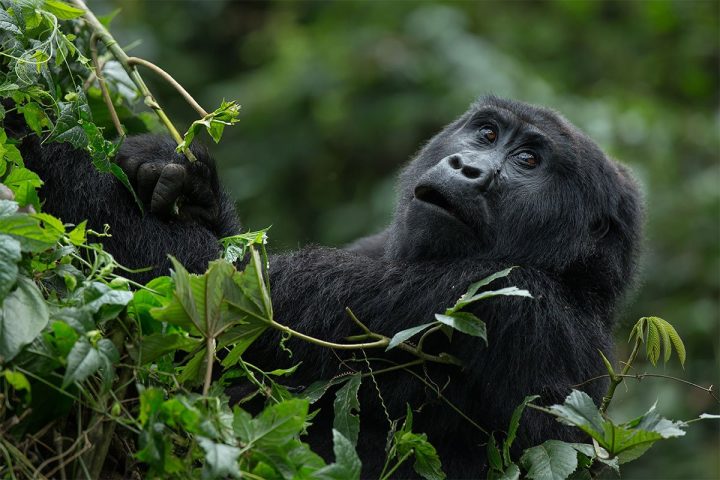
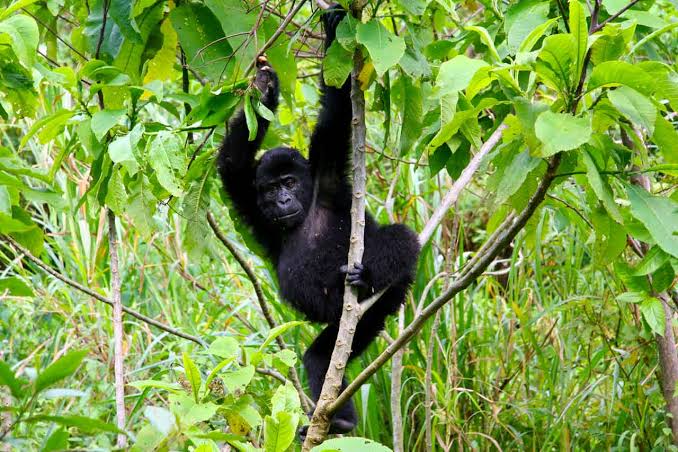
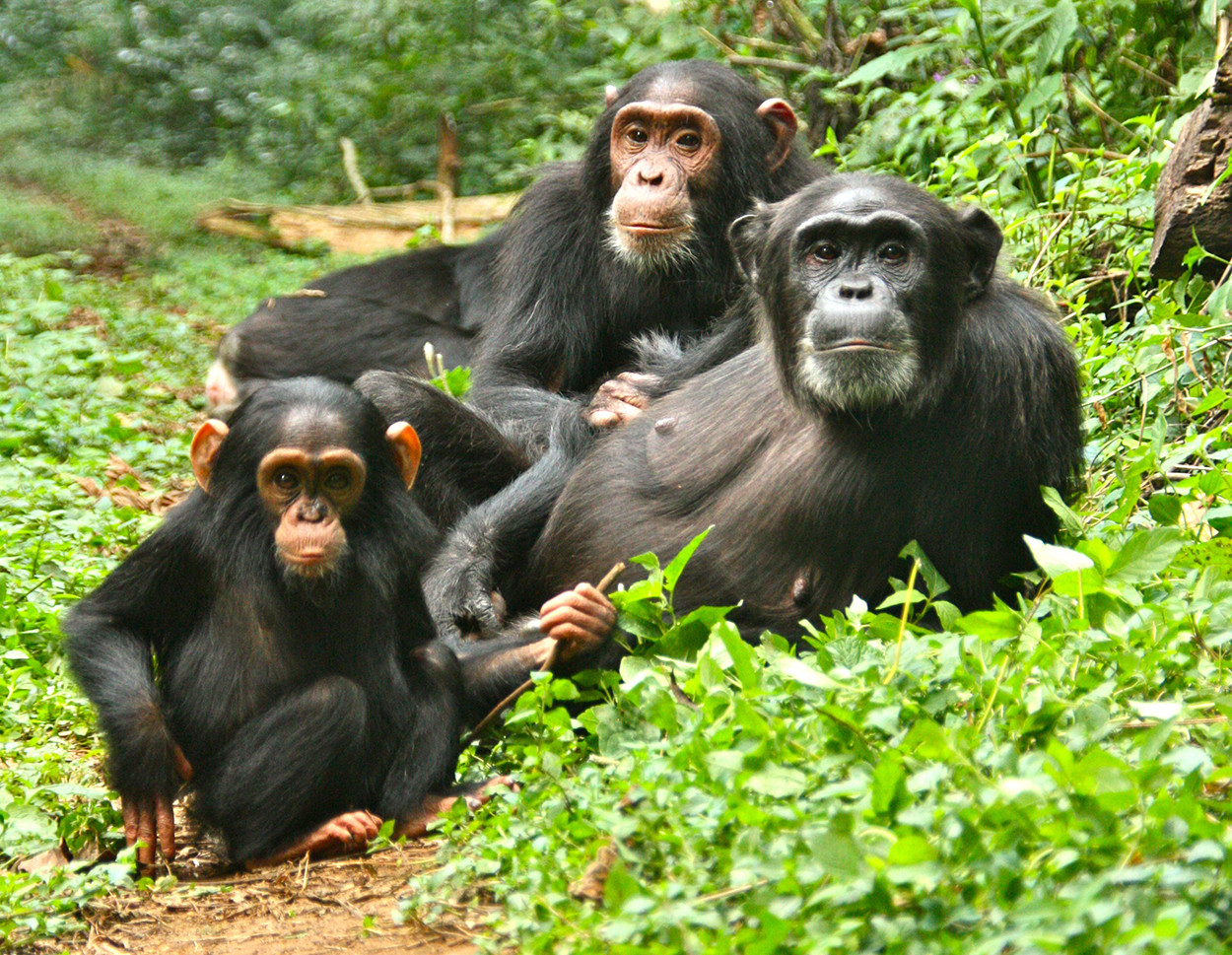
Kibale National Park is a haven to over 13 primate species which is the highest of any Protected Area in the country. The most popular of these primates are the chimpanzees known to be more than 1,500 individuals most of which have been habituated making them ready for tracking. Other primates include the uncommon L’Hoest’s monkeys, the endangered red colobus monkeys, black and white colobus monkeys, red tailed monkeys, blue monkeys, grey checked mangabeys, olive baboons, pottos, bush babies and many others.
Other wildlife
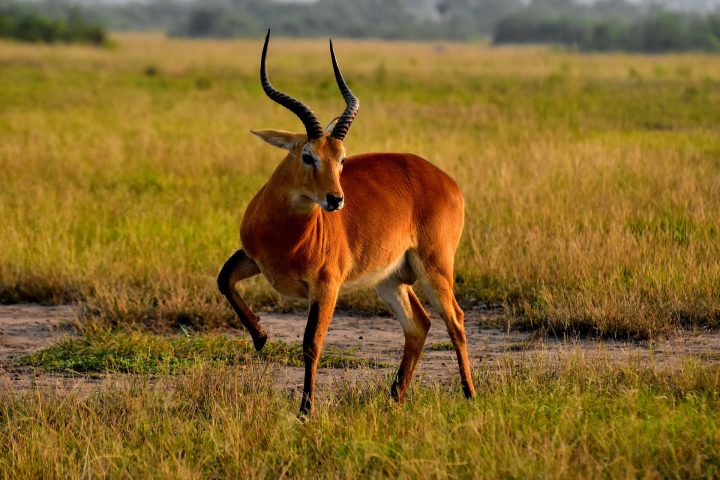
Kibale National Park is also a home to several other wildlife including duikers, forest elephants, leopards, bush pigs, bushbucks, African golden cats, forest buffaloes, servals and several others. Other wildlife that can easily be spotted by keen viewers includes reptiles, amphibians, a variety of butterflies and many more.
Bird species
Kibale National Park is known to protect over 372 bird species including six species that are endemic to the Albertine Rift region namely red-faced woodland warblers, purple-breasted sunbird, dusky crimsonwing, blue-headed sunbird, collared apalis and the black-capped apalis. Other bird species include the crowned eagle, blue-breasted kingfisher, yellow-rumped tinker bird, brown-chested alethe, black-eared ground thrush, little greenbul, yellow spotted nicator, Abyssinian ground thrush, black bee-eater, green-breasted pitta, African pitta, Nathan’s partridge, white-napped pigeon, lowland masked apalis, African shrike-flycatcher, great blue turaco, afep pigeon, blue-shouldered robin-chat, pin-tailed whydah, black-headed Gonolek, papyrus Gonolek, brown-eared woodpecker, yellow-spotted barbet, white-collared olive back, white-winged swamp warbler, brown-capped weaver, brown illadopsis, scaly-breasted illadopsis, red-chested owlet, black and white-casqued hornbill, white-spotted flufftail to mention but a few.
Bigodi wetland sanctuary
Bigodi wetland sanctuary is a jungle swamp in Kibale National Park just 6 kilometers south of Kanyanchu visitors’ center established to protect the four square kilometer Magombe swamp. This jungle swamp is a home to over 200 bird species including the famous great-blue turaco and thus being referred to as “the home to the Great-blue turaco”. Other bird species that can be spotted in this wetland sanctuary include the papyrus Gonolek, black-crowned waxbill, eastern yellow-billed barbet, yellow-rumped tinkerbird, double-toothed barbet, western nicator, white-spotted flufftail, red-headed bluebill, snowy-crowned robin-chat, white-winged warbler, papyrus canary to mention but a few. This wetland sanctuary is also a home to a variety of mammal and primate species. Mammal species that can be spotted include the semi-aquatic sitatungas, otters, bushbucks, mongoose, bush pigs and many more. Primates include the grey-checked mangabeys, blue monkeys, red colobus monkeys, black and white colobus monkeys, L’Hoest’s monkeys, vervet monkeys and chimpanzees that are occasional. This jungle swamp also protects several plant species that attract researchers and these include wild palms, polita fig trees, the common papyrus to mention but a few.
Crater lakes
These Crater Lakes are known to be in the Ndali Kasenda Crater region adjacent to Kibale National Park in Kabarole district. A visit to this Crater region offers dramatic scenery of the surrounding including the magnificent views of the Park. This region comprises of about 60 beautiful explosion craters believed to have formed about 10,000 years ago. Some of these Crater Lakes contain water whereas others are just empty depressions. The most visited Lakes include Lake Nyabikere, Lake Nkurumba, Lake Nyinambuga, Lake Kifuruka and many others. The above Lakes can easily be explored by taking a boat ride, hiking or taking part in mountain biking to cover the scenic beauty of these magnificent Crater Lakes.
Rich cultural heritage
The culture around Kibale National Park is influenced by the indigenous Batooro people and the Bakiga immigrants. Makin visits to these indigenous cultural groups, visitors can learn about their culture through village visits, cultural tours and many more. Cultural tours may include Kibale cultural tours that take visitors to traditional villages, Bigodi cultural experience where visitors participate in traditional activities like basket weaving, community walk tours that take visitors to local communities to learn about their ancient and current lifestyles and enjoy their traditional dance performances.
Activities in Kibale national park
Chimpanzee tracking in Kibale National Park
This is one of the Park’s major tourist activities where visitors get an up-close encounter with chimpanzees which is so exhilarating. Kibale National Park is the country’s protected area known to harbor the highest number of chimpanzees of more than 1,500 individuals most of which have been habituated and made readily available for tracking. Chimpanzee tracking starts with a briefing at Kanyanchu visitors’ center where guests are sensitized about the dos and don’ts while taking on this activity. After the briefing, trackers set off in a group of about 6 individuals with the guidance of an armed ranger guide who helps them trace the whereabouts of a habituated troop of chimpanzees. As guests trek for the chimpanzees while listening out critically for their hoots and calls, other primates are spotted such as the olive baboons, black and white colobus monkeys, blue monkeys, red-tailed monkeys and many others. Encountering the chimpanzees may take up to 30 minutes to 4 hours and an hour is allowed with the chimpanzees where guests get the opportunity to clearly observe their social lifestyle and other behaviors. However, there are other places in Uganda where you track chimpanzees as well. Places to track chimpanzees apart from Kibale are; Kyambura Gorge in Queen Elizabeth national park, Kalinzu forest in Queen Elizabeth national park, Budongo forest in Murchison falls national park, Ngamba Island on Lake Victoria.
Chimpanzee habituation
Chimpanzee habituation is the best alternative for visitors who would prefer to spend more time with the chimpanzees and avoid potential crowding. The chimpanzee habituation experience lasts for the entire full day from the time these chimpanzees leave their nests until late in the evening when they start constructing other nests for them to spend a night. The chimpanzee habituation process takes to about a full year and guests interested in this activity always join researchers on their chimpanzee habituation process. Guests need to be well prepared for a bit of brisk walking since these primates are known to move faster though it’s rewarding and worth the walk.
Bird watching
Kibale National Park is one of the top bird watching destinations in Uganda protecting to more than 375 bird species including the local endemics, Central Africa’s specials, migratory species and many more. Bird watching in Kibale National Park is done with the guidance of experienced UWA birding guides to help guests spot different species of birds. Birding is often done in the morning by around 7am when the birds are still very active or in the evening as they prepare to end their day’s activities. The best birding spots in Kibale National Park include Bigodi wetland sanctuary known to protect up to 200 bird species, around the Kanyanchu visitors’ center, forest trails, Sebitoli tourism sites, other swampy areas and forest trails.
Kibale forest hikes/walking trails
Embarking on nature walks is one of the best ways to explore Kibale National Park where a variety of wildlife species are spotted during these hikes. The Park conducts both day and night nature walks where nature walks are only allowed with the guidance of a Uganda wildlife ranger guide. Nature walks commence at Kanyanchu visitors’ center to different forest trails and swamps like the Bigodi wetland as guests lookout for several wildlife species such as bird species, different primate species, butterfly species and other insects, reptiles like geckos and a variety of plant species. These nature walks last for about 2 to 3 hours and always seen as the best way to get close to nature also an alternative activity for children who are not eligible for chimpanzee tracking.
Crater-Lakes tours
The Crater Lakes are in the Ndali Kasenda Crater region in the western rift valley region just at the edge of Kibale National Park. These Crater Lakes offer stunning and spectacular views as well as a camping ground for nature lovers. Crater Lakes are easily explored by embarking on mountain biking that take you through these stunning landscapes as well as making hikes to these Lakes. A variety of wildlife are easily spotted such as several bird species, butterflies and many others.
Cultural tours
Kibale National Park is surrounded by local communities of the ancient Batoro people and the Bakiga immigrants who have unique and diverse cultural practices that form the best ground for cultural encounters. For example the Bakiga still possess and preserve their traditions and culture that can easily be experienced through folklores, musical performances, dances and storytelling. Guests also take part in some community activities like donations to the needy, school, hospitals and many more.
Best time to visit Kibale national park
Kibale National Park is open for tourism and accessible throughout the year, however the best time to visit the Park is during the dry seasons of the year when the trails are dry and passable. The dry season runs from June to September and December to February with other months of the year being wet. The northern section of the Park is known to be the wettest receiving an average annual rainfall of approximately 1700mm during March to May and late September to November. However the southern area of the Park receives less amounts of rainfalls with maximum temperatures where the terrain drops into the hot rift valley with now the forest providing way to the open grasslands.