Queen Elizabeth National Park is one of Uganda’s National Parks situated in the western region of the country occupying an estimated area of 1,978 square kilometers. The Park is known for its abundant wildlife including 95 mammal species and up to 600 bird species making it a paradise for nature enthusiasts. Queen Elizabeth National Park was founded in 1952 as Kazinga National Park by combining Lake George and Lake Edward Game Reserves. These game reserves were formed as a result of a rinderpest epidemic and sleeping sickness among the indigenous inhabitants of the region known as the Basongora pastoralists. This epidemic caused great death and emigrations from the region where the remaining people were also evicted from the region by the British colonial government fostering expansion of the Game Reserves. Kazinga National Park was renamed to Queen Elizabeth National Park two years later in 1954 to commemorate a visit by Queen Elizabeth II, and the last remaining communal grazing rights of the Songora herders were rescinded causing thousands more to move across the border with their livestock into the Democratic Republic of Congo. Queen Elizabeth National Park today stands out as one of Africa’s greatest wildlife havens and Uganda’s most popular safari destination offering breathtaking landscapes, rich cultural heritage and abundant wildlife. The Park is set against the majestic backdrop of the Rwenzori Mountains also known as the Mountains of the moon and boasting with an incredible variety of ecosystems including vast savannah grasslands teeming with big gems, sparkling lake and the Kazinga channel bustling with aquatic life, lush humid forests housing several primate species, wetlands harboring a variety of bird species and many more.
Attractions in Queen Elizabeth national park
Queen Elizabeth National Park is one of Uganda’s most popular tourist destinations receiving one of the highest number of visitors of any of the country’s National Parks due to its numerous attractions namely;
Notable wildlife
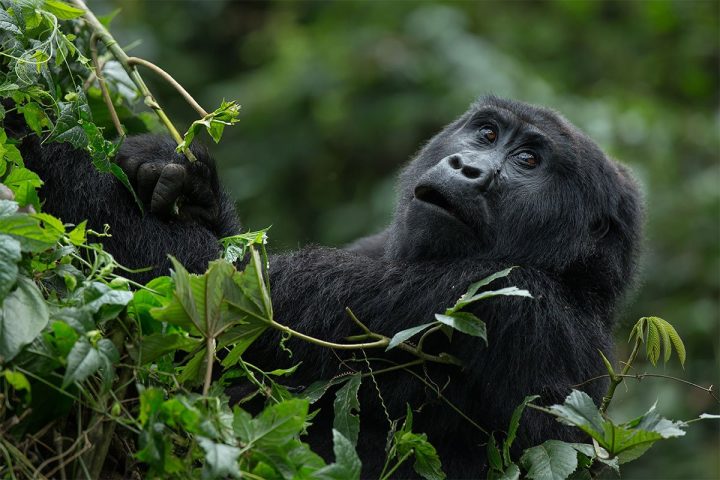
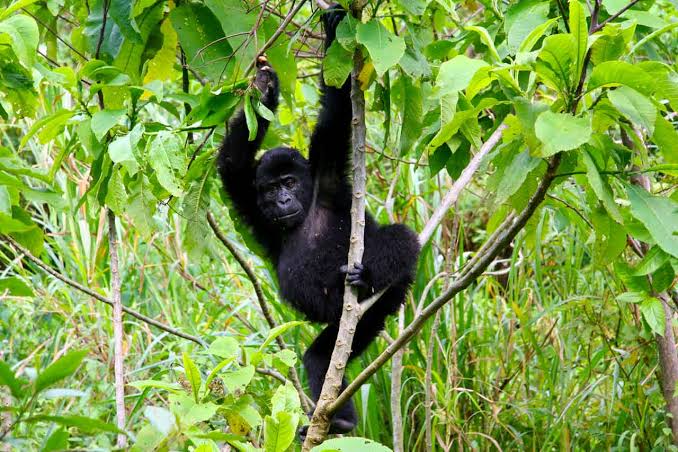
Queen Elizabeth National Park is a haven to over 95 mammal species, reptiles including giant monitor lizards and crocodiles, insect species such as butterflies and many more. The Park houses big games such as elephants of over 4,000 individuals, hippopotamuses, buffaloes of more than 2,000 individuals, waterbucks and several other antelope species. Predators can also be seen roaming the Park’s savannah plains and these may include lions, leopards, side-stripped jackals, spotted hyenas among others. Queen Elizabeth National Park is known to support over 20 species of carnivores making it one of Uganda’s top destinations for predator sighting. Primates that are easily sighted in Queen Elizabeth National Park include chimpanzees, olive baboons, black and white colobus monkeys, vervet monkeys and many more.
Rare and iconic bird species
The Park is a haven to over 600 bird species which is the most comprehensive checklist of any Protected Area in East Africa. This plethora of bird life is as a result of the Park’s rich variety of habitats that ranges from the dense tropical forests of the Kyambura gorge to the wetland habitats of Lakes George and Edward. Bird species that are easily spotted in the Park include the African fish eagle, yellow-billed stork, African skimmer, African finfoot, the blue-headed bee-eater, white-tailed lark, martial eagle, the elusive shoebill stork, African spoonbill, long-crested eagle, black and white casqued hornbill, pink-backed pelican, grey-crowned cranes, western banded snake eagle, black-headed Gonolek, yellow-throated long claw, saddle-billed stork, great blue turaco, red-chested sunbird, Ayre’s hawk eagle, black crake, nob-billed duck, yellow wagtail, scared ibis, African jacana, lesser swamp warbler to mention but a few.
The Kazinga channel also referred to as a wildlife spectacle
The Kazinga channel is a 32kilometer long water channel that links Lake Edward to Lake George. This water channel is a key feature in Queen Elizabeth National Park since it’s a home to a wide range of animal and bird species. The Kazinga channel houses the world’s largest concentration of hippopotamuses of up to 2,000 and countless Nile crocodiles. Other animals to expect while at this water channel include large herds of elephants, buffaloes, waterbucks to mention but a few and over 100 species of water birds. The Kazinga channel in Queen Elizabeth National Park can easily be explored on a boat cruise which is one of the major activities that are done in the Park.
The Ishasha sector
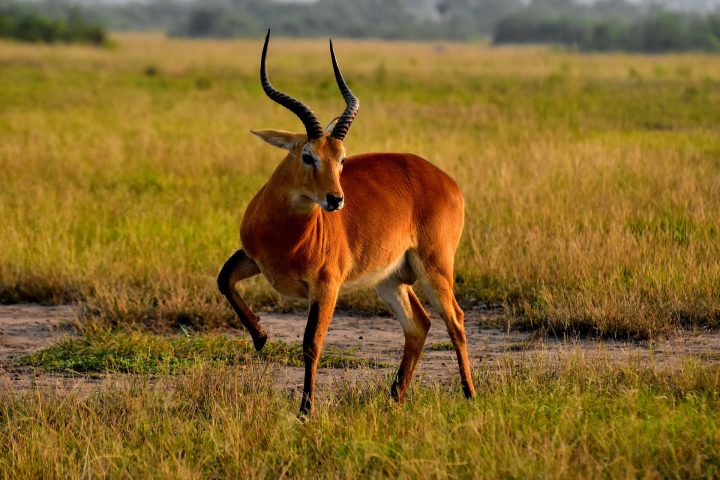
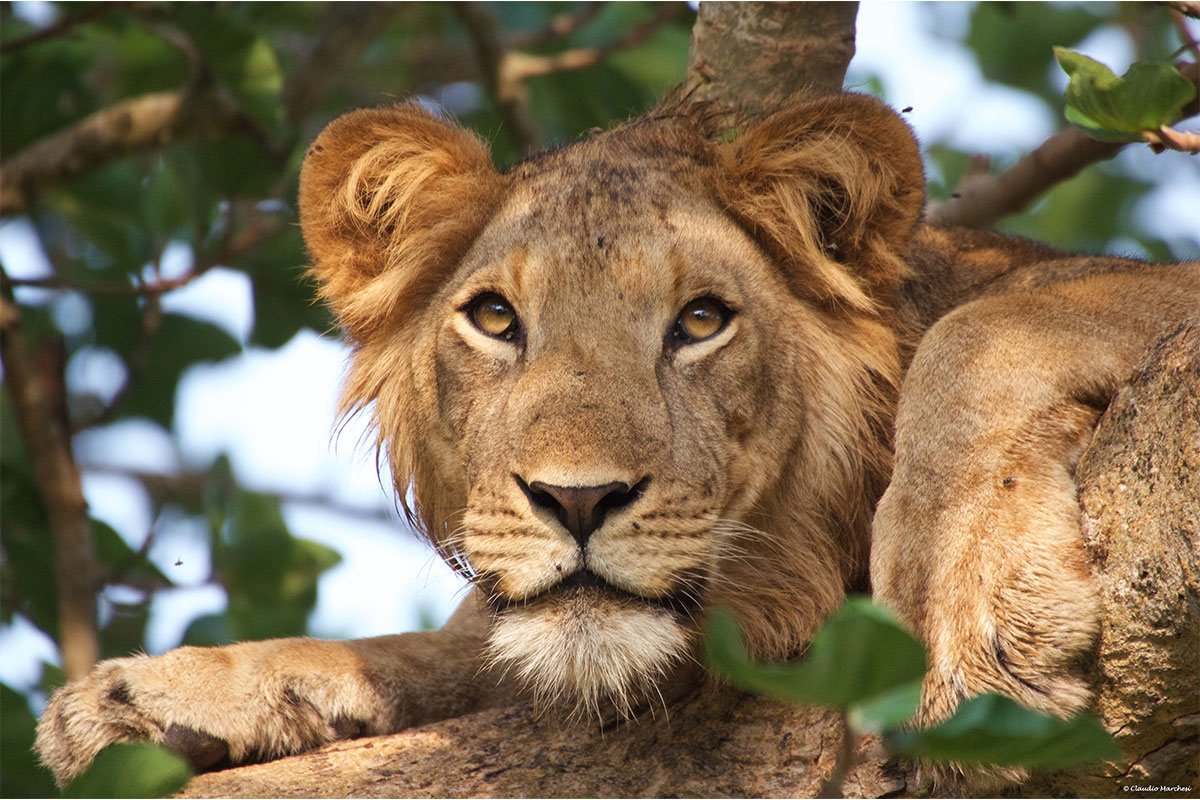
The Ishasha sector is a home to the tree climbing lions in Queen Elizabeth National Park. This sector is in the southwestern rim of Queen Elizabeth National Park and it’s famous for its tree-climbing lions that often spend their days lounging on fig trees as they try to scan the savannah plains for prey. This behavior is rarely seen globally in lions making these lions a must see as well as a must visit to the Ishasha sector for safari enthusiasts. The Ishasha sector is not only a home to tree climbing lions but also a haven many other wildlife species including buffaloes, elephants, Uganda kobs, bushbucks to mention but a few making it one of the most alluring game viewing areas in the country.
Rich cultural heritage
Queen Elizabeth National Park is deeply interwoven with various traditions of local communities beyond its wildlife treasures. Ancient cultural tribes that can be visited around Queen Elizabeth National Park for a true African cultural experience include the Basongora communities, Bakonzo and the Banyabindi communities. Visitors can visit these cultural communities and indulge with the local people where they learn about their ways of living, enjoy storytelling sessions, enjoy traditional dances and music performances and many more.
The Crater Lakes
Queen Elizabeth National Park is situated with Africa’s western rift valley where volcanic activity took place million years ago creating a number of volcanic craters in the area. There are about 10 crater Lakes with in Queen Elizabeth National Park and most of them can easily be seen along the 27kilometer crater drive for an insight about their formation and history. These crater Lakes are also associated with beautiful scenery best for photography and hiking.
Kyambura escarpment
The Kyambura escarpment is a geographical feature where the Kyambura gorge is located. The gorge was formed as a result of the River that flowed off the Kichwamba escarpment. This River over flooded creating a deep valley through erosion and when the water receded, the gorge remained. The Kyambura gorge is therefore a 10 kilometer long gorge that is occupied by a strip of dense forests through the vast savannah grasslands. This dense forest offers beautiful scenery and a home to several primates such as chimpanzees, black and white colobus monkeys and many others.
The landscape
Queen Elizabeth National Park has undulating hills that make beautiful scenery for sight offering a true pearly glamour of the Pearl of Africa. Queen Elizabeth also offers a beautiful view of the Rwenzori ranges that are often seen as if touching the skies since it is situated on the backdrop of Mountain Rwenzori. The Park’s vast savannah ecosystem is primarily open grasslands offering endless views in the jungle as well as the best opportunity to capture the magical sunrise in the wild as well as it sets.
Katwe salt works
Katwe salt works are carried out along Lake Katwe located in the northwestern part of the Park north of the Mweya peninsula. Lake Katwe is one of the crater Lakes in Queen Elizabeth National Park famous for the splendid crater drive. Lake Katwe is known to be a saline Lake with inlets but no outlets making it salty. The Lake’s water often becomes concentrated in the dry season and thus forming salt pans on the bottom and also forming crystalized salt on the surface. Visitors always visit this Crater Lake for an insight about the entire process of mining salt locally.
Activities in Queen Elizabeth national park
Game drives
Game drives are one of the Park’s most popular activities that one can engage in while at Queen Elizabeth National Park. Game drives offer the best game viewing opportunities while in a 4WD tourist vehicle through the Park’s vast savannah grasslands with the guidance of a driver guide or a UWA ranger guide. Game viewing in Queen Elizabeth National Park is best done in the Kasenyi plains due to a variety of animal species that reside and roam through these golden plains. Other areas in the Park best for game viewing include the Ishasha sector known for its tree climbing lions and around the Mweya peninsular. Game drives are done very early in the morning when most animals are active and in the evening when the predators are most active. Night game drives are also supported in Queen Elizabeth National Park but only strictly around the Mweya peninsular so as to reduce stress on animals in other game viewing areas. The best time for game drives in Queen Elizabeth National Park is during the dry season in the months of June to September and December to February. During this period of time, the tracks are dry, the vegetation is short and animals concentrate around permanent water sources which makes game viewing clearer, easy and better.
Kazinga channel boat cruise
The Kazinga channel boat cruise offers a different experience from all that one must have had in Africa. The boat cruise at the Kazinga channel is indeed the highlight of any Uganda safari as said by many visitors that come to Queen Elizabeth National Park. This activity is done along the Kazinga water channel conducted with the guidance of experienced professional guides that always give all the information about this activity, the history of the water channel, wildlife in and around the water channel and all the explanations you would wish to know about its surroundings. This activity lasts for about 2 to 3 hours and often conducted twice a day unless during the peak seasons when it done thrice a day. The morning boat cruise starts at 11:00am to 1:00pm and the evening cruise runs from 3:00pm to 5:00pm.
Bird watching
Bird watching is one of the Park’s prime tourist activities due to a variety of bird species that roam its plains. Queen Elizabeth National Park was internationally recognized by the International Birding Association as an Important Bird Area due to numerous birds of up to 600 bird species it harbors including those that are endemic to the region, those that are globally threatened and migratory bird species. The adoptability of these bird species is as a result of a wide range of habitats within the Park that range from savannah grasslands to woodlands and forests like Maramagambo and Kalinzu forests as well as numerous fertile wetlands that attract water birds. Bird watching in the Park is best done either in the morning or in the evening and the Park’s best bird watching spots include the Kazinga channel, around Crater Lakes such as Lake Katwe, Maramagambo forest, Katunguru Bridge, Kasenyi plains, around Mweya peninsula and many others.
Chimpanzee tracking is an interesting activity that is carried out in the Kyambura gorge of Queen Elizabeth National Park. The Kyambura gorge is a strip of a rainforest cutting across the Park’s vast savannah plains and a home to several primates including our closest cousins the chimpanzees. The presence of chimpanzees has baptized the Kyambura gorge several names like “the Valley of apes” and “the Valley of comedy” among others. Chimpanzee tracking within this dense rainforest starts with a briefing very early in the morning after which visitors are guided into the forests by ranger guides who help them trace the whereabouts of these knotty creatures. This activity lasts for about an hour to 4 hours depending on how far the chimpanzees could have moved in search for food. Guests are entitled to an hour close to these primates which is the best opportunity for them to learn about their social behaviors and interactions.
Hiking and nature walks
Nature walks and hiking is another form of exploring Queen Elizabeth National Park. nature walks are done around the Park’s Crater Lakes and along the 27kilometer Crater walk that exposes guests to nature and several interesting things such as the scenery of undulating hills and the vast plains of the
savannas, a variety of bird species, butterfly species to mention but a few. Other places best for nature walks and hikes include the Kyambura gorge best for scenic viewing, forests such as Maramagambo and Kalinzu to spot a variety of wildlife and plant species and several other areas.
Lion tracking
This is another unique activity that is carried out in Queen Elizabeth National Park. Lion tracking is conducted within the Kasenyi plains and it involves tracking lions with radiator collars. This activity s mainly conducted by professional scientists and researchers from the Uganda Carnivore Program. Lion tracking is only limited to a few number of guests to avoid interference with the natural balance of the wilderness and allow a fabulous lion tracking experience. Guests get an up-close encounter with the lions where they obtain a proper understanding of Africa’s lions.
Cultural encounters
Queen Elizabeth National Park is surrounded by several ancient cultural tribes such as the Banyabindi, Bakonzo, Basongora and many more. During cultural encounters, visitors enjoy the local folklore from elders of the communities as well as storytelling. Guests can also enjoy the Kikorongo cultural dancers at the equator where they are entertained as well as purchase locally made crafts and other souvenirs to take with them back home. Cultural encounters also take guests to several fishing villages around the Park and along Lake George and the Kazinga channel like the Businga village where they participate in some activities such as sport fishing, community walks, boat racing and many others,.
Best time to visit Queen Elizabeth national park
Queen Elizabeth National Park is open to visitors all year round for game viewing, wildlife adventures and other activities though the best time is during the two dry seasons of the year in the months of June to September and December to February. During this time of the year, animals are much easier to see because the vegetation is thinly dispersed or scattered and animals are drawn to permanent water sources unlike during the wet season where they concentrate around several water holes deep within the Park. However, during the wet season, most activities like nature walks, chimpanzee tracking, game drives and others tend to be difficult due to slippery tracks and hiking trails.