Rwanda national parks. Rwanda, often called the “Land of a Thousand Hills,” is a small, landlocked country in East-Central Africa known for its stunning landscapes, diverse wildlife, and extraordinary biodiversity.
Rolling hills, lush green valleys, high-altitude plateaus with the famous Volcanoes National Park, Lake Kivu, Nyungwe forest, and cooler temperatures characterize Rwanda.
As a country, Rwanda offers a unique blend of natural beauty, wildlife encounters, cultural richness, and a powerful story of resilience. Rwanda is a global leader in conservation as they have managed to bring back the mountain gorillas from the brink of extinction, and reintroduced lions and rhinos in Akagera national park.
All these conservation projects have benefited the local communities and promoted sustainable tourism as Rwanda is a prime destination for ecotourism and conservation-focused travel.
Rwanda is home to over 189 mammals including lions, elephants, rhinos, leopards, African golden cats, vervet monkeys, red-tailed monkeys, l’hoest’s monkeys, blue monkeys, golden monkeys, chimpanzees, mountain gorillas, olive baboons, grey-checked mangabeys, horseshoe bats, pangolins, servals, otters, hippos, bush pigs, warthogs, giraffes, giant forest hogs, antelopes, bushbuck, duikers, waterbucks, crocodiles, and many more.
the park has over 705 bird species like Rwenzori turaco, great blue turaco, eastern plantain-eater, harmerkop, hadada ibis, African paradise flycatcher, village weaver, regal sunbird, purple-breasted sunbird, African fish eagle, pin-tailed whydah, pied crow, blue-headed sunbird, little bee-eater, woodland kingfisher, pied kingfisher, Grauer’s swamp warbler, mountain masked apalis, Kungwe apalis, spur-winged goose, stripe-breasted tit, speckled mousebird, red-eyed dove, speckled pigeon, African jacana, wattle-eye, dusky crimsonwing, African openbill, common bulbul, old word orioles, stranger weaver, African grey hornbill, handsome spurfowl, and many more.
Rwanda is home to four national parks, and all are protected ecosystems and wildlife reserves, offering unique wildlife, and breathtaking landscapes. These include the following: Volcanoes National Park, Akagera National Park, Nyungwe Forest National Park, and Gishwati-Mukura National Park.
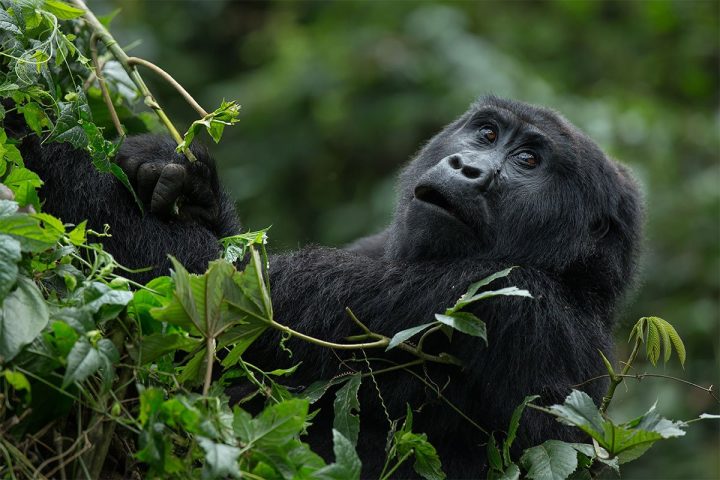
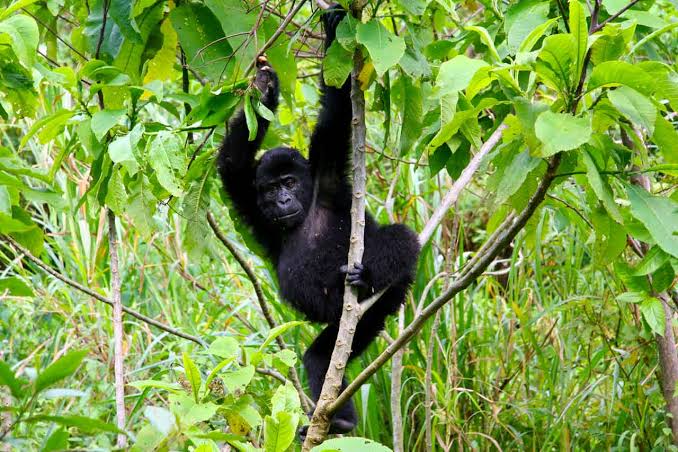
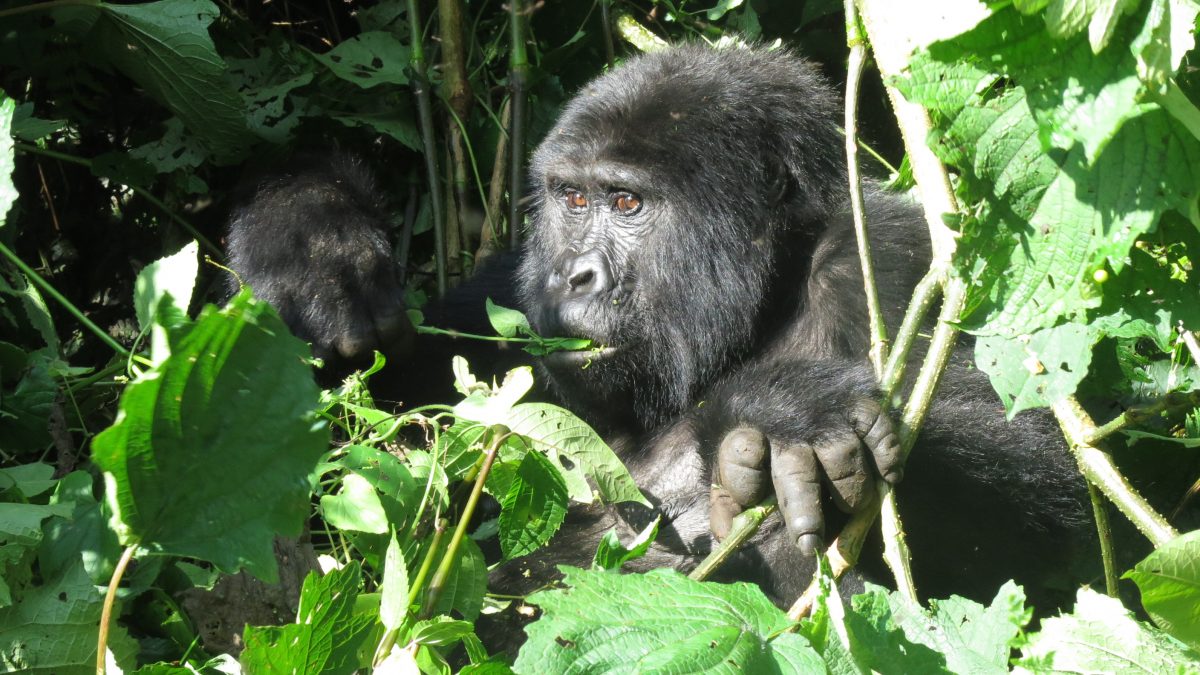
Volcanoes National Park is a prominent national park located in northwestern Rwanda, near Musanze, at 160km2, originally established in 1925, making it one of the oldest parks in Africa. The park is home to five of the eight volcanoes in Virunga, which are Karisimbi, Bisoke, Muhabura, Gahinga, and Sabyinyo, and is known for its unique landscapes and diverse wildlife. Volcanoes National Park is one of the only three parks in the world where visitors can view the endangered mountain gorillas.
The park is best known for its mountain gorillas, but it also offers stunning volcanic landscapes, rich biodiversity, and cultural significance. Away from mountain gorillas, and golden monkeys, it also supports a wide variety of other species like 36 mammals including buffaloes, elephants, bushbucks, giant forest hogs, bush pigs, hyenas, civet cats, leopards, golden cats, duikers, serval cats and over 200 bird species like Ruwenzori batis, Ruwenzori apalis, dusky crimsonwing, Grauer’s swamp warbler, handsome francolin, strange weavers, archer’s robin chat, collared apalis, red-faced woodland warblers, Rwenzori turaco and many more. The landscape is very ideal and stunning for various avian life and animals.
Activities like mountain gorilla trekking, golden monkey tracking, hiking, mountain climbing, bird watching, community tours, and the Diane Fossey site and memorial can be enjoyed by guests when at the park. All these can be enjoyed all year round, however best during the dry seasons of June-September and December-February, as trails are dry and the skies are clear, giving more viewing chances for the wildlife.
Akagera National Park is a conservation area located in the northeastern part of Rwanda, near the border with Tanzania, established in 1934 by the Belgian colonial government, making it one of the oldest national parks in Africa. Named after the Akagera River, which flows along the eastern boundary of the park and feeds into several lakes within the area, including Lake Ihema. Akagera Park covers over 1,122 km2 and includes ecosystems, from savannahs to wetlands. Akagera is unique for its diversity of ecosystems, ranging from savannah plains, woodlands, and swamps to a series of lakes, and wetlands surrounded by cultivated hills, making it Rwanda’s only savanna safari destination. This variety of landscapes makes it one of the most biodiverse parks in Africa and the park’s habitats support a wide array of wildlife, including large mammals, reptiles, and numerous bird species.
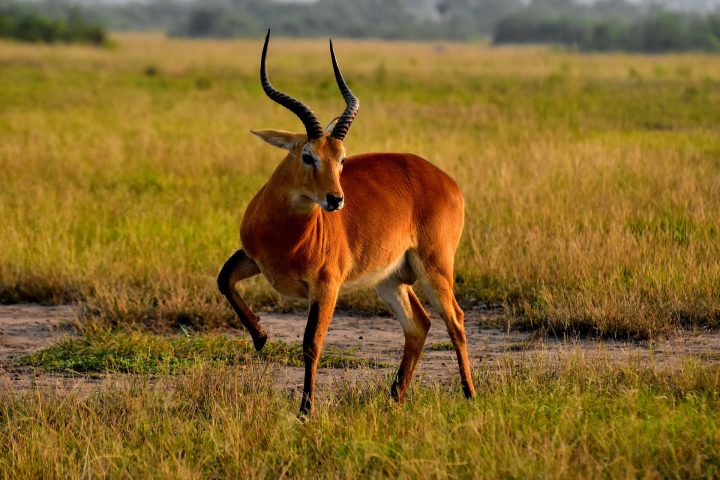
The park is home to the Big Five (lion, leopard, elephant, buffalo, and rhinoceros); as the park reintroduced lions in 2015 and black rhinos in 2017, contributing to its status as a Big Five destination. The park also hosts giraffes, zebras, antelopes, jackals, hippos, hyenas, bushbucks, water bucks, klipspringer, and crocodiles with primates like vervet monkeys, Anubis baboons, olive baboons, blue monkeys, and bush babies among others. With over 480 bird species, Akagera is a paradise for birdwatchers with notable species including the rare shoebill stork, papyrus gonolek, ross’s turaco, grey hornbill, red-faced barbet, cattle egret, swamp flycatcher, African fish eagle, bateleur, African harrier hawk, fan-tailed widowbird, African jacana, marabou stork, African darter and many more.
While at the park, visitors can enjoy activities like game drives, boat cruises, sport fishing, guided nature hikes, birding, and community tours throughout the year with the dry seasons of June-September and December-February for wildlife viewing as animals gather near water sources and the wet seasons of March-May and October-November which offer lush scenery, fewer crowds and encourage birding.
Nyungwe Forest National Park at approximately 1,000km2 is situated in the southwestern part of Rwanda, in the western branch of the Great Rift Valley, near Rwanda’s border with Burundi and Lake Kivu. This makes Nyungwe a critical watershed between the Congo River basin to the west and the Nile River basin to the east, supplying 70% of Rwanda’s fresh water. Nyungwe forest is one of Africa’s oldest and most biodiverse tropical montane rainforests celebrated for its rich array of wildlife, unique landscape, and cultural importance.
Nyungwe Forest National Park is home to over 1,000 plant species, and 200 tree species, with its vegetation remaining relatively intact through the climatic fluctuations. The park is also home to 85 mammals including 13 primates like chimpanzees, L’Hoest’s monkeys, colobus monkeys, baboons, mona monkeys, golden cats, giant forest hogs, mongoose, duikers, and many more; over 300 bird species with Albertine Rift endemics like regal sunbird, red-throated alethe, yellow-eyed black flycatcher, great blue turaco, Kungwe apalis, Rwenzori apalis, Albertine owlet, Rwenzori batis, handsome francolin, dusky crimsonwing, archer’s robin-chat, Neumann’s warbler, and many more, reptiles, amphibians, butterflies, and breathtaking waterfalls.
Chimpanzee trekking, hiking, canopy walking, and bird watching are some of the activities enjoyed by guests while at the park. The best time to visit the park is during the dry season of June-September and December-February, as most trails are dry and easy to move around, and more chances to view the primates, birds, and other mammals.
Gishwati-Mukura National Park is Rwanda’s newest and least-visited national park, making it a perfect destination for nature lovers looking for a quiet, off-the-beaten-path experience. Located in western Rwanda and covering over 34km2, the park is a conservation success story focusing on forest restoration and biodiversity protection. The park is a biosphere reserve and the integration is part of a broader effort to restore the degraded lands and promote biodiversity conservation in the area.
The park is a haven for primates including chimpanzees, golden monkeys, blue monkeys, black and white colobus monkeys, vervet monkeys, and olive baboons, animals like jackals, duikers, servals, genets, civets, and many mothers; over 200 bird species like purple-breasted sunbird, regal sunbird, Grauer’s swamp warbler, Woodhoopoe, martial eagle, grey-crowned crane, dusky crimsonwing, Ruwenzori turaco, mountain yellow warblers, red-throated alethe, and many more and reptiles all contributing to the rich tapestry of life in the forest ecosystem. Gishwati-Mukura National Park is a prime example of how concerted conservation efforts can revive ecosystems that have suffered from deforestation and human-induced degradation.
Primate tracking, hiking the Gishwati-Mukura waterfall, community tours, rafting on the Mubuku River, guided nature reserve walk, and birding are some of the activities that visitors can engage in to enjoy the full park’s experience.