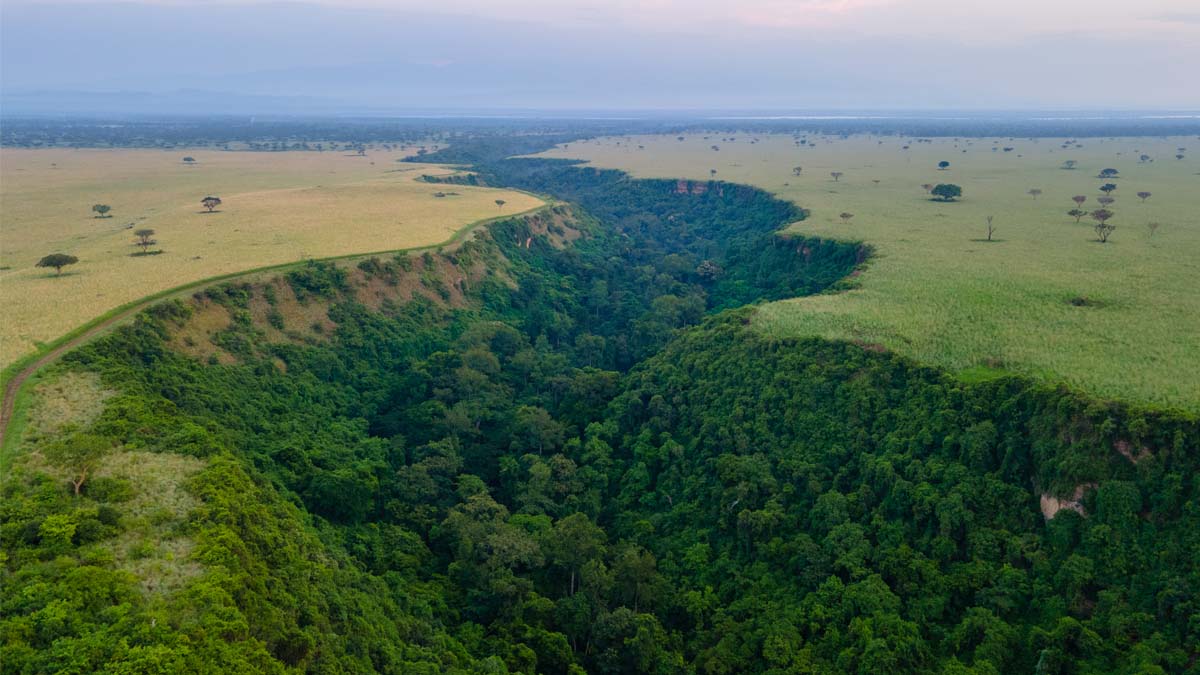
Kyambura gorge is a stunning feature situated in the southwestern region of Uganda bordering the southeast of the Kazinga channel and the south shore of Lake George. It is therefore in the northeastern region of Queen Elizabeth National Park approximately 30 kilometers from the Park headquarters. The gorge has a landscape of gently rolling savannah grasslands above and deeply cut by a 16 kilometer valley that supports riverine thick forests and the Kyambura River that connects to the Kazinga channel. The Kyambura gorge together with Queen Elizabeth National Park, Maramagambo forest and Kigezi game reserve all adjoin to form the Queen Elizabeth Protected Area.
The Kyambura gorge is popularly referred to as the Valley of Apes primarily because of its high concentration of chimpanzees and other primate species within its lush rainforest. This gorge is 100 meters deep at the Kichwamba escarpment and 16 kilometers in length with forested riverine supporting a unique ecosystem. The Kyambura gorge was initially part of the Kyambura game reserve that was known to be a larger controlled hunting area before it was officially established as a game reserve in 1965. The history of the Kyambura gorge is a blend of geological formation and local folklore.
Geologically, the Kyambura gorge is thought to have been formed through secondary faulting during the formation of the East African Rift Valley. This process therefore created valleys including this gorge along the floor of the Rift valley. It’s also believed by scientists that the Kyambura River flowing from the Kichwamba Escarpment eroded a deep valley over time creating the Kyambura gorge.
Locally, the name Kyambura means “I can’t see it” and it’s connected to the local legend of a devastating flood that swept through the valley causing significant loss of life and property. After the floods subsided, the local villagers searched for their lost loved ones and property but were unable to find any of them. The River’s name “Kyambura” became a symbol of grief and the inability to find their loved ones and possession leading to the name of the gorge. This sunken distinctive rainforest now offers diverse habitats supporting a wide range of wildlife including populations of both wild and habituated chimpanzees.
Attractions in the Kyambura gorge
The gorge itself
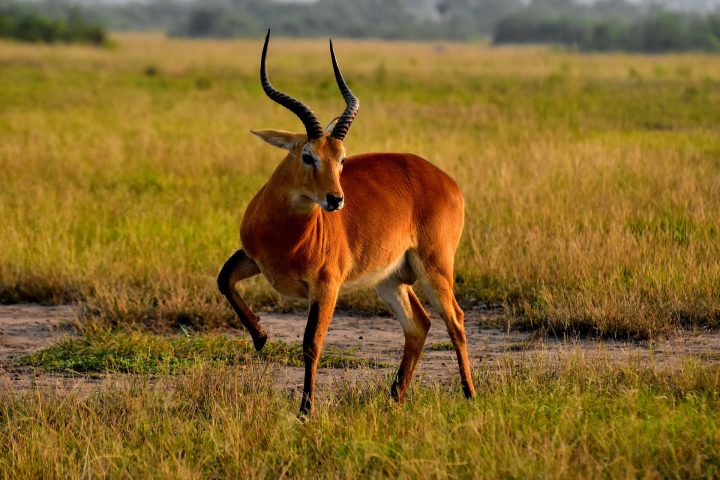
This is a sunken depression that is over 16 kilometers in length and 100 meters in depth occupied by both riverine and rainforests. These are known to support the gorge’s diverse ecosystem such as wildlife species like birds, primates and many more. This forested depression attracts a variety of other wildlife species such as elephants, hippopotamuses from the Kyambura River and Kazinga water channel, bushbucks, waterbucks to mention but a few. This Kyambura gorge is known for its stunning views more so of the rainforest and the surrounding landscape.
Primates
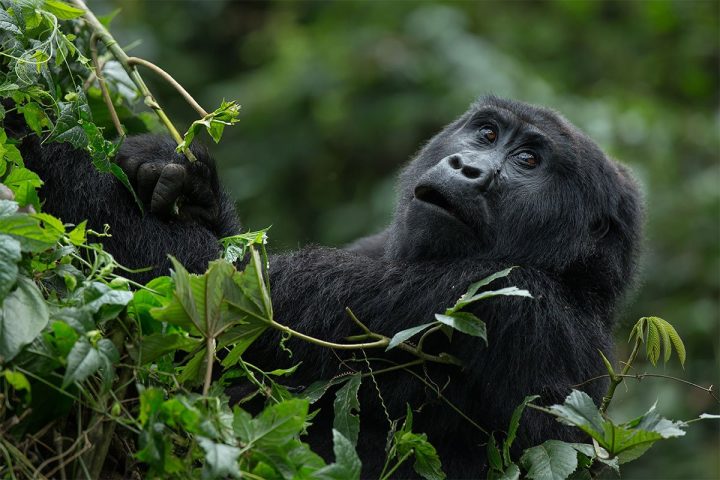
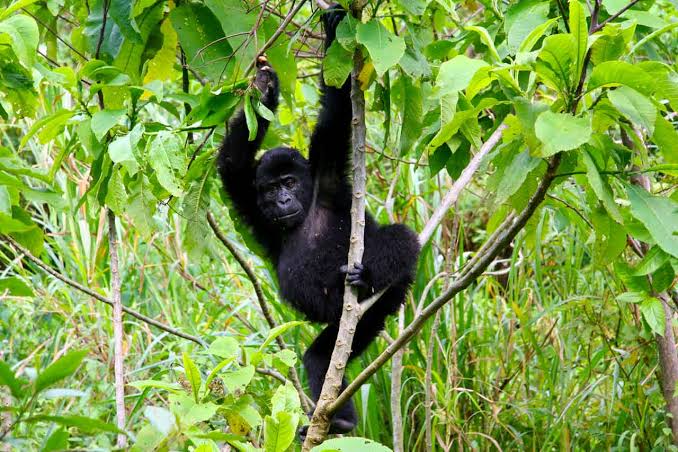
Kyambura gorge is predominantly occupied by riverine forests and rainforests whose tree canopies are a perfect habitat to a wide range of primate species which are the greatest attraction in the Gorge. Primates include the chimpanzees, red-tailed monkeys, olive baboons, black and white colobus monkeys, vervet monkeys and nocturnal primates such as Bush babies and pottos. The Kyambura gorge is a renowned destination for chimpanzee trekking and the only place in Queen Elizabeth National Park where habituated groups of chimpanzees can be sighted after trekking through thickets and forested areas.
Bird species
The Kyambura gorge is renowned for its variety of avian species including forest birds and water birds that roam around River Kyambura. The bird checklist of the gorge includes the blue-headed bee-eater, African Finfoot, white-winged warbler, papyrus canary, African broadbill, black-headed bee-eater, Verreaux’s eagle owl, blue-bellied kingfisher, Great blue turaco, martial eagle, black and white cascade hornbill, bar-tailed godwit, black-ramped buttonquail, Chapin’s flycatcher, white-tailed lark to mention but a few. This therefore makes the gorge one of the best places for bird watching in Queen Elizabeth National Park.
Other wildlife species
Other than primates and bird species, Kyambura gorge is a home to several other wildlife species such as forest elephants, forest hogs, bushbucks, hippopotamuses that strike the forest in the night from the Kyambura River, waterbucks, several amphibians and insects like butterflies to mention but a few. Much of these wildlife species can easily be spotted during guided nature walks and walking safaris through the Kyambura forest.
Activities in the Kyambura gorge
Chimpanzee trekking
Chimpanzee trekking is one of the gorge’s major tourist activities since this forested valley is known for hosting both habituated and wild chimpanzees. Chimpanzee trekking starts very early in the morning with a briefing about the dos and don’ts of this activity at the information center after which visitors are led into the forests by armed rangers and a guide to embark on the search of the chimpanzees in their natural habitat. While guests hike through the forests, they easily spot several other primates such as vervet monkeys, olive baboons, black and white colobus monkeys, red tailed monkeys, sights of a variety of bird species and flowering plants. Having encountered a troop of habituated chimpanzees, guests are allowed an hour in their presence while they enjoy sights of them feed, play and several social behaviors. Visitors are allowed to record videos, take photos though without the flashlights on to have such moments kept for a life time.
The Kyambura gorge is a haven to a wide range of bird species that reside in the riverine and tropical forests that occupy most of the gorge’s area cover. This therefore makes bird watching experience possible in the gorge where visitors access the forest through several trails to spot the avian species that roam this magical forest. Bird watching starts at the headquarters within Kyambura where visitors are led by an experienced birder guide to help them out in species identification and armed rangers security just in case of any attack from wild animals. Bird watching within Kyambura gorge can be done twice a day that is to say in the morning and afternoon or evening shifts for one to look out for a variety of bird species such as black-ramped buttonquail, blue-headed bee-eater, bar-tailed Godwit, Chapin’s flycatcher, white-tailed lark, Martial eagle, Verreaux’s eagle own, papyrus Gonolek, African broadbill, papyrus canary, black bee-eater, white-winged warbler to mention but a few.
Guided nature walks or walking safaris
Embarking on a guided nature walk is the best way to explore and cover what Kyambura gorge has to offer for example plant species, mammals, bird species, reptiles, primates and many more. Guided nature walks start with a briefing at the starting point where they trek through several walking trails as they enjoy sights of several wildlife species that leave one fascinated and offering an opportunity for nature photography.
Best time to visit the Kyambura gorge
Kyambura gorge is open for visits throughout the year though the best time is during the two dry seasons of the year in the months of June to September and December to February. This dry season offers favorable conditions for a variety of activities that take place in the gorge such as chimpanzee trekking, bird watching, nature walks and many more since there is no or less rainfall and the trails are generally dry and accessible. The vegetation is also not very thick like it becomes during the rainy season which allows visitors to spot a variety of wildlife species without destruction. However for those interested in bird watching, the best time is during the rainy season in the months of March to May and October to November. During this period of the year, food for birds is in plenty which also attracts several migratory birds into the forest. The rainy season is also the best option for budget travelers since it is regarded as a low season and the turn up for visitors is always low which provides room for several service providers like lodges to lower their charges making the entire trip affordable for these cost-conscious travelers.