Ngamba Island is an Island on Lake Victoria known to be part of the famous Koome group of Islands about 23 kilometers by boat southeast of Entebbe town. Other Islands include Damba Island, Bulago, Kiimi, Nsazi and Koome. It is about 100 acres of rainforest that harbor and protect orphaned chimpanzees that were rescued from the illegal pet and bushmeat traders.
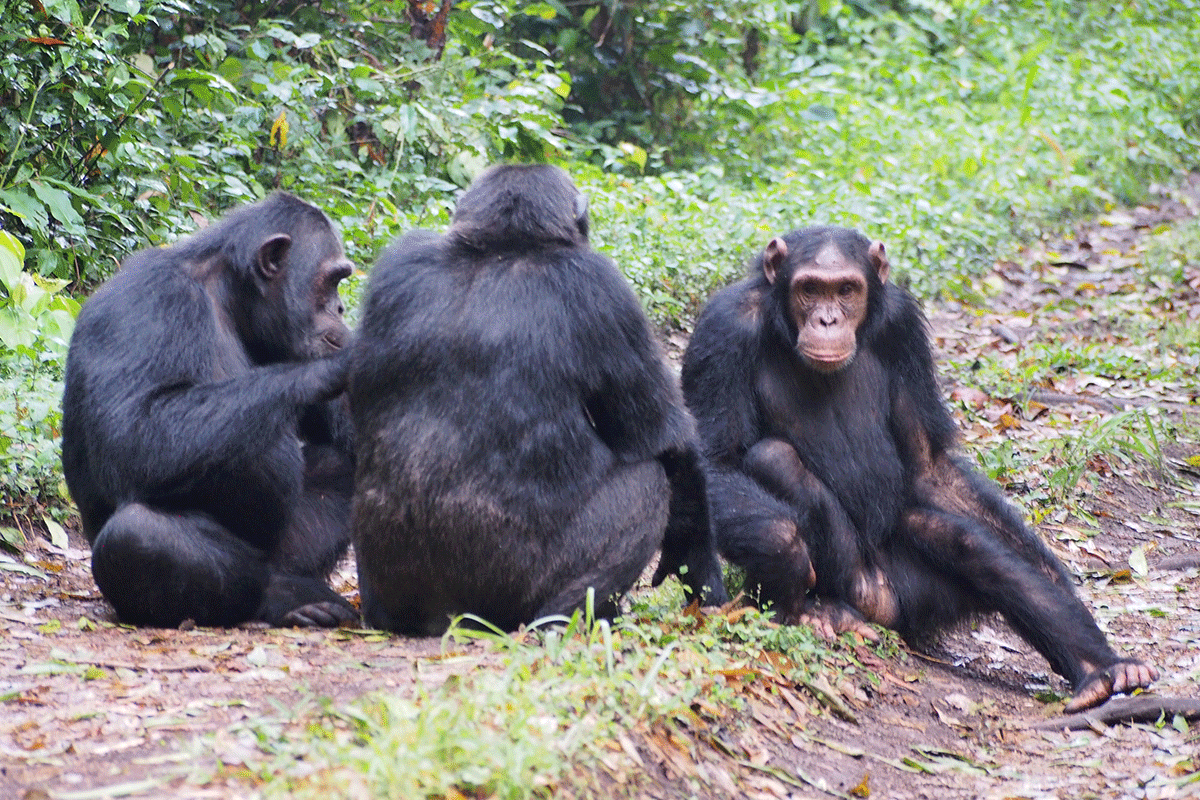
Ngamba Island doesn’t only protect orphaned chimpanzees but it also supports a rich diversity of natural wildlife and provides a variety of natural foods for several primate species. Ngamba Island is now a renowned chimpanzee sanctuary that protects up to 52 orphaned chimpanzees most of which were confiscated and rescued from the illegal pet and bushmeat trade in East Africa. The chimpanzees living in Ngamba Island are now very safe and live in semi-natural environment in which they recover and eventually thrive over their long lives of up to 60 years. Chimpanzees at Ngamba Island have the liberty of roaming and foraging in the forests though their diet is supplemented multiple times daily by variety of fruits provided by care takers and visiting guests who are able to view and feed them from a suspended viewing platform.
The chimpanzees here can either stay in the forest throughout the night or return to nighttime enclosures where they build nests and receive an evening meal. There are scheduled times for chimpanzees to feed in an open place that is at 11:00am and 2:30pm where they are enclosed with electric wire fence. During this time, travelers can easily view the chimpanzees from a raised platform where they can as well feed them. Therefore Ngamba Island is one of the few places to view chimpanzees in Uganda alongside other places like Kibale National Park, Budongo forest, Kalinzu forest and in the Kyambura Gorge in Queen Elizabeth National Park.
The history of the Ngamba Island Sanctuary dates back in 1998 when Ngamba Island was chosen and gazetted as a sanctuary for orphaned and confiscated chimpanzees across East Africa. During this very year, the first 13 chimpanzees were rescued and brought to the Island marking the origin of the sanctuary.
The sanctuary has since then grown to now protect and support more than 52 chimpanzees making it one of the leading primate sanctuaries in Africa. Ngamba Island Chimpanzee Sanctuary is a project of a non-profit organization the Chimpanzee Sanctuary and Conservation Trust charged with providing welfare to the chimpanzees.
This non-profit organization is also in partnership with six organizations committed to the welfare and conservation of wildlife namely the Born Free Foundation, Jane Goodall Institute, International Fund for Animal Welfare, Uganda Wildlife Conservation Education Center, Environmental Conservation Trust of Uganda and the Uganda Wildlife Society. Ngamba Chimpanzee sanctuary is accredited by the Global Federation of Animal Sanctuaries and the Island is now popularly known as the Chimpanzee Island.
Attractions at Ngamba Island
Chimpanzees at Ngamba Island
Ngamba Island is a proud home of more than 52 chimpanzees that have been rescued from poachers and wildmeat traders around East Africa for example those rescued from the Ituri forests of the Democratic Republic of Congo and other areas. Chimpanzees are the major tourist attraction in Ngamba which is known to offer the best chimpanzee viewing experience in Uganda other than Kibale National Park. These chimpanzees enjoy Ngamba’s semi-natural environment where they can move freely and forage in the Island’s 95 acres of forest. They are fed several times a day and have an option of staying in the forest for a night though they can also return to their enclosed area where they can construct their nests and have an evening meal. Chimpanzees at Ngamba Island can be viewed in their natural habitat or from a designated place where they are fed from by visiting guests. The wellbeing of chimpanzees is taken care of a dedicated team of caretakers, veterinary doctors and researchers that work tirelessly to ensure that they are in good shape and healthy by providing enriching activities such as monitoring their health and behavior to promptly promote their physical and emotional welfare.
Bird species at Ngamba Island
Ngamba Island is a haven to over 150 bird species including the forest and water-associated bird species. Bird species that can be sighted at Ngamba Island include the spur-winged lapwing, African openbill, reed cormorant, African fish eagle, grey-crowned cranes, marabou stork, Shelley’s crimsonwing, yellow-breasted wavers, great blue turaco, shoebill stork, African sacred ibis, black kite, pied kingfisher, western cattle egrets, slender-billed weaver, village weaver, pied crow, Egyptian goose, white-browned coucal, water thick-knee, lesser black-backed gull, white-winged tern, great cormorant, Hadada ibis, Harmerkop, great-white pelican, pink-backed pelican, barn swallow, Angola swallow, common bulbul, collard sunbird, orange weaver, African-pygmy goose, red-eyed dove, common greenshank, slender-billed gull, malachite kingfisher, African paradise-flycatcher, spectacled weaver, African pied wagtail, black-headed weaver, blue-spotted wood-dove, African green pigeon, black crake, red-knobbed coot, black-winged stilt, common sandpiper, striated heron, grey heron, hooded vulture, palm-nut vulture, crowned hornbill to mention but a few. The above bird species can easily be sighted on one’s birding excursion in Ngamba Island along Lake Victoria.
Other wildlife species
Other than bird species and chimpanzees, Ngamba Island protects several other wildlife species and plants that contribute to the overall biodiversity of this Island. These include mammals such as the marsh mongoose, genet cats, fruit bats, spot-necked otters and many more. Other wildlife species include reptiles like the Nile monitor lizards, insects like a variety of butterfly species to mention but a few. All the above can easily be sighted when one embarks on a nature walk through the trails of the forested Island.
Tourist activities at Ngamba Island
Chimpanzee viewing and feeding
Ngamba Island is famously known for its chimpanzees and viewing these orphaned chimpanzees is the prime activity at this forested Island. At Ngamba Island, visitors can observe chimpanzees from a dedicated viewing platform and participate in guided feeding sessions. There is a well-developed elevated viewing platform overlooking the forest for visitors to enjoy an up-close view of these chimpanzees. During this activity, visitors have the opportunity to spend time close to the chimpanzees where they learn about their social behaviors, feeding behaviors and many others. The feeding sessions of chimpanzees are known to be done twice a day where visitors can take part and enjoy the mesmerizing feeding habits of chimpanzees as well as clearly observing how they do react to different types of food and fruits. The chimpanzees are fed on a variety of fruits and vegetables such as bananas, pineapples, watermelons and several others that are thrown to them from a raised viewing platform. Visitors can also take part in volunteer programs for the interested in a more hands-on experience where they can help with chimpanzee monitoring, care, data collection and entry, sanctuary maintenance and several other activities.
Bird watching
Ngamba Island is a haven to both water birds and forest associate bird species making it a perfect destination for bird enthusiasts. Bird watching at Ngamba is done with the guidance of a bird guide who is available to help visitors with bird species identification as well as answering each and every query about wildlife species at the Island. Bird watching is done both in the forest through several trails and along the Island shores for an experience of water associated bird species.
Boat cruises
Ngamba Island offers opportunities for sunset boat cruises where visitors can enjoy the scenic views of the surrounding areas and potentially spot a variety of other wildlife species. During these boat cruises, visitors are also able to capture unique views of fishing villages and fishermen casting their nets. The thrill of this experience comes when visitors realize that they are crossing the equator line in the Lake from the southern hemisphere to the northern while sipping a glass of wine or any other ice-cold beverage.
Visiting fishing villages and fishing
Visitors that have made their way to Ngamba Island can make short treks to the neighboring fishing villages where they can take part in fishing as well as interact with the local fishermen. While fishing, visitors have an opportunity of hooking the Nile Perch from Lake Victoria known for being the largest fresh water Lake in Africa. Fishing excursions at Ngamba Island feature 4 to 8 full hours of incredible fishing as guests try out several fishing gears and methods. Fishing is done under the guidance of UK certified trained skippers that know the Lake intimately and always available to offer amazing fishing experience.
Community cultural experience
Community visits are arranged at the Island for visitors to have an insight about the local culture and traditions as they also learn about their current lifestyles. Cultural performances are often organized for visitors that always stay for an overnight by the bonfire in the night where they interact with the locals as they enjoy their cultural performances and storytelling.
Guided nature walks
One of the best ways to explore Ngamba Island is by embarking on a guided nature walk through the Island’s trails where visitors can learn about the local flora and fauna from the experienced and knowledgeable guides. Several wildlife species are easily spotted during guided nature walks for example a variety of bird species, tree species, butterfly species, small mammals and reptiles to mention but a few.
Best time to visit Ngamba Island
Ngamba Island is open for visits all year round though the best time is during the dry season that typically falls from June to September and December to February. These periods of the year offer favorable and predictable weather conditions that make the Island’s activities more enjoyable such as boat cruises Lake Victoria, Chimpanzee viewing, nature walks to mention but a few. The dry season also present pleasant temperatures and clearer skies that offer better views of Lake Victoria and the surrounding scenery. The wet season (March to May and October to November) offers unreliable weather conditions that may hider or disrupt activities. However a wet season can also be a perfect time to visit the Island there are typically fewer visitors which can make for a peaceful experience. This period also presents a lush green landscape that offers a unique visual experience and scenery.