Aberdare national park is located in the central Kenya covering an area of about 767 square kilometers. The park is composed of both montane and low altitude area. The park accommodates Aberdare ranges which are high about 1,829 meters above the sea level. The park was established in 1950 ad it was established as a game reserve. It was initially called Nyandarua a Kikuyu dialect meaning “the drying hide’’ It was regarded as the home of Ngai by Kikuyu, Ngai meaning (gods) and they believed him to be one who gave them blessings. In 1884, the President of the Royal Geographical Society Joseph Thompson the explorer he renamed the ranges in Honor of Lord Aberdare. In 1950, these ranges were a fighting ground between British forces and the Mau Mau freedom fighters and the popular site in this area is the Headquarters of Dedan Kimathi who was the leader of Mau Mau rebellion in 1950s. The park being in the Kikuyu community, they believed that the ranges are a home to their gods and they could visit to the ranges to worship gods. In the early 1920s, the European immigrants occupied these ranges and they named them the White Highlands, however in 1884, the ranges were renamed by the then President of the Royal Geographical Society Lord Aberdare, he called the park Aberdare Ranges. Literally the park is composed of different vegetation types, from Afromontane, riverine to some of the open savanna. The park is a home to a number of wildlife for example; black rhinos, leopards, lions, golden cats which are often seen in bamboo forests, forest antelopes, birds among others.
Attractions in Aberdare National Park
Wildlife in Aberdare National Park
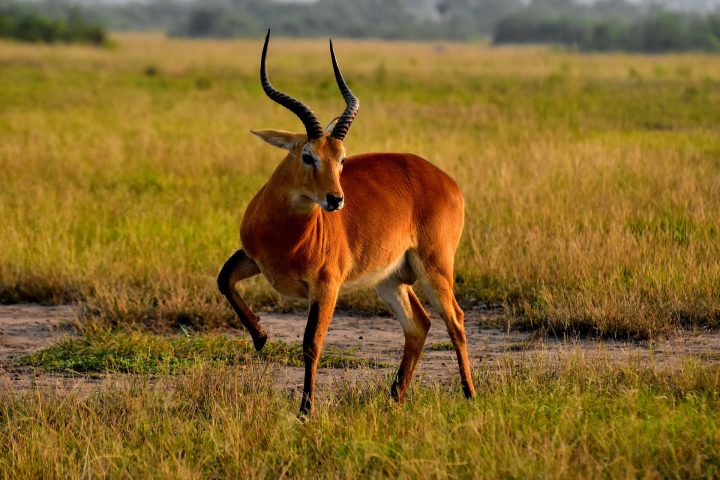
Aberdare national park is a home to Africa’s Big 5 which are; rhinos, elephants, buffaloes, lions and leopards. The park is congested with other wildlife species for example; bushbucks, bongo antelopes, warthogs, golden cats, stripped jackals, spotted genet, forest hogs, hyenas, baboons, monkeys, duikers, zebras. In higher moorland, there lies high population of elephants and servals and the salient area a corridor where elephants migrate from.
Birdlife in Aberdare National Park
The park has a recorded number of birds to be 250 bird species and for the birders, this is a birding paradise where they have to dive deep in the forests to encounter birds of different types. In wet season between November and May, this is believed to be the breeding season, nesting season and many migratory birds are seen in the park because of the abundant food. At this point, you need to have your binoculars with clear lenses to engage in the birding experience. Some of the bird species you expect to encounter in Aberdare national park are; African black duck, buff-spotted fluff tail, African thrush, Baglafecht weaver, African hawk, crowned eagle, Blacksmith lapwing, little grebe, speckled pigeon, lemon dove, Martial eagle, Malachite kingfisher, Yellow-romped tinker bird, green-backed honeyguide, red fronted parrot, Mountain Gray Woodpecker, Black-collared Apalis, Aberdare Cisticola, African Paradise-Flycatcher to mention but a few.
The Vegetation in Aberdare National Park
The vegetation of Aberdare national park is so fascinating in that, it is composed of Moorland, thick forests, bamboo and rhododendrons. This vegetation is a home to wildlife found in the park.
Aberdare Mountain Ranges
The park is composed of the rolling range lands which have breathtaking views and they are worth a visit. The highest peak in Mount Santima which is 4,001 meters above sea level, followed by Mount Kinangop with a height of 3,906 meters, Table Mountain at 3,791 meters, Martini Hill at 3,698 meters, Mount Elephant at 3,590 meters and Mount Chesubwa being at 3,364 meters.
Waterfalls in Aberdare National Park
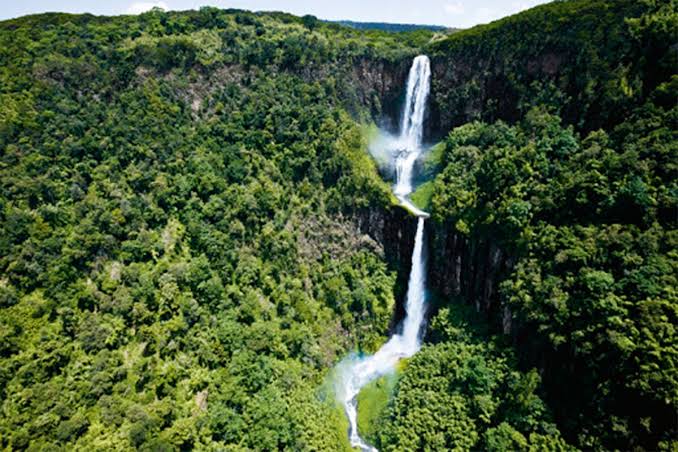
Aberdare national park is famous for its dramatic waterfalls which make the park so attractive. The main waterfall is Karuru waterfalls which has 3 fascinating steps with first being at a height of 130 meters, second waterfall is at 117 meters and the third one being at 26 meters. The park has other waterfalls for example Gura waterfalls which are just adjacent to Karuru waterfalls, Magura waterfalls which flow over the yawning mouth of Queen’s Caves and you an access these waterfalls through Mutuboi west gate. The hike to the waterfalls takes about 20 minutes where you have to pass through the forests to catch the breathtaking views.
The historical and cultural sites in Aberdare National Park
The park has rich history and cultural sites making it one of the most likeable cultural and historical destinations in Kenya. The park provided fighting ground for Dedan Kimathi the leader of MAU-MAU rebellion and his troupes. During this period, they used to camp between Honi Campsite and Elephant ridge.
The Mugumo Tree (Fig Tree)
This is regarded as the largest fig tree that lies in the heart of the park, it was used as the hideout by the Mau-Mau rebellion during the fight against British colonial rule. The tree has been in existence for centuries and therefore it possesses a rich history in the park. This tree was used as a post office, where message was passed through. Dedan Kimathi used to write information put on the tree for the rest of the fighters to know the next move. After the death of Dedan Kimathi, the tree was named Kimathi Post Office.
The Kikuyu Community
In the park, there is a tribe called Kikuyu who have lived here since time memorial. They believed that Aberdare ranges are a home to their gods who they call Ngai. The park was initially called Nyandarua which translated to Dried Hide and this was because of the folds found in the park.
What is the best time to visit Aberdare National Park?
The fact is that, you can access the park throughout the year but the best time to access the park is during dry season between June and September and December to February. Being a mountainous park, it is better to visit the park when the pathways are dry, all roads are purely dry, the vegetation is short and you can clearly see the park, however on the other hand, during wet season, between March and May it is when the park is very green, the vegetation is thick, birds are breeding and nesting, thus this is the best period for the birders to pick up their binoculars, clean their lenses and head out to the park to capture beautiful moments. You can combine Aberdare national park safaris with Masai Mara national reserve or gorilla trekking in Bwindi impenetrable national park in Uganda, or Serengeti national park in Tanzania or combine it with Volcanoes national park.