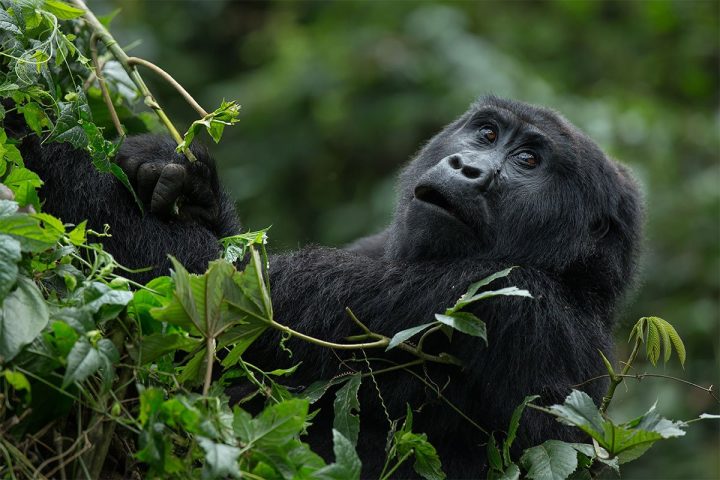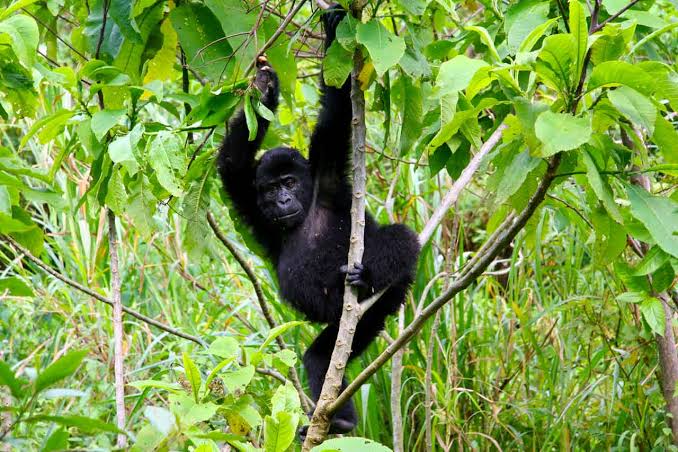
Nyakagezi gorilla family is one of the two habituated gorilla families that thrive in Mgahinga National Park. The other is Hirwa gorilla family, which is yet fully made available for trekking.
Mgahinga National Park is Uganda’s smallest National Park located in the country’s southwestern region bordering Volcanoes National Park in Rwanda and Virunga National Park in the Democratic Republic of Congo. It is therefore situated in the Virunga region encompassed by three inactive volcanoes out of the eight volcanoes namely Mount Gahinga, Mount Muhabura, and Mount Sabyinyo.
The Nyakagezi gorilla family obtained its name from an area within the Park known as Nyakagezi known to have a lot of food attractive to the gorillas where this gorilla family was first sighted. The habituation of the Nyakagezi gorilla family started way back in 1991 and later opened for tourism in 1994. This gorilla family was famous for its migratory behaviors across Uganda’s borders to the Democratic Republic of Congo as well as Rwanda.
The Nyakagezi gorilla family later settled in Mgahinga National Park ever since 2012 due to abundant food within its range making it to be one of the easiest gorilla families to track in Uganda. It therefore has a permanent settlement around a small home range of low altitude where the family prefers feeding from, nesting, relaxing, and recreation unlike in the past where it used to be mobile occasionally crossing to Volcanoes National Park of Rwanda and Virunga National Park of Democratic Republic of Congo.
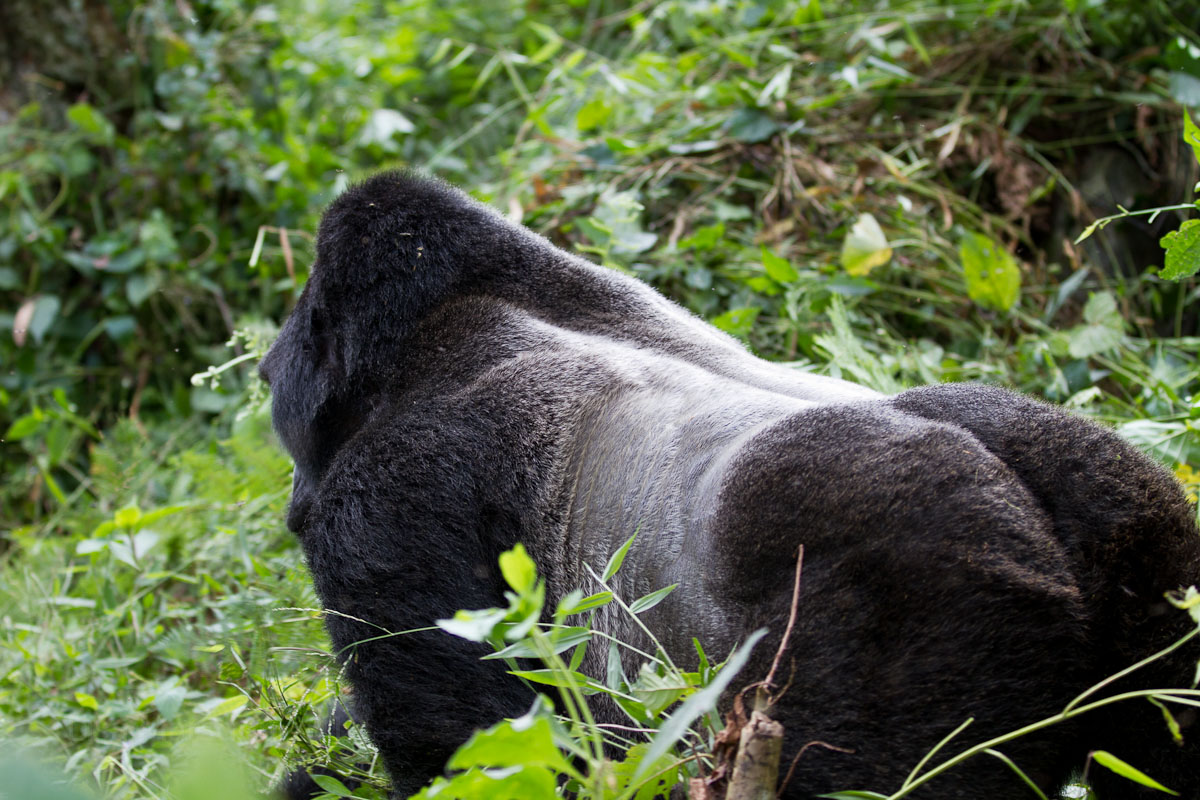
Nyakagezi is currently comprised of 10 family members being led by a dominant silverback known as Mark a son to Bugingo an old silverback who is currently an elderly leader playing the role of a grandfather in the family.
Bugingo Silverback was the family leader during the period in which this gorilla family was being habituated but later overthrown by his son Mark who is currently deputized by his brother Mafia who is also a Silverback. Bugingo Silverback is estimated to be over 54 years of age and still thriving in this same gorilla family something uncommonly seen in gorilla life.
In usual circumstances any silverback gorilla that happens to be overthrown by another silverback in the same family resorts to a lonely life or abandoning the family for life to start up another gorilla family.
Therefore family members of the Nyakagezi gorilla family include silverbacks namely Bugingo, Mark, and Mafia, adult females namely Kaboko, Nyiramwiza, Munezero, Majembere a male sub-adult, a juvenile known as Ndungutse and two infants.
Nyakagezi gorilla family trekking
Trekking this magnificent gorilla family starts with a briefing about the etiquette, your expectations, and what is required of you during gorilla trekking early in the morning at the Park headquarters. A maximum of eight people are led into the Virunga mountain slopes by Park rangers at exactly 8:00am to embark on the search of these gentle giants in their natural habitat.
Trekking these mountain gorillas lasts for about 1 to 4 hours depending on how for the mountain gorillas could have moved in search for food and having located the entire family an hour is allowed with the gorillas which is an opportunity for you to closely observe them go by their routine activities.
Having taken enough flash-less pictures and videos, you trek back to the starting point to be awarded your gorilla trekking certificate and head off to your next safari destination. This gorilla family is one of the most exciting gorilla families to track in Uganda since its members are so entertaining, playful and free with guests easiest. It is also one of the easiest gorilla families to track in the country since it is known to thrive around the base and lowland areas of volcanoes implying that it is not strenuous to encounter them in their natural habitat.
Best time to track Nyakagezi gorilla family
Mgahinga National Park is all year open for gorilla trekking though the best time is during the two dry seasons of the year in the months of June to September and December to February. During this period of the year there are little or no rainfall downpours implying that the trekking trails are dry and passable compared to the rainy season when the trails are slippery and muddy.