The Ankole Cattle
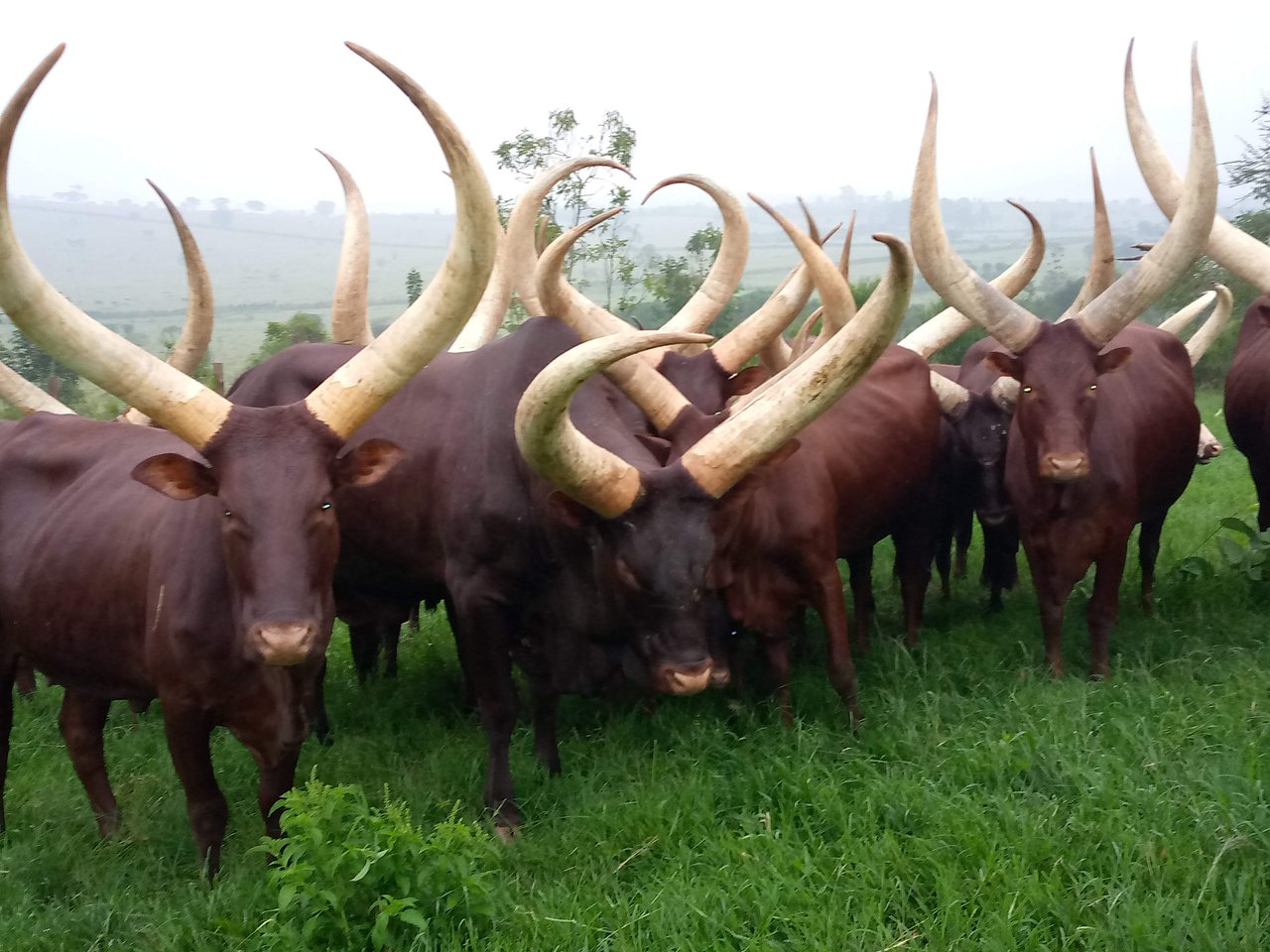
Ankole cattle are domestic animals in Uganda and are long horned cattle that are mainly found in the southwestern Uganda where they thrive in the semi-arid conditions and they are herbivores that largely depend on grass, shrubs and water. The Ankole cattle are seen in the districts of Kazo, Kiruhura, Ntungamo, Mbarara, Bushenyi and Isingiro. The Ankole cattle start their day in the early morning grazing with a herdsman following them with a long stick and the role of the herdsmen is to make sure the cattle reach better places with pastures, not to destroy gardens and also protect them from wild animals especially the big cats like leopards, hyenas and lions since the cattle corridor borders national parks like Lake Mburo national park in Mbarara and Kiruhura, Queen Elizabeth national park bordering Bushenyi.
The Ankole cattle are so resistant to draught, therefore they can easily survive even when the pastures and water are so limited and this makes these cows so exceptional and easy to rear.
The History of the Ankole Cattle
The Ankole cattle originally came from Sanga one of the cattle corridor areas and these Ankole cattle are divided into two types for example the Watutsi cattle of Rwanda and this is named after the Rwandan tribe called the Batutsi. The Ankole cattle are also believed to have come from Egypt cross bred with Zebu cows which originated from India, migrated to Sanga where the original Ankole cow was found. The cattle are now mostly reared in Sanga the original land of Ankole cattle, Rwanda, Burundi and in the southwestern parts of Uganda and it is also believed that the Sanga cattle are reared in parts of Ghana and Zambezi.
Ankole cattle were treated as big strongholds to most families especially in the southwestern Uganda since some families used to wholly depend on them. I am using “was’’ not all families in southwestern Uganda have Ankole cattle. There are a few families that still have these cattle and most people now rear cross breeds of the Ankole and Frisian cows. The Ankole cattle also used for prestige and to earn respect in the society and this is because to have Ankole cattle you have to have a vast land where these cattle can feed from and thus their status is highly recognized in the society. The Ankole cattle have unique characters right from the color, horns, dewlap, neck, hump and the size.
The Ankole cattle are also known at the Inyambo a local dialect of Rwanda meaning the Ankole long-horned cattle are reared in Rwanda and Uganda in the cattle rearing areas and these cattle are reared for various reasons for example the cattle skin was used to make dresses, it used to work as blankets, the skin was also used to make cultural regalia like sandals, drums, the cattle are also reared for milk production, meet and also for sell.
The Gestation Period of Ankole Cattle
The gestation period of Ankole cattle are 9 months, giving birth to a calf and on rare cases they give birth to 2 calves. The Ankole cattle are known for being good at mothering and their calves have over 75% survival chances. Their calves when born they weigh between 14gks to 25kgs.
The Price of Ankole Cattle in Uganda
The price of an Ankole cow depends on many factors for example size, season and the state in which the seller is in. However the average price of the Ankole cattle ranges from $ 1,000 to about $ 8,000.
Types of Breeds of Ankole Cattle in Uganda
Ankole cattle have 3 breeds which are as below;
Bahema type of Ankole Cattle
The Bahema type of cattle is a type of Ankole cattle mainly reared in Northern Lake Kivu and Lake Edward. These kinds of cattle are mainly reared in Uganda and they are named after the Bahima tribe in Uganda. They are reared for milk production, meat, dowry and for ghee. These breeds of cattle have smaller horns compared to other breeds.
The Kigezi type of breed
The Kigezi types of breed are found in Kigezi area and are relatively small in size compared to the Bahema breeds.
The Bashi type of Breed
These are found in the southern Kivu near Lake Kivu in Rwanda.
The Tutsi type of Breed
These are found mainly in Burundi near Lake Tanganyika and they are mainly red in color.
What do Ankole cattle need to be healthy?
The Ankole cattle being resistant to different weather conditions do not need much care for them to be healthy. You can create a barn that can accommodate them, make sure they have water, they always enjoy drinking water from a local water trough called “Obwato” in Runyankore, this water trough is made our of clay soil and when they are drinking, they enjoy that aroma that comes from the clay soil. You also have to spray them at least once every week to kill ticks and other parasites which might cause diseases.
How to Buy the Ankole Cattle?
You can get Ankole cattle through a tour operator like Omangwa Safaris which is a trusted and licensed travel company in Uganda and we are well versed with all the cattle corridor markets and in cattle corridor the cattle market are called “Ekikomera”, you can also get these Ankole cattle from a famous farmland since we as Omangwa Safaris know these farmers and we shall help you to acquire this beautiful animal.
The Ankole Watutsi Cattle Horns
The Ankole cattle are not only reared for food, prestige and dowry, but their horns make very nice decorations especially if you find a horn that is twisted, the really make good artisans.
The horns also help the cattle to regulate the body temperatures.
They are also used for protection in case they are attacked.
Importance of Ankole Cattle
- Cattle being a great treasure especially in Ankole region, they are used as great gift you can give to someone you love.
- Cattle are a source of income to farmers.
- Milk from the cattle is consumed, it is also used to make ghee and yoghurt as well.
- Cattle are used to pay dowry price especially in the cattle rearing tribes.
- Cattle dung is used as manures especially in gardens.
- The skin and the hide from cattle are used to make clothes, drums, sandals for the locals.
- Cattle provide food in form of meat and milk.
Can I combine Ankole cattle farm experience with Gorilla Trekking Experience in Uganda?
These great iconic attractions in Uganda are all found in southwestern Uganda and surely you can have an exclusive experience of the Ankole cattle in Nshaara ranch just adjacent to Lake Mburo National Park and connecting to gorilla land in Bwindi impenetrable national park is very simple. You can spend a night in Lake Mburo National Park which is about 4hours drive from Entebbe, and then proceed for gorilla trekking in Bwindi impenetrable national park and it is about 5hours drive. Combining gorilla trekking experience in Bwindi impenetrable national park with Ankole cattle experience is so amazing, you will get to know more about these cattle, learn the Ankole culture and then crown the whole experience with gorilla trekking in Bwindi impenetrable national park. If you want to save time, after gorilla trekking in Bwindi impenetrable forest national park, you can proceed and exit to Rwanda to catch a flight in Kigali, or you can proceed with other wildlife adventures either in Uganda or visit national parks in Rwanda.