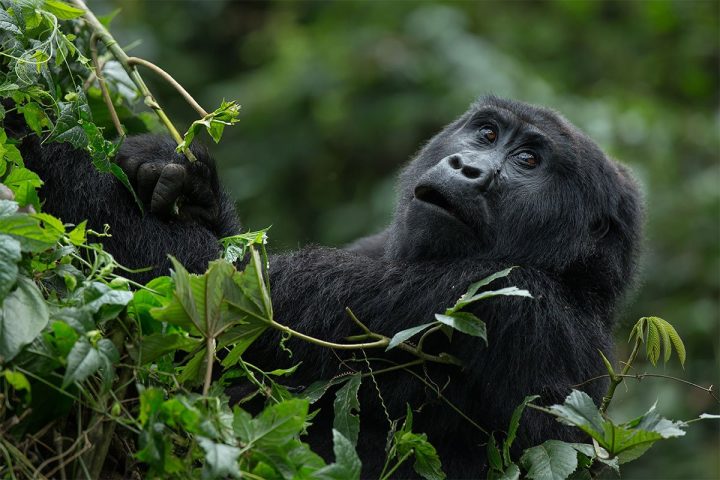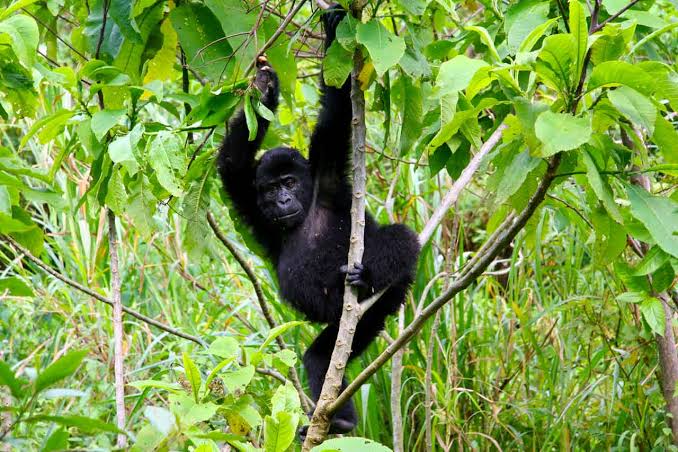
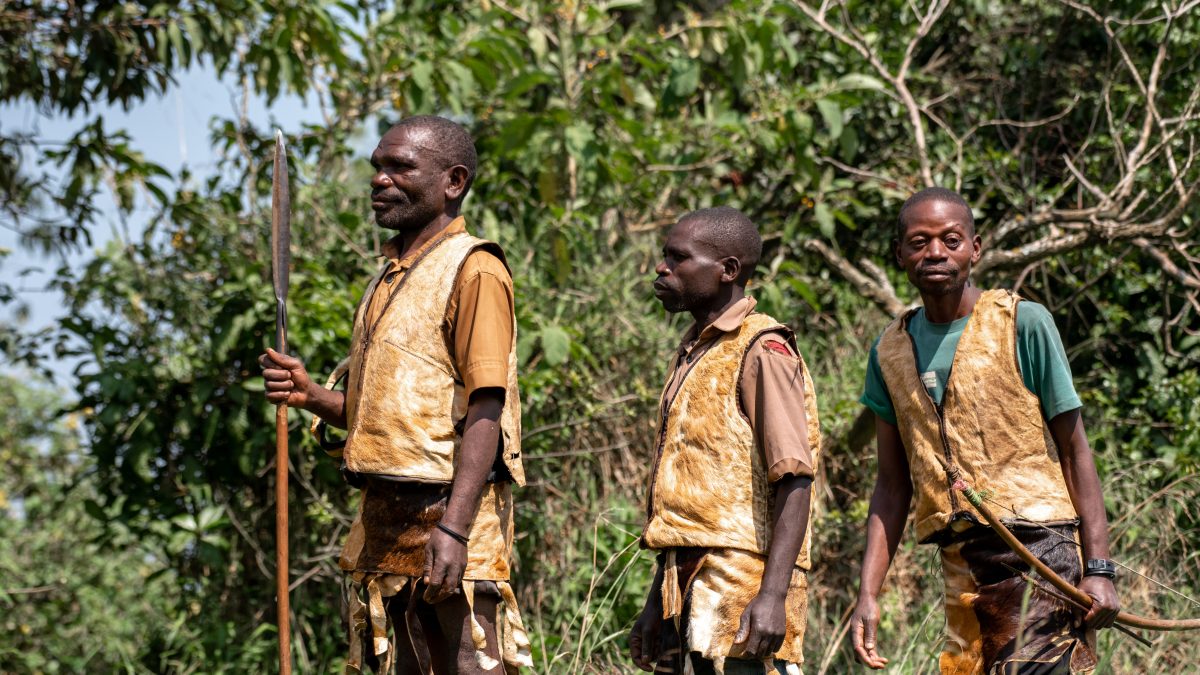
With a population of about 20,000, the Batwa people are an indigenous group of Central Africa, considered one of the oldest ethnic groups in the region, often referred to as “pygmies” due to their shorter stature, though this term is sometimes seen as derogatory. Historically, they lived as hunter-gatherers in the dense forests of modern-day Uganda, Rwanda, Burundi, and the Democratic Republic of Congo. Often called the ‘keepers of the forest’, the Batwa people lived in harmony with nature using the forest as shelter, food, and spiritual practices with a unique cultural heritage shaped by their close relationship with the forest environment. The Batwa people are a marginalized and vulnerable community making them endangered like their neighbors the mountain gorillas in Bwindi Impenetrable forest national park.
As a group that predated the arrival of Bantu-speaking people, the Batwa people are the earliest known inhabitants of the region. They were forest dwellers, living in small and mobile groups who survived by hunting small game with bows and arrows; gathering fruits, roots, and honey; using herbal medicines for healing; and other forest resources also formed an essential part of their subsistence. The Batwa people also had a deep spiritual connection to the forest something they considered sacred as they believed in spirits and inhabited nature. They have a rich cultural heritage that includes unique traditions, beliefs, and practices passed down through generations. Historically, the Batwa lived a semi-nomadic lifestyle, moving seasonally within the forest in search of food and resources. The Batwa lived a nomadic lifestyle as hunter-gatherers, relying on the forest for food, shelter, and medicinal plants.
In the 20th century, the Batwa people were evicted from their ancestral lands due to conservation efforts for mountain gorilla protection changing their lives drastically. Bwindi’s impenetrable Forest was gazetted as a conservation area in 1991, leading to the eviction of the Batwa people which forced them to move to the outskirts of the forest to maintain some relationship with it as it’s the only life they knew. This unplanned evacuation was hard on the Twa as they had to adapt to a new life outside the safe space they were accustomed to and were not allowed to go back for any reason. Much as they were the protectors of the forest many outside the forest believed that the Twa killed or poached the gorillas which also meant that hunting in the forest became illegal even if they were hunting other animals, not the endangered mountain gorillas.
The Batwa are pygmies with an average height of 5ft (1.5m) and are considered the poorest people with a low lifetime and high infant mortality rate which contributes greatly to their dwindling number making them an endangered group. The Twa sing and dance in jubilation after a successful hunt; as a way to thank their god Nyabingi after a satisfying meal; in times of mourning and a marriage ceremony; all this is unique to them and their cultural beliefs. They have a rich cultural heritage characterized by unique traditions, music, dance, and storytelling. Their cultural practices are closely tied to the forest and reflect their deep spiritual connection to nature. Traditional ceremonies, rituals, and communal gatherings play an important role in preserving Batwa culture and identity.
As a marginalized group, the Batwa people face high levels of poverty, lack of access to education, and limited political representation. They were forced to adapt to modern life, something they were not okay with, and as a result, they lost their traditional practices and language. However, efforts to support the Batwa are increasing through NGOs and advocacy groups as they work to improve their land rights, education, and healthcare. In addition, governments and international bodies continue to discuss the recognition of the rights of the Batwa and land restitution to support their communities. With all these multiple efforts we believe the Batwa will get better in this new version of life they are now accustomed to and also promote Batwa heritage and traditions through tourism and storytelling.