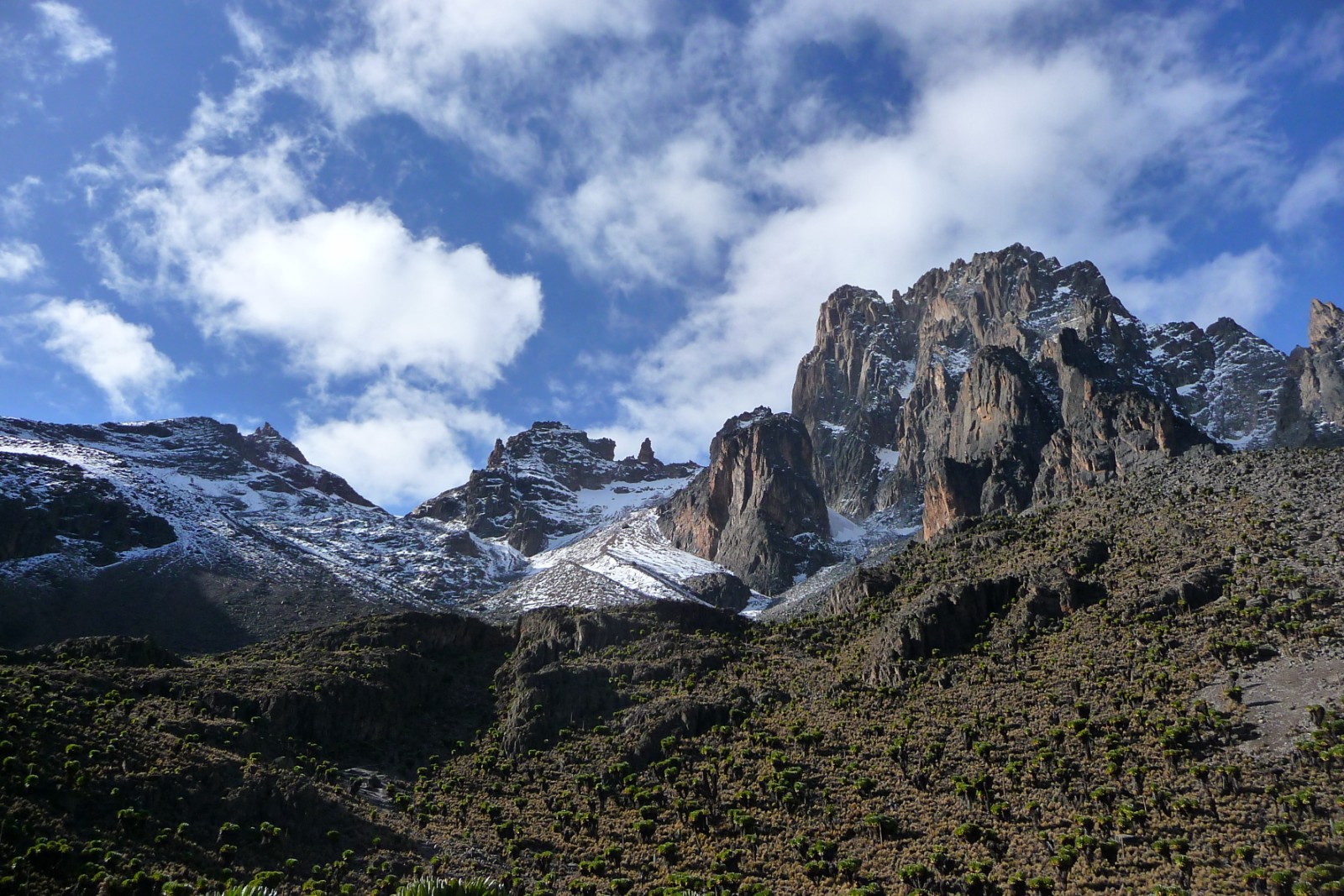
Mountain Kenya is located in Mount Kenya national park in the East of Great Rift valley about 175 kilometers Northeast of Nairobi. Mountain Kenya is the second tallest peak in Africa after Mountain Kilimanjaro, standing at a height of 5,119 meters giving breathtaking sceneries of the park. Mount Kenya is composed of glaciers, tarns, thick forests, mineral springs and endemic wildlife which flourish in the mountains, open slopes and rolling rangelands which are habitats for a number of wildlife. The Mount Kenya being with glaciers and snow, it is a water source for the country where it provides about 50% of water to the population and about 75% for hydro-electric power.
The mountain is a source of permanent rivers including River Tana which is the longest river in Kenya with so many waterfalls that have been used to generate Kenya’s hydro-electricity. The mountain is one of the most impressive landscapes advertised by its rugged glaciers, Afro-alpine moorlands and dense forests. The park was established by the Kenyan government in 1978 and this was aimed at boosting tourism around declared World Heritage Site by UNESCO in 1997. Mount Kenya national park covers an area of about 715 km2 and it lies astride the Equator near Aberdare ranges which for Aberdare national park.
Wildlife in Mount Kenya National Park
The park is a home to a number of wildlife for example elephants, tree hyraxes, bushbucks, mongooses, waterbucks, duikers, buffaloes, black rhinos, leopards, lions, mole rats among others.
The park being mountainous, it is a home to avifauna which attracts birds. Some of the bird species found in Mount Kenya national park include; violet-backed starling, olive pigeon, mountain buzzard, eastern bronze-napped pigeon, oriole finch, Meyer’s parrots, black-and-white Mannikin, African green pigeon, red-fronted parrot, Jackson’s francolin, Moorland chat, Abyssinian ground thrush, Hartlaub’s turacos, scarlet-tufted Malachite sunbird, black-headed waxbill, slender-billed starling, Waller’s starling, hunter’s cisticola among other birds.
Activities in Mount Kenya National Park
Hiking Mount Kenya
Mountain Kenya has a height of 5,199 meters above the sea level. The mountain has seven routes which are used for hiking experience and the most used and easiest being Naro Moru and it takes about four days and then Sirimon, Chogoria and the Summit path. Point Lenana is the 3rd peak and trekking to the peak takes about 10 days. The recommended trekking period is during dry season between August and September, this is when the trekking trails are dry and easily accessible. Hiking to the top of the mountain will expose you to the breathtaking experience of the park and the mountain. You will see glaciers, lakes and birds as well.
Game drive in Mount Kenya National Park
This is the only way to explore the beauty and have an encounter with wildlife in the park. You can choose to have an early morning game drive or evening game drive. Each game drive has a unique experience for example morning game drive is mainly for diurnals for example buffaloes, antelopes, while evening game drive is for animals that fear the heat of the day and these are mainly nocturnal animals for example leopards, hyenas, jackals among others.
Camping and visiting Shipton’s Caves on Mount Kenya
Exploring Mount Kenya does not stop on the trekking experience, but you can camp and also visit Shipton’s caves which are near the camping area. You will enjoy an extra ordinary experience and you will feel so close and attached to the wilderness than ever before.
Birding in Mount Kenya National Park
Mount Kenya is a home to over 160 recorded bird species and this makes avian trips in Mount Kenya national park to flourish. Some of the bird species in the park include; Abbott’s starling, silvery-cheeked hornbill, Tacazze sunbird, olive pigeons, alpine chats, Augur Buzzard, malachite sunbirds, Jackson’s francolin among others.
How to Access Mount Kenya National Park?
You can access the park through its well established routes and this always depends on the level of your fitness and hiking skills. These are routes to take you to hiking Mount Kenya.
- Sirimon Route
This starts from near Nyuki in Nyuki town and it has the best acclimatization, gradual ascent and breathtaking sceneries.
- Naro Moru Route
This is the direct trail to Lenana point and it is known for being vertical meaning the trekkers have to be super fit. This is through the Vertical Blog.
- Chogoria Route
This is the most dramatic route which consists of gorges, valleys, Lake Ellis and Lake Michaelson and is on the eastern side of the mount.
- Burguret Route
This is the less used route for the experienced trekkers.
- Timau and Kamweti Routes
This is the older route that is rarely used but it is combined with other trails for all-around experience.
The most used routes are Naro Moru, Chogoria and Sirimon which are closer to Kenya Wildlife Service gate. This is where the trekking permits are issued.
Hiking trips are so sensational and so dramatic, giving hikers unforgettable memories and staunch attachment to nature. You can combine hiking Mount Kenya with Climbing Mountain Rwenzori in Uganda or combine hiking experience with Bwindi impenetrable national park for gorilla trekking experience or fly to Rwanda to track gorillas in Volcanoes national park or relax on Lake Bunyonyi the most cool place in Uganda and best for relaxation especially from the hustle and bustle of the jungle.