Explore the largest Living primates on earth-the Gorillas. We have the Mountain Gorillas and the Low land gorillas that belong to the eastern Gorilla subspecies. The other subspecies is the western gorilla with the cross river gorillas and the western lowland Gorillas.
Gorilla trekking is a lifetime adventure and an opportunity of meeting your cousins in their natural habitat. Meet the world’s most powerful Primate Species in their different destination. When you know the character and difference of the lowland Gorillas and the Mountain Gorillas, you know there is a difference in the trekking experience.
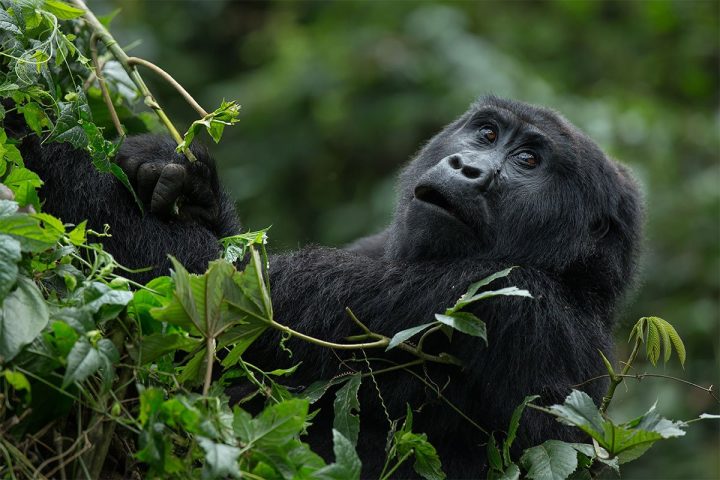
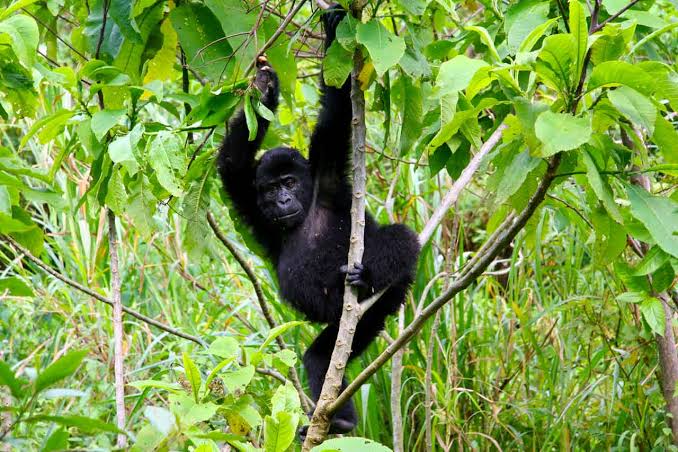
Mountain Gorillas are scientifically called the Gorilla beringei. They have large teeth, jaw and nose. They weigh about 150kgs with very huge bodies, and much hair all over the body. They stand at 1.2-1.8mtrs tall, with females weighing over 90kgs. Mountain Gorillas have a selection what plant, stems, bark of the trees, insects and fruits they feed on. They live in an altitude of about 800-13,000ft in a cold places.
The Subspecies is found in Mgahinga Gorilla and Bwindi Impenetrable forest national park in the southwestern part of the republic of Uganda; Volcanoes National park in the northwestern part of the republic of Rwanda, and In Virunga National Park in the eastern part of the Democratic Republic of Congo.
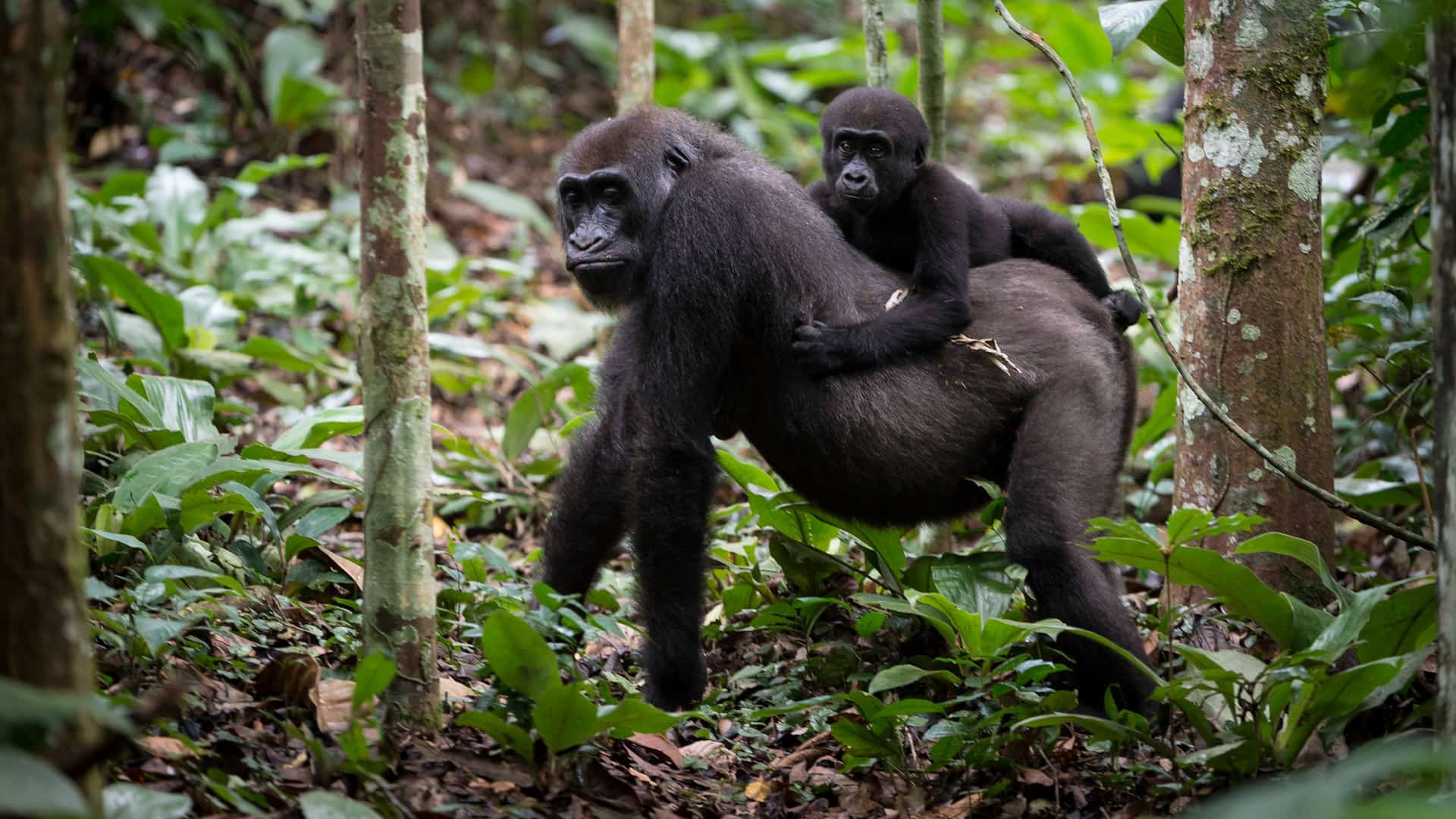
The Eastern Lowland Gorillas are a unique subspecies of eastern Gorillas. They are scientifically referred to as Gorilla gorilla. Their teeth, jaws and nose are smaller than that of Mountain Gorillas. They live in lower altitude tropical rain forest areas, in countries of Congo, Central African Republic, Cameroon, Angola and Equatorial Guinea. You can trek them at Kahuzi Biega National park in the democratic republic of Congo. You can also find the lowland gorillas in different zoos around the world. You can identify them through their shorter arms, light shorter hair, elderly low land Gorillas loose the hair at their back and hip, and they weigh about 180kgs. An average Height of a male lowland Gorilla is about 1.7mtrs. They live in smaller Groups of about 4-8 family members
Similarity of the Mountain Gorillas and the Lowland Gorilla Species
Both the mountain and eastern low land Gorillas leave in groups of about 4 to 40, led by an alpha male with a silver like lining at the Back-the silver back. All gorillas are herbivorous, feeding on fruits, stems, leaves and root. The lowland gorillas add to their diet insects and small reptiles. The creatures are very humble, and you are in their presence, they pay less attention on you, but rather on what they are doing. The trekking rules when trekking both Gorilla families In the same; No littering the park, stand 7meters from the apes, no making noise, no feeding the apes, no use of flashlights when taking photos or video, no smoking, no creating paths in the forest, and for anything, ask the ranger guide for help. A maximum group of up to 8 people can visit a gorilla family per trek.
Gorilla trekking Permit cost and where to purchase
Mountain and low land Gorilla trekking permit costs differ depending on the destination to be visited. This destinations include among others; Bwindi impenetrable National park and Mgahinga Gorilla National park at 800$ for foreign non-residents, and 700 for foreign residents; 400$ for Congo Gorilla permits, and 1500$ for Rwanda Gorillas. The permits are for a one time use, for one person. Trekkers are advised to purchase a trekking permits through only licensed Tour Operators, or directly from the Issuing authorities. In Uganda, you can get from Uganda wildlife Authority offices at Kamwokya in Kampala. In Rwanda, get the permit from Rwanda Tourism Board in Kigali.
In conclusion; be among the few people who have explored both the Endangered Mountain Gorillas, and the Lowland Gorillas in the continent of Africa and learn to differentiate the two sub-species of Gorillas. Gorilla trekking is a once in a lifetime adventure, only done in the continent of Africa. The trekking experience takes place through-out the year with the best months being in December to March, and June to September. Book yourself a trekking permit at least six months in advance as the Trekking permits are on high demand in the high seasons.