The Responsible travel means taking full account of planning trips carefully and thoughtfully so that one enjoys the experience he or she seeks while also having a positive impact on a destination, environment, its people and wildlife. Responsible travel in Uganda is one way to reach out to Uganda’s countryside population by helping them conserve and preserve the environment, wildlife living besides them and their culture.
Why chose Uganda as a safari destination?
Uganda is one of the most thrilling African safari destinations that are worth visiting since it’s a wealth of attractions untouched by mass tourism where one is well assured of experiencing wildlife in the country’s National Parks and other protected areas. Therefore there are various reasons why someone should choose Uganda as a safari destination as described below;
The Pearl of Africa offers a spectacular diversity of wildlife with the country presenting 10 National Parks, 12 wildlife reserves, 13 wildlife sanctuaries and 5 community wildlife management areas. Some of these protected areas harbor unique wildlife that could not be found elsewhere in the country for example the tree climbing lions of the Ishasha sector in Queen Elizabeth National Park, white rhinos at Ziwa rhino sanctuary and wildlife ranch to mention but a few.
Uganda is rated one of the best birding destinations by travel experts and hosts several birding spots that are listed as international Ramser sites. Therefore, Uganda is a birding hub all year round due to the country’s conducive climate and comfortable weather conditions that attract several other migratory birds all over the world and favor the activity. Uganda has a variety of favorable habitats to birds that range from savanna plains, wetlands, lakes, rivers to cultivated fields, woodlands and forests.
Uganda is a home to the source of the world’s longest River as well as a home to the world’s second largest lake that offer several attractions and adventure activities that one can easily indulge in for example white water rafting, boat cruises, bungee jumping, kayaking, sport fishing, swimming, white sand beach activities on Lake Victoria Islands to mention but a few. Uganda harbors several other water bodies that favor water adventure activities for example Lake Bunyonyi, Kazinga channel, Lake George and Lake Albert, Kibale crater Lakes, Lake Albert to mention but a few.
Uganda houses Africa’s third highest mountain known as mountain Rwenzori that stands at 5,109meters at Margherita peak. This gorgeous Mountain offers a 10 days stunning climb while you enjoy its beauty that includes wildlife, forests, valleys, glaciers and many more. Climbing to its peak is a bit strenuous though rewarding since you are guaranteed of the scenic beauty across the Albert peak to the Democratic Republic of Congo. Uganda as well houses the oldest and largest solitary volcanic mountain in east Africa known as Mountain Elgon that is shared with Kenya. Mountain Elgon has the largest volcanic base in the entire world that is worth exploring.
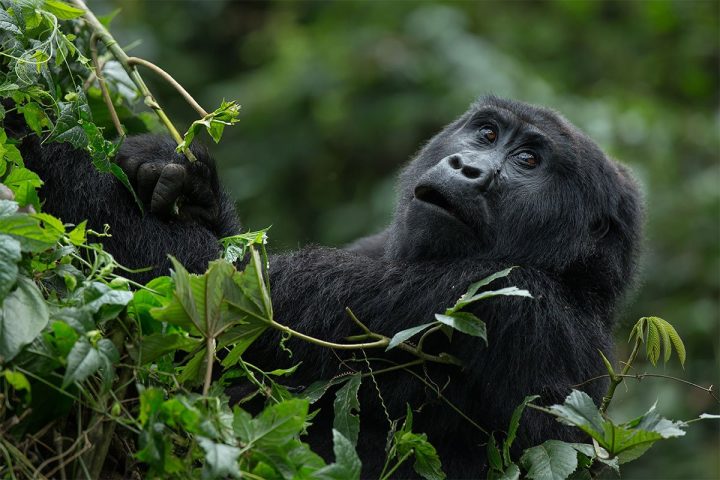
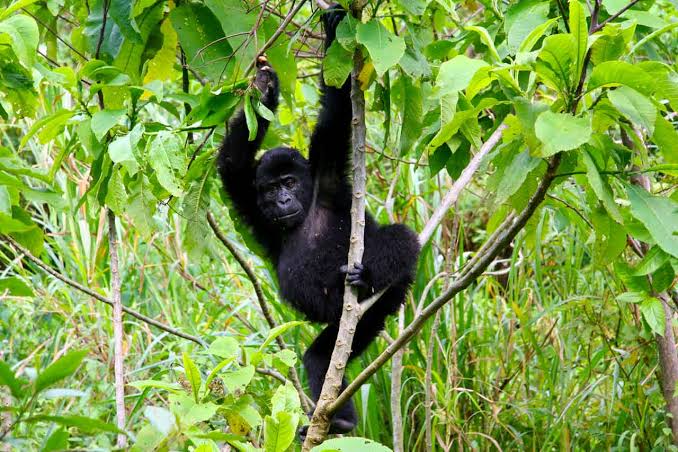
Mountain Gorilla trekking is one of the country’s major tourist activity since there are almost half of the world’s remaining mountain gorilla population that call this beautiful country their home. This activity involves hiking through thick and misty forests to encounter our closest cousins in their natural habitats after which an hour is allowed in their presence. There are strictly two gorilla trekking destinations in Uganda where one can find these gentle giants in their natural habitats namely Bwindi Impenetrable National Park and Mgahinga National Park.
Uganda’s weather and climate is largely tropical with two rainy seasons per year that is March to May and September to November while the rest of the months are dry which are the most favorable for wildlife viewing. However Uganda can still be visited throughout the entire year regardless of the weather conditions since the country’s temperatures are always cool and stable. Currently, Uganda is one of the world’s safe destinations where tourists can go to experience the country’s engrossing tranquil destinations unlike in the past when the country suffered from political turmoil and several epidemic diseases for example covid-19 pandemic and Ebola. The country has now progressed in Her economic and social development through trade both local and international, agriculture, industrialization and tourism which has been made a priority in the country.
The Pearl of Africa is made up of 56 tribal groups that are friendly and welcoming of which most of them still hold their ancient values, traditions, beliefs and norms. These tribes still hold their pure and authentic culture and worth encountering for those interested in cultural tourism in Uganda. The most popular cultural encounters in this country are the Batwa cultural experience and cultural trail in Bwindi impenetrable National Park as well as Mgahinga National park and the IK group of people that live on mount Morungole in Kidepo National Park. With the Batwa cultural trail, you are led into the forests by the Batwa where they lived in harmony with mountain gorillas as you learn about their ancient life and how it has been hard for them to adapt to life outside the forests. The IK group of people is as well an interesting group of people that once lived in the current Kidepo National Park before it was founded. They were later displaced from the Park and resorted to staying on top of a mountain in the Park where encountering them involves hikes to the mountain top. This is one of Uganda’s indigenous and smallest tribal groups with not more than 10,000people. Other exciting tribal groups include the Karamajongs, Sabinyi, Bagushu, Bakiga, Bamba, Banyoro, Batooro, Kumam, Madi, Langi to mention but a few.
It is therefore advisable for our esteemed clients to travel in a respectful and responsible way and below are some tips and guidelines to responsible travel;
Wildlife and environment conservation
Gorilla trekking: Finding your way to the Park headquarters, a briefing is conducted about the gorilla trekking etiquettes after which you are led by ranger guides into the forests to embark on the search of our closest cousins. But before you hit the forests, you are cautioned not to proceed to the forests if you are suffering from any illness for example cough and flue, cold and many more because these diseases can easily be transmitted to the mountain gorillas. Upon encountering the mountain gorillas in their natural habitat, you should not make noise meaning that you should talk in a low tone however excited you could be and avoid unnecessary or sudden movements. You are also requested to keep about 5 to 7meters away from the gorillas and one should never touch the gorillas under any circumstances however much they get closer to you because these still remain wild animals and can easily react unexpectedly although they are habituated and used to human presence.
Avoid taking photos and recording videos with your camera flashlights on because these may make the gorillas uncomfortable and make them feel insecure which may result into direct attacks from these human like creatures. You should never drink, eat or smoke while in the forest unless the ranger guides direct you where to have your lunch in the forests. This is aimed at reducing risks of transmitting diseases to the mountain gorillas as well as preventing littering in the forests.
Always turn your head away from the direction of gorillas and cover your mouth and nose while coughing and sneezing to minimize the spread of viruses and bacteria. Ranger guides are always available to assist you dig a hole of about 30cm deep for you to ease yourself and immediately cover with soil after. Please never hesitate to ask for assistance from ranger guides in case you want to ease yourself.
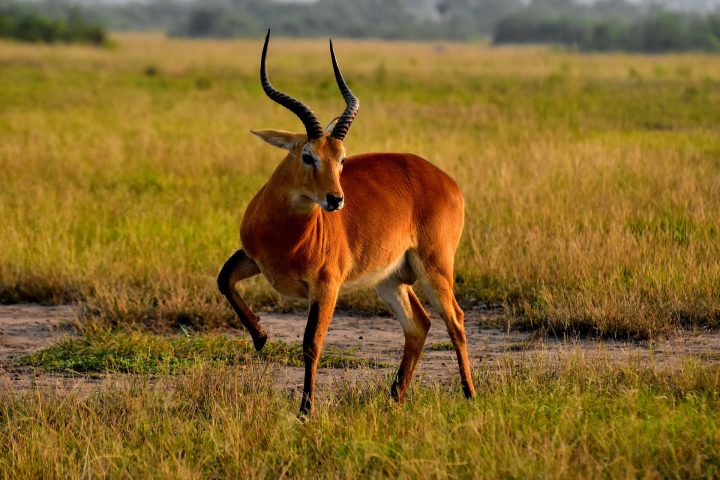
Game viewing: This activity is done on a 4WDtourist motor vehicle along the Park’s trails or tracks while you gaze at various animals in the Park’s savanna plains. Animals that can be seen include the African elephants, lions, giraffes, leopards, spotted hyenas, Uganda kobs, Jackson’s hartebeests, warthogs, waterbucks, bushbucks to mention but a few. Therefore game viewing should be done in a respectful and responsible manner to wildlife and the environment as follows;
Travelers shouldn’t drive off track since all National Parks have set tracks for drivers and made guides available to protect the wildlife at the country’s protected areas. When driving within the National Parks, one is expected not to exceed the speed of 40km/hr. since going above this speed limit may result into accidents with in the Park and thus animal killings.
Unnecessary notices such as hooting is not allowed within the National Parks since it disturbs and scares away wildlife and destructs game viewing experience.
You are expected not to litter rubbish in the Park since this disturbs wildlife and the environment. There are rubbish pits placed at the park entrances and the Park headquarters. You should as well never think of picking any vegetation or flower from the protected area however beautiful it could appear to you.
People, Culture, Customs and Religion
Uganda is gifted with enchanting, friendly and welcoming people that one shouldn’t go away without meeting and indulging in their local communities. However while on Ugandan safari, one should consider responsible travel in relation their culture and religion in the following ways;
Engaging and interacting with the local communities is the best way to learn about Uganda’s culture compelling one to a meaningful and enriching travel experience. When planning your trip to local communities endeavor to involve a local guide who is well conversant with the local language so that communication between you and the locals is simplified. Some indigenous tribes are not so familiar with English for example the Batwa, Karamajongs, the IK people and many more.
Dress code is key while planning your trip to Uganda. One should ensure that he/she dresses up in a respectfully way while on a Ugandan safari. When traveling to national parks and communities, religious and cultural sites, you are expected to that that you are dressed up while covering your knees and shoulders. Most tribes look at the uncovered knees, chest and shoulders as a disgrace to their cultural traditions and norms. When interacting or engaging with the local communities, it is advisable to ask for permission before taking photos of anyone or anything and respect people’s privacy. Some locals are totally afraid of cameras and feel insecure their images being taken away.
While scheduling your trip to churches and schools, ensure that it is planned and coordinated by a professional and responsible tour guide and fully authorized by the head of the institution for example head teachers, church and Moslem leaders referred to as the Imams. Therefore making your trip planned is aimed at avoiding disruptions of classes and services that could be taking place at the institution.
In Uganda, there are several community based tourism projects that are aimed at directly involving the local communities in tourism by linking tourism to conservation, cultural heritage and sustainable rural development to enhance their livelihoods. Community tourism projects include the Bombo community tourism initiative, Bigodi wetland sanctuary, Katwe community, several women’s craft cooperatives to mention but a few. The local people earn a living from weaving baskets, making pots, animal carvings from wood to mention but a few that they sell out to travelers. Therefore it is now your responsibility to support their efforts other that purchasing imported souvenirs from abroad that is sold in most of the urban craft shops.
There are local guest houses and other accommodation facilities owned by entrepreneurial individuals or communities for example Clouds Mountain gorilla lodge, Buhoma community lodge in Bwindi Impenetrable National Park and many more. You could as well lookout to such accommodation facilities as a form of giving back to the local people.
You should never buy products that are obtained from endangered and protected animals for example ivory, fur, feathers and many more that could be sold with in the communities. Don’t think of buying bush meat as well for example meat from Buffaloes, hippopotamuses, waterbucks, bushbucks to mention but a few. These are only obtained through poaching which is illegal and the greatest threat to Uganda’s wildlife.